Ho Hum! “Trade war” not worrying Indian companies active in China

Seems Indian companies active in China think that the USA-China trade war is all a bit “ho hum” – or maybe an opportunity?

tradewar3

Indian organisations working in China don’t expect any critical effect of the escalating trade war among Beijing and Washington on their business, a new survey conducted by the Confederation of Indian Industry (CII) has stated, including that most of the companies intend to put more in Beijing in 2019.

The survey of Indian organisations working in China indicates cautious optimism and certainty when contrasted with the past survey a year ago. “Most organisations don’t see a significant effect of the present trade situation between the US and China on their business,” said Mr Chandrajit Banerjee, Director General, CII.

In excess of 120 Indian organisations work in China separated from a sizeable number of merchants who have workplaces here; 57 of the organisations reacted to the CII poll.

As per the survey, two-fifths are considering inclining up their investment more than 2018. More IT and BPO organisations intend to make extra investment in 2019 contrasted with 2018.

My “top 10” of Indian companies active in China:

Adani Global; Essar; Jindal Steel & Power; Reliance ADAG; TCS; Tata Sons; Union Bank of India; Allahabad Bank; Bank of Baroda; Bank of India.

tcs

Also in China are Zee TV; Jet Airways; Apollo International; Ashok Leyland.

What is the “fourth industrial revolution” and why is India important?

The First Industrial Revolution introduced the use of steam power to mechanize production.

The Second Industrial Revolution saw a number of groundbreaking inventions in transport, telecommunications and manufacturing, including the use of electric power to generate mass production.

The Third Industrial Revolution brought the internet and other technological innovations, which have ushered society into the digital era.

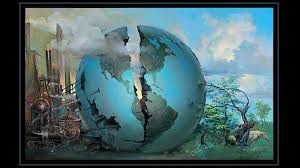
Today, society is challenged by a Fourth Industrial Revolution, an age in which scientific and technological breakthroughs are disrupting industries, blurring geographical boundaries, challenging existing regulatory frameworks, and even redefining what it means to be human.

Emerging technologies such as artificial intelligence (AI), blockchain, drones and precision medicine are swiftly changing lives and transforming businesses and societies, inevitably posing new risks and raising ethical concerns. How can society ensure that its policies, norms and standards are able to keep up with these rapidly evolving technologies?

The World Economic Forum has chosen India as the base for its Centre for the Fourth Industrial Revolution – India is the world’s largest democracy having the second highest number of scientists and engineers – shaping the future.

Modi oath

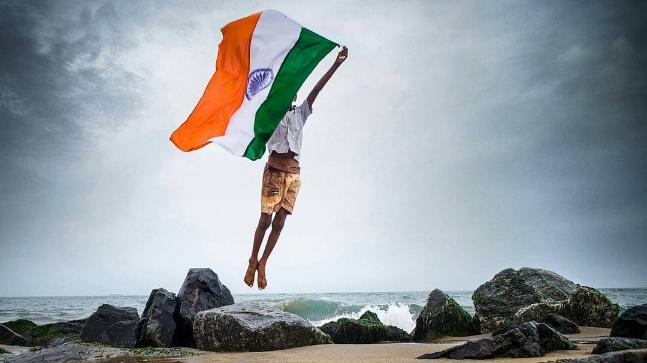
Happy Independence Day to young and vibrant India

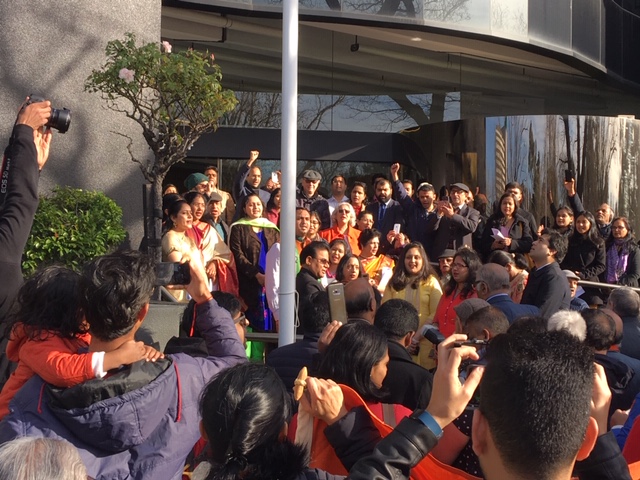
On this Independence Day for India, 15 August, it was a privilege to attend the flag raising ceremony at the Indian Consulate in Melbourne (picture below).

Independence2

It made me reflect on one amazing statistic about India – more than 50% of its population is below the age of 25 (that’s 600 million) and more than 65% below the age of 35. It is expected that, in 2020, the average age of an Indian will be 29 years, compared to 37 for China and 48 for Japan.

This “Demographic Dividend” will drive economic growth and cultural change.

Happy Indian Independence Day!

Time for the Nehru-Gandhi family dynasty to end for Congress Party

For almost 100 years, generations of the Nehru-Gandhi family have led the Indian National Congress Party – is this dynasty coming to an end?

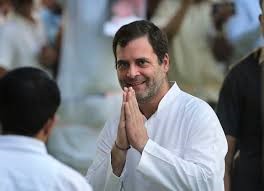
This question pre-occupies Indian commentators as Rahul Gandhi (pictured above) quit after leading the party to a disastrous 2019 election loss to Narendra Modi.

The modern Indian electorate is aspirational and finds little to like in the conservative and history obsessed Congress Party.

One key element of becoming a leader is that you are driven to do it, that becoming leader is your life’s passion. Rahul Gandhi never convinced in this – he looked like a man forced to run because of the dynasty.

In 1919, Motilal Nehru (pictured below) became the president of India’s oldest party, the Indian National Congress. Rahul was his great-great-grandson.

Motilal2

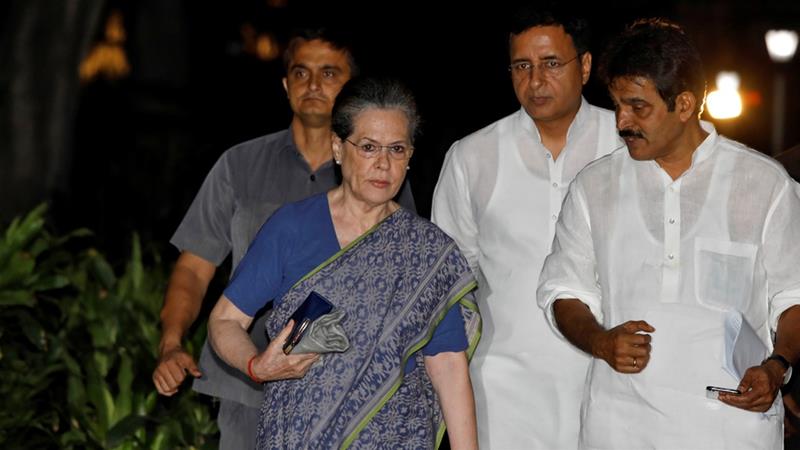
This dynasty goes from Motilal Nehru to his son Jawaharlal Nehru (independent India’s first Prime Minister), and then to Nehru’s daughter, Indira Gandhi (who had married a man named Feroze Gandhi, and since then the dynasty has been called the Nehru-Gandhi dynasty), and her two sons, Sanjay Gandhi and Rajiv Gandhi. After Rajiv Gandhi was murdered by a Tamil terrorist in 1991, the party eventually convinced his Italian wife, Sonia Gandhi (born Sonia Maino), to take over the steering wheel. Sonia brought into Indian politics her two children: Rahul and Priyanka, making them the fifth generation of the Nehru-Gandhi family line within the party leadership.

sonia

Sonia Gandhi returns as fill in leader of the Congress Party as it contemplates the future

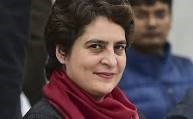
Many say Priyanka Gandhi Vadra (pictured below) has all the leadership qualities Rahul lacked, and could succeed to the leadership.

priyanka2

The huge victory for Prime Minister Narendra Modi’s Bharatiya Janata Party has only underlined how the BJP has replaced the Congress as “India’s natural party of government”.

Congress has been decimated, with only 52 (up 8) national parliamentary seats compared with the BJP’s 303 (up 21) and none from 19 of the country’s 36 states and territories. It is estimated that the BJP won 92 per cent of contests with a Congress candidate and only 52 per cent of direct contests with other parties.

“The Congress Party must radically transform itself,” Rahul Gandhi wrote in his resignation letter. The question is – can it look beyond the dynasty to find a new, modern leader and political brand?

Watch Out! Divided world ahead!

You can see the world dividing, as the USA and China continue locked in a trade war.

The global division began when Trump pulled out of the Trans Pacific Partnership – of which Australia was a part. With the TPP, Trump could have dealt with China on behalf of “the world”. Once this was gone, he was free to just speak for America and that is where the divisions began. This seems to be what he wanted all along.

divided7

Then the trade war with China revved up and seems unstoppable.

One result (unintended consequence) of the Trump approach has been to unite the 15 countries trying to create the Regional Comprehensive Economic Partnership – the biggest free trade deal in history. Australia is part of this, as is, surprisingly, India. So too are Japan, China and Indonesia. The USA is not.

So what would a divided world look like? China on one side (potentially with Japan, Australia, India and the other 15 RCEP countries), USA on the other, different digital technologies and communication platforms – much more fundamental that just selling cheap shirts and tennis shoes. This is a huge divide, not just about trade.

divided4

Australia can probably play this division on both teams – we probably have to, but it will be one hell of a balancing act. Remaining close to America while engaging with China and others in the RCEP could see a win-win for Aussies. But others might have a different view.

India and Australia to be key players in world’s largest free trade deal

Australia and India are poised to be key players in the world’s largest free trade deal – the Regional Comprehensive Economic Partnership which should be signed by mid 2020.

There are 15 countries in RCEP excluding the USA. Major players are China, Japan, Indonesia, India and Australia.

RCEP will have a market of over 3.5 billion people and almost 33% of the world’s GDP.

As we have noted before – Trumps’s trade war with China has given some urgency to RCEP negotiations and the 15 countries are set to complete the deal.

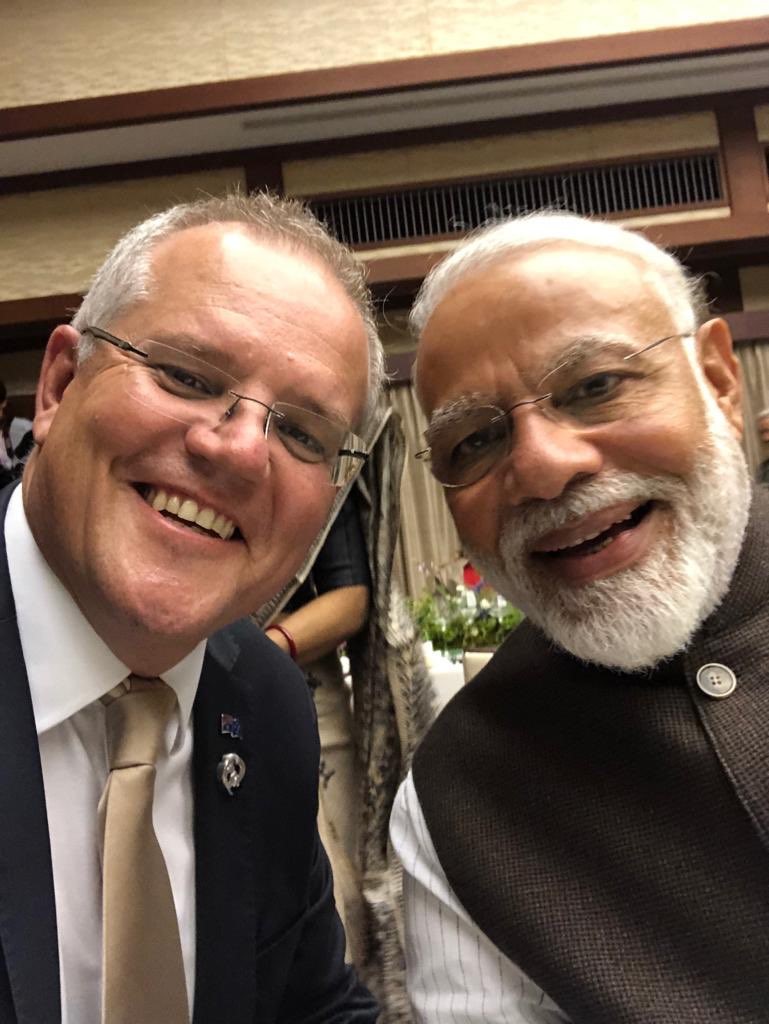
ModiMorrisonSmile2

Pictured the two Prime Ministers excited about RCEP – Australia’s PM Morrison (left) and India’s PM Modi

Revoking special status of Kashmir seems to be common sense by PM Modi

Not many people outside of India would be aware of the “special status” given to Kashmir – but all has changed as the status has been revoked by the Modi Government.

Under the previous special status Jammu and Kashmir had their own constitution and decision making rights for all areas except defence, communications and foreign affairs.

But the special status went further than that – forbidding Indians outside the state from permanently settling, buying land, holding local government jobs and securing education scholarships.

While it might have initially been designed to protect Jammu and Kashmir, we know from experience that special status like this also condemns the recipient to live in a kind of time warp, stagnating and excluded from the broad benefits of economic growth and social change.

In other words, the decision of the Modi Government to revoke the special status seems to be good common sense.

ladakh2

But there appears to be no end of trouble in this area disputed by India and Pakistan.

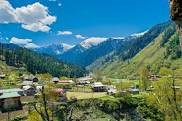
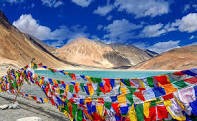
Maybe the India side can be peaceful via the longer term plan to split the state into two territories – Jammu and Kashmir with their own elected legislature and Ladakh (picture above) which will be ruled directly by the central government.

Let’s hope the move is positive and the people can be free from conflict.

Now the challenge for PM Modi is to find some resolution of the conflict with Pakistan – but that seems a challenge beyond resolution.

Australia could benefit from Trump’s trade war with China

Here’s a very nice irony – Australia and India have really struggled to agree a Free Trade Agreement but one outcome of the Trump trade war on China is that the 15 countries in the Regional Comprehensive Economic Partnership (Including Australia and India) are now motivated to do a deal.

They are talking fast, negotiating hard and could come up with a sweeping deal this year that reduces the need for direct talks on an Australia-India FTA.

ModiMorrisonSmile2

Australian PM Morrison (left) and Indian PM Modi – pretty happy about the future

RCEP will have the potential to deliver significant opportunities to Australian businesses and consumers. RCEP will cover ten of Australia’s top 15 trading partners, and collectively RCEP participating countries will account for a combined GDP of US$23.8 trillion (2016). These countries account for almost 60 per cent of Australia’s total two way trade, and over 65 per cent of our exports.

Thanks Donald.

Aussie firm Atlassian sets up base in Bengaluru, India

Australian IT firm Atlassian, which provides its technology to customers such a NASA, Spotify and Lyft, has set up its global R&D Centre in Bengaluru and plans to hire 300 people.

This move by the Australian software developer firm shows it is betting big on the India market and its tech ecosystem. The company provides team collaboration and productivity software.

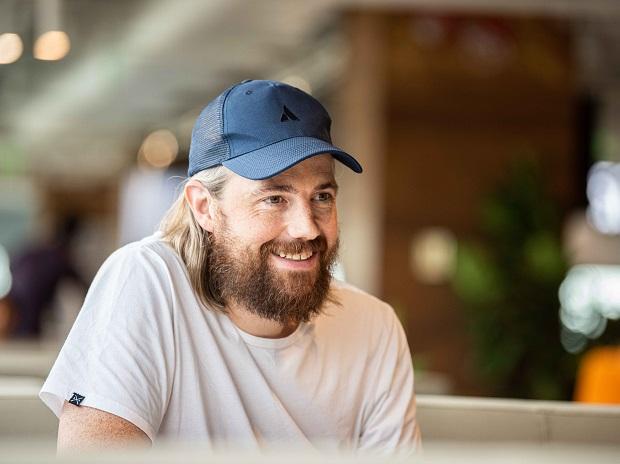
Atlassian Mike

Mike Cannon-Brookes, (pictured) co-founder and co-chief executive of Atlassian, said in an interview. “It (India) is a big part of our growth plans as the company continues to grow very rapidly. We always try to build well-balanced R&D teams not just on the software side of the things but also design, product management, security and all the aspects that go into making great software products.

“One of the big advantages Bengaluru has is (the availability) of great talent in all those areas in one spot,” he added.

Indian budget to be presented today showing the way for Modi 2.0

The India Budget 2019 is due to be presented today by Finance Minister Nirmala Sitharaman (pictured).

This will be one of the most crucial Budgets for Modi 2.0 as it will become a guide for upcoming reforms and policies in the next five years of his government.

Modi2Promo

Come and learn more at our FREE Melbourne seminar (copy this and paste into your browser):

https://www.eventbrite.com/e/modi-20-journey-towards-greater-india-tickets-64489650280