Are you ready for the facts on how much India has changed?

(Based on an article by Monika Halan, consulting editor at Mint and writer on household finance, policy and regulation)

Indian elections have just opened – so, how long does it take to find out if your name is on the Indian electoral role? Go to the Election Commission site, it asks you to SMS to check if your name is on the list—thirty seconds later, you will get a confirmation that your name is or is not there. Things move fast in modern India.

As Monika Halan writes – “Most people get their Provident Fund (PF) balance on SMS too. Also, the passport and visa processes are mostly all automated and keeps us well-informed about the progress of the process.”

So, what else works fast and well in India?

The metro network where it exists, in cities like Delhi and Kochi, is superb.

trains2

Getting or renewing a passport used to be a total nightmare a decade back. Enter private sector plus technology and the average time it takes for the passport application process is 30 minutes to under 4 hours. The passport reaches home by courier in a couple of days. At every stage, you get an SMS informing you what will happen next.

What about getting a driving licence? At least in Delhi, the process is mostly painless—online form filling, and 30 minutes to three hours of time in the local office. The licence reaches home in just a few days – according to Monika Halan.

Property registration used to be a nightmare. But Halan says “That again is a breeze. Again, a mix of technology and processes has reduced transaction time and pain hugely.”

Payments is the other huge success story of modern India. Forgetting your wallet at home is no big deal anymore. The money is in the phone. In a wallet, on an app or available through mobile banking. Riding on the backbone built by the National Payments Corp. of India (NPCI), transaction options and ease are both world-class.

payment

So how long does it take you to get a Wi-fi connection? How long does it take you to open a bank account? At least in the big metros, a Wi-fi connection happens within a day. Opening a bank account takes lesser time. The average time for these services in most developed countries is much longer. In most of Europe, for instance, it takes at least a month to get both these services.

Modern India is fast. Click on “buy” at 11pm and hear the doorbell ring at 9am the next morning.

A huge shift has happened in India and even Indians have failed to notice. The mix of technology, competition and cheap labour – plus reformist governments – means modern India has some of the simplest and fastest processes in the world.

All of this in just over a decade.

Time to catch up with what is really happening in modern India?

Indian governments “awash with money” as the GST has impact

Gross Goods and Services Tax (GST) collection by the Government of India reached Rs 1.07 trillion (US$ 15.41 billion) in March 2019, registering the highest monthly collection in FY19.

This is a stunning boost to both the Central and the 29 State Governments.

We used to advise businesses wanting to enter India that they should only deal with government there “if they have to”. But things have changed. Not only do the central and the State Governments have lots of money, they are all proactive in encouraging business – and competing hard to outdo each other on ease of business and encouragement for entrepreneurs.

gst5

So, our advice today – include governments in your list of people to talk to about doing business with India.


gst3

India’s product and services exports to hit US$540 billion this year

Can this be true?

India’s merchandise and services export would touch USD 540-billion mark this fiscal, Indian Commerce Minister Suresh Prabhu said Thursday.

Seems the figures back it up – India was once an isolated domestic economy but is now a major global exporter.

He said exports are growing at a healthy pace and shipments of goods would reach over USD 330 billion.  Similarly, services exports would touch about USD 200 billion.

The goods exports grew by 8.85 per cent this year and the Indian economy continues to hit around 7 per cent growth annually.

Surely this is one of the world’s great economic stories.

How China and India differ in the consumer goods market

India’s share in the consumption of consumer goods is expected to double by 2030 and favourable demographics (youth) will soon take it ahead of China in regional market dynamics, according to a report by Credit Suisse.

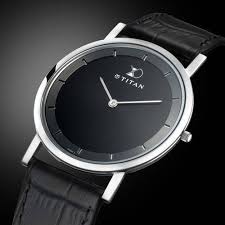
Interestingly, in India it is the home-grown brands like watchmaker Titan, hosiery company Rupa and another watchmaker Sonata which are gaining the most out of this propensity to spend in India.

consumer8

However, India is at a comparative disadvantage vis-a-vis China because of factors like less urbanisation, high concentration of urban pockets and lower enrolments in higher education.

It said in 2015, China had 150 million more people in working age than India, while by 2045, the northern neighbour will have 300 million less people than India in the bracket.

Additionally, China will also have to grapple with ageing related issues by 2045, it said, pointing out that the Communist country will have 350 million people aged over 65 as against 200 million in India.

consumer1

It marked out the apparel and meat sectors as the ones with ‘high’ growth potential as the per capital income of the country grows, followed by beverages, cars, cereals, personal computers, smart phones and education with ‘medium’ growth potential, while healthcare, consumer credit and tourism were the ones with ‘low’ potential.

consumer 4

From a consumption perspective, the Chinese prefer more of travel and entertainment-related options, it is staples that dominate the Indian story, the brokerage said.

India scores over China when it comes to spending intentions, the brokerage said, pointing out that the desire to spend is declining “more broadly” in China.

consumer3


IMF confirms India leads as a growth economy

India has been one of the fastest growing large economies in the world, the International Monetary Fund (IMF) has said, asserting that the country has carried out several key reforms in the last five years, but more needs to be done.

Responding to a question on India’s economic development in the last five years at a fortnightly news conference here, IMF communications director Gerry Rice Thursday said, “India has of course been one of the world’s fastest growing large economies of late, with growth averaging about seven per cent over the past five years.”

“Important reforms have been implemented and we feel more reforms are needed to sustain this high growth, including to harness the demographic dividend opportunity, which India has,” he said.

Details about the Indian economy would be revealed in the upcoming World Economic Outlook (WEO) survey report to be released by the IMF ahead of the annual spring meeting with the World Bank next month, he said.

This report would be the first under Indian American economist Gita Gopinath, who is now IMF’s chief economist.

“The WEO will go into more details. But amongst the policy priorities, we would include accelerate the cleanup of banks and corporate balance sheets, continue fiscal consolidation, both at centre and state levels, and broadly maintain the reform momentum in terms of structural reforms in factor markets, labour, land reforms and further enhancing the business climate to achieve faster and more inclusive growth,” Rice said.

World auto industry investing in Indian auto startups

India is attracting global investment, especially in automotive startups – global automobile manufacturers have invested around $491 million in 2018 in Indian automobile industry start-ups, led by Essel Green Mobility’s investment of $300 million into Bengaluru-based on-demand AC bus service provider Zipgo, according to market intelligence firm Venture Intelligence.

essel

There were 13 investments during the year. In 2018, Taiwanese two-wheeler manufacturer Kwang Yang Motor, known as Kymco, invested $65 million in Gurugram-based electric two-wheeler maker Twenty Two Motors, while auto major Mahindra and Mahindra invested $40 million in self-drive car company Zoomcar.

Toyota Tsusho Corporation, the trading arm of Toyota Group, invested around $30 million in Droom Technology, the operator of India’s largest online automobile marketplace by co-leading Series D fundraising of the company. The firms also concluded a pact on the overseas expansion of the used car and motorcycle marketplace business.

essel2

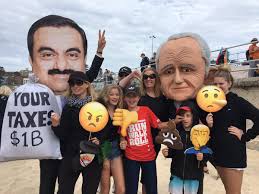
I feel sorry for Adani Group, but wonder why they bought in the first place

I kind of feel sorry for the Adani Group. Here they are sitting on Australia’s biggest coal reserve, yet nobody wants them.

But, how did Adani Group get into this strife torn project?

After all, Australia has most of the world’s biggest and smartest coal miners. They all knew about the Carmichael but none of them would touch it. Did Adani ask why not?

No Australian bank would fund it. Did this give Adani pause to think?

Aussie politics was always going to be mixed on this one – yes, er, no. Did these give Adani concerns?

The whole scheme depended on a new railway and a port – right near the globally significant Great Barrier Reef. Promised the “world’s biggest coal mine” our governments offered billions to pay for railway and port. But then it became “just enough coal for Adani’s own power stations”. That’s a long way short of the early promise and politicians are looking for an out. Is this a surprise to Adani?

Importing coal is no longer popular in his country of India, which is moving in a big way to alternatives such as wind and solar. Did Adani factor this into their Aussie plans?

And finally – global demand for coal has taken a hit, demand just fell over the cliff. What did Adani market research tell them about this?

In Australia, Adani Group is lonely.

Adani might be a fine Indian corporation. But here in Australia they seem to have stumbled into something no Aussie firm would touch.

That’s why I kind of feel sorry for them.

Mark Mobius (investment guru) calls for reform of FDI in India

The Economic Times recently spoke to Mark Mobius, emerging markets guru and Founder of Mobius Capital Partners:

What are your thoughts on Indian economy currently?

I think the (economic) growth is still going to be higher than China. We will probably see around 7 per cent, and that itself is a tremendous accomplishment. I know unemployment is a real issue, and this is something that whoever comes to power in the next election, is going to have to address very forcefully. They will have to think how to make it work, and that means making it easier for foreign investors to come in.  ..

Bengaluru and New Delhi 3rd and 4th fastest growing office markets in world

Bengaluru (Bangalore) is the third fastest growing office market globally in terms of prime rental values for office space, mainly due to continued supply crunch, a recent survey found.

According to a global study by property consultant Knight Frank, the estimated growth in office rental values in Bengaluru by end of 2019 is expected to be 6.6 percent.

Bengaluru is the “Silicon Valley” of India, employing 35% of India’s 2.5 million IT professionals. But it is also big in food (Cafe Coffee Day), pharma and biotechnology, aerospace, cars, and is home to Ola Cabs (competitor to Uber).

The report evaluates 33 global cities and gives insight on office rental growth – it noted that New Delhi, in fourth position, is expected to see a rise of 6.5 percent in prime rental values in 2019. Delhi is more than a government centre – it is big in consumer goods manufacturing, IT, telecoms, banking, construction, retail and tourism.

connaughtplace

Delhi’s Connaught Place

Bengaluru is impacted by demand from the IT/ITeS and the start-up sectors, so the lack of quality space in key markets is pushing the rentals up.

BangaloreInfosys

Infosys headquarters in Bengaluru

Mumbai is however expected to see stable rentals in 2019 with an outlook of marginal rental growth due to anticipated supply for 2019 in the prime market.

Where would you locate your India headquarters? One challenge is that with so much regulation and the need to deal with government, wherever your HQ is based, your people will have to travel often to New Delhi.

But options exist outside of these three major cities and it is worth evaluating tier two cities.

Please share your thoughts and experiences…

PM Modi leads India to 6th largest economy in the world with high growth

Things are happening fast under the leadership of the Prime Minister,  Shri Narendra Modi – India is having its best phase of macro-economic stability, becoming the sixth largest economy in the world from being the 11th in the World in 2013-14.

Presenting the Interim Budget for the year 2019-20 in Parliament this week, the Union Minister for Finance, Corporate Affairs, Railways & Coal, Shri  Piyush Goyal said “India is the fastest growing major economy in the world” with an average GDP growth  of 7.3% per annum, the highest ever achieved by any Government since economic reforms began in 1991.

Shri Goyal said  under the leadership of Prime Minister, Shri Narendra Modi, a clean, decisive and stable Government reversed the policy paralysis, laid the foundation for sustainable growth  and restored the image of the country.

New India by 2022

Shri Goyal said that a New India would celebrate its 75th Independence year in 2022 when every family would have a house with access to water, electricity and toilets; farmers income would have doubled; and the country would be free from terrorism, communalism, corruption and nepotism.

This is clearly an ambitious government, and the track record so far proves that Modi does get things done.

blackstone