“We need to build skills, not walls.” – Telstra Boss

The need for Australian companies to source ICT talent from overseas is stronger than ever, with the local pipeline continuing to fall short.

That was the message from Telstra CEO Andy Penn, who delivered a strongly-worded address at the Committee for Economic Development Australia in Melbourne on Wednesday.

andy penn

“We need to build new skills and capabilities in new areas,” he said.

“We need these capabilities now, but the fact is we cannot find in Australia enough of the skills that we need on the scale that we need them, such as software engineers.

“Why? There simply are not enough of them. The pipeline is too small.”

In anticipation of the impending local ICT talent shortfall – which Penn said he expects to be 60,000 skilled workers short in the next five years – Telstra will this year open a new ‘Innovation and Capability Centre’ in Bangalore, India.

Labelling Bangalore as “India’s ‘Silicon Valley’”, Penn said the move would consolidate Telstra’s presence in India, where it has been operating since 2011.

Immigration negativity

Penn also called for a cease to the “negative commentary around immigration”.

“We need to build skills, not walls.”

He pointed to the associated benefits that come with “a well-targeted skilled migration policy”, arguing this would create – not take away – jobs.

“Skilled migrants also add to Australia’s wealth,” he explained.

“Research by the International Monetary Fund estimated Australia’s migration program would add up to 1% to annual average GDP growth from 2020 to 2050 because it focused on skilled migrants of working age and would limit the economic impact of Australia’s ageing population.”

The Jamnalal Bajaj Awards promote the values of the great Mahatma Gandhi

Many things amaze me in India and one that both amazes and inspires is the Jamnalal Bajaj Awards – for the “unsung heroes” who inspire many through selfless effort in the tradition of Gandhian values.

gandhisatyagraha

My good friend eminent scientist and regular visitor to Australia, Dr R A Mashelkar, is Chairman of the Selection Committee of the Award for Application of Science and Technology for Rural Development and a Member of the Council of Advisors for the whole scheme.

Dr Mashelkar said: “The fundamental issue is about Gandhian values and creating an inclusive society by dismantling inequalities.”

ATT00012_

The Nobel Laureate Kailash Satyarthi is one of the trustees of the Jamnalal Bajaj Foundation and a jury member for the Awards: “Changemakers firstly need to understand the trend of the change and then change the direction to positivity, righteousness, justice, equality and humanity.”

My country – Australia – has seen a decline in the reputation of major institutions and corporate Australia is in the firing line as the Banking and Finance Commission finds unethical behaviour is rife. Beyond the so-called ethic of “building shareholder returns”, no Australian business leader has had anything constructive to say on corporate ethics. Very disappointing. We could learn much from this foundation and the great Mahatma Gandhi.

More information about this wonderful foundation and the awards is at http://www.jamnalalbajajfoundation.org/

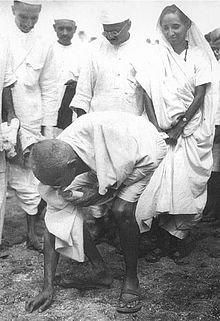
Gandhi Salt

6 trends to watch for India in 2019

1. Politics to dominate

Internal politics will dominate India with a general election due in May 2019. The Modi Government won in 2014 with a slogan of “good days are coming” but higher inflation, declining rural incomes and lack of jobs are all hitting government prospects, while the big unknown is the huge number of “first time” voters – India has 20 million young people turning 18 each year which means there will be around 100 million first time voters.

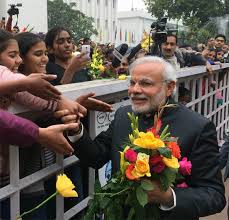
modiyoung

Modi has so far appealed strongly to young voters. However, state elections show that the Indian voter is now harder to predict. Most predict Modi will be returned but with a reduced majority. But when the world’s biggest democracy votes, politics becomes the theme of the year.

2. Trade deals point to stronger region

India has a growing number of trade deals that place it at a point of influence in the Indo-Pacific Region and there is a growing prospect of countries such as India, Indonesia and Australia leading a stronger Indian Ocean grouping. Of significance is the Regional Comprehensive Economic Partnership or RCEP (a trade alliance currently in negotiation among 16 countries in Asia and Oceania) which India could join in 2019 – perhaps a long shot but one to watch.

3. Fashion, weddings and pride

fashion

National pride has been growing (some call it Hindu pride, but it seems broader) and so we can expect Indian fashion, traditions and weddings to be bigger than ever – the wedding planning industry will be booming but fashion and festivals not far behind. The trend in India is to combine modernity with preservation of the past – a great balancing act. Another result is that well placed local brands – if marketed well – will attract huge consumer interest. And any year now the west will become very interested in “all things Indian” which is good news for Indian fashion, music, films and dance.

4. Economy and shares to grow

nifty50

Despite trade and currency wars slowing global growth, Moody’s and others predict continuing Indian economic growth and shares to remain buoyant for 2019. However, keep in mind shares have been booming – the Nifty 50 Index (the largest 50 stocks in India) rose from 7000 points at the end of 2015 to 11,750 points in September 2018. That is a growth of 57% in the market in just three years. It seems the psychological touch point is 10,500 for the Nifty – above that and shareholders will have a good year. Below that and watch out.

5. Business opportunities abound

health4

Healthcare for India has got to be one of the world’s biggest business opportunities with massive growth prospects for healthcare clinics and online service delivery. When you consider 60% of the people are rural but 80% of healthcare is urban (and not meeting demand there) so there will be a big rural boost. Agribusiness is strong with specific areas to watch – dairy, butter/ghee, strawberries, button mushrooms, salad supplies and alternative production such as hydroponics on urban fringes. But really, growth opportunities are everywhere as domestic demand soars – tourism (domestic and global) and education (including western immersion tours for Indian uni students) are top growth areas.

6. Energy up

India is a global leader in investment in alternative energy and this will gain ground with solar, wind and biomass to surge ahead. All of which makes the proposed and controversial Adani coal mine in Australia more of a mystery.

mumbaitrain

Adapting to India’s combination of “direct and indirect” culture

Most cross-cultural trainers will tell you India is an “indirect” culture, meaning it does not say things bluntly, goes around the topic rather than directly to the heart of the matter.

This is one of those generalisations that is only partly right – and if you rely on it you will be in for surprises in India.

The reality is that India combines direct and indirect communication.

direct

At the point of meeting you, Indians can be very direct – “are you married, why is your husband/wife not here with you, what do you earn, can you find me a job, will you distribute my product”. For most westerners this is confronting, because our style of meeting and networking is very gradual.

But at the point of issues arising, this is where Indians can be very indirect.

If there is a problem with what you are wanting or what India promised for you, the communication becomes more obscure. India’s indirect communication can be hard to spot, even for India trade veterans. Some tell-tale signs are when the India side says “we will try to meet your deadline” – this generally is leading to the heart of the problem which is that they cannot deliver.

This indirect communication is not motivated to deceive or make your life difficult. in fact, it is based on the value India places on its relationship with you and a desire to keep that relation intact. This is why Indians rarely use the word “no” – the relationship is more important than the truth.

10 reasons every business can find a market in India

To understand what a great long-term opportunity India is, consider these facts:

  1. The numbers are on your side:  564 million below the age of 20
  2. The middle class is growing: 600 million growing middle-class, saving rates have tripled in last 12 years
  3. The mindset is right:  adaptability, competitive, entrepreneurial, believes in “learning, earning and spending”
  4. Challenges lead to opportunity:  mainly in areas such as transport and agricultural infrastructure, medical, power generation & distribution, education, healthcare
  5. Eating and drinking is changing: food & Beverages: food processing, food packaging, food warehouse and transport, health drinks
  6. Homes are stylish: home decor products, kitchenware essentials, bed and bath
  7. Paying for Healthcare: diagnostics and testing, medical equipment, health supplements, clean air and water products
  8. Consultancy Services are flat out: engineering, business development, product development, security analysis, accounting
  9. Infrastructure is big ticket: waste management, solar and wind technologies, temperature-controlled warehouses, air and noise pollution control technologies, towing trucks, and automated parking lot equipment.
  10. “Franchising” is popular: Top sectors with franchising opportunities are Education and Healthcare due to a huge mismatch between supply and demand now and in the coming years

Time to find your niche in India?

indiagate

What is the “India Stack” and why does it matter?

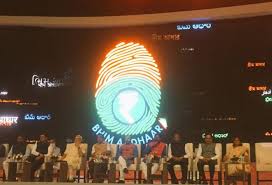
Aadhaar, which means foundation in Hindi, is the foundation of the India Stack and is an identity program for all residents of India. Despite its opt-in nature, about 1.12 billion have Aadhaar identity cards today.

Indian PM Modi launches extension of Aadhaar program.

The intent of the program, which was initiated in 2009, is to eliminate the inefficiencies in the public distribution system as well as to facilitate the disbursement of cash transfers directly from the government to the intended beneficiaries, cutting out middlemen.

The 12-digit card number is linked to an individual’s biometric and basic demographic data including a photograph, iris scans, fingerprints, name, address, date of birth and gender.

The Aadhaar database containing this information is the largest biometric database in the world and was built using internet-scale technology.

Aadhaar is purely an identification tool, so having an Aadhaar card affords no privileges to an individual; unlike a driver’s license for example,which allows one to drive.

The goal, therefore, is to build an identity platform and allow others to build an ecosystem around it, or link services to it – hence, the India Stack. The Aadhaar database can be queried (or pinged) by a bank to verify a person’s identity: Is this person who they say they are? the database returns a binary (yes/no) response to the query.

The other layers in the India Stack interact with the identity (Aadhaar) layer to facilitate digitisation.

Document or credential issuers can send digital documents such as birth certificates, degrees and diplomas, driver’s licenses and digital medical records to the digital locker which can then be used by an individual (using the consent layer) to share documents with those who may demand them such as health insurance providers.

This removes paper from the system as well as fraudulent documents.

The cashless layer facilitates mobile payments. The Immediate Payment System (IMPS) provides an immediate (and 24×7) interbank funds transfer service through mobile phones using a mobile money identifier linked to a bank account.

The Unified Payment Interface (UPI) is built on IMPS and is an open source platform which uses a single virtual identifier that may be linked to multiple bank accounts as well as mobile wallets.

The India Stack sets up most of the infrastructure required for India’s digital transformation. It provides secure identification to nearly all Indian residents hence eliminating a basic barrier to financial inclusion. It reduces transactions costs as well as fraud and paperwork. However, since it is a platform infrastructure, it’s up to the private sector and the central and state governments to use the open APIs (application programming interfaces) to find use cases and build applications which utilise the platform.

The India Stack is gathering pace – with Telcos and the financial sector leading the charge.

Study shows which countries are best at preparing children for work


An analysis of the latest PISA report (Programme for International Student Assessment), which assesses how 15-year-olds in OECD countries are performing in science, mathematics and reading, has revealed the countries in which children are best at “collaborative problem-solving”.

Childrenworkingtogether

Employers highlight the importance of so-called “soft skills”, a suite of attributes that include social abilities like networking, communication, negotiation, team-building and problem-solving. At the root of these skills is how well a child gets on with others.

Asian countries Singapore, Japan and South Korea top the chart, with Canada, Estonia and Finland not far behind. Australia is at eighth spot. Denmark, the United States and United Kingdom also make the top 10.

children2

Soft skills and hard yards

The World Economic Forum’s Future of Jobs report 2016 argued that by 2020: “Creativity will become one of the top three skills workers will need. With the avalanche of new products, new technologies and new ways of working, [employees] are going to have to become more creative in order to benefit from these changes.”

But, whatever qualifications, experience or technical abilities today’s job interviewees may possess, employers cannot necessarily count on them having the soft skills that are now required as soon as they walk through the door.

children

As an article on TrainingMag.com pointed out: “There’s a subtle irony in [the fact that] hard skills are relatively easy to learn, while soft skills are often hard to learn.”

It pointed out that “hard skills are specific, teachable abilities that include technical proficiencies and are easily defined and measurable. You usually obtain a degree or diploma when you have these skills, such as software programmer, mathematician, accountant, tool-and-die maker, forklift driver, etc.”

But it adds that soft skills are less tangible and harder to quantify. “There is no degree or diploma for soft skills. They’re mostly learned through life experience on the job, such as active listening, interpersonal skills, knowing how to recognize people, and demonstrating caring concern.”

Start ’em young

Such skills are likely to be best acquired at an early age and the PISA analysis shows that some education systems are taking steps in the right direction. Finland has already moved to a model where collaboration is part of the regular curriculum and France is eyeing similar moves as it shakes up its education system in an effort to boost economically deprived children.

However, companies will probably have to recognize that while schools and universities should teach core skills, the burden of providing much of the life-long skills learning employees are going to need will fall on them.

As Vishal Sikka, the former chief executive of Infosys, wrote in the Financial Times: “Curriculums should be modernized to encourage creative problem finding and solving, and learning through doing, with mandatory computer science learning as the bedrock for enabling digital literacy.

“Organizations also need to make life-long learning resources available for employees to enhance skills development. Indeed, they should be required to dedicate a percentage of their annual revenue to reskilling staff.”

Childrenworking2


Indian universities not preparing students for the workplace – study

Indian universities are losing ground to global competitors when it comes to preparing students for the modern workplace, according to a new “Global University Employability Ranking” study, produced by French HR consultancy Emerging.

Harvard University tops the list, followed by California Institute of Technology and Massachusetts Institute of Technology.

Amity20183

Leading in India are the Indian Institute of Science in Bangalore, Indian Institute of Technology in Delhi and IIT Bombay.

India still only has three universities in the top 150 for performance in employability.

The report shows that successful universities value soft skills such as collaboration, teamwork and communication. Employers are also increasingly ranking critical thinking skills as very important.

SwinJune

The capacity to adapt to a changing world and to keep learning are seen as essential.

Most improved this year according to the rankings were universities in East Asia and parts of Europe.

Hired2

India to create over 1.4 million new IT jobs as digital disruption gains pace

The numbers in India are always big!

India is likely to add over 1.4 million new IT jobs by 2027, primarily driven by emerging technologies like cybersecurity, Internet of things (IoT) and Big Data, a report by Cisco-IDC said.

4th2

“Of the 9.1 million IT positions in India in 2017, 5.9 million job postings from employers were for new-age roles,” it added.

The report said roles like social media administrator, machine learning designer, and IoT designer would be most sought after in the coming years.

digital2

It pointed out that about 22 per cent IT professional respondents said they self-funded their certification courses, while about 50 per cent of them underwent some training in 2017 – a reflection of the growing importance of upskilling in a rapidly changing technological landscape.

About 15 per cent IT professional respondents said took training leading to certification in 2017.

Interestingly, the report stated that seven out of 10 organisations look for IT certifications when hiring or promoting and getting certified put an applicant ahead of 85 per cent of his/her peers.

The top 10 technology trends impacting Indian job scenario include cybersecurity/data security, Big Data, Data analysis visualisation, IoT, Business Intelligence, Artificial Intelligence, Machine Learning, Virtualisation/Software defined infrastructure, Converged Infrastructure and cloud solutions/technologies.

digital3

Tourism or business – start your India visit in Maharashtra

The Indian state of Maharashtra and the capital, Mumbai, is situated in the western region of the country – but really it is central to almost everything.

Maharashtra’s gross state domestic product (GSDP) at current prices accounted for 14.89 per cent of India’s gross domestic product (GDP) in 2017-18, the highest among all states – valued at US$ 387.36 billion. It’s the economic powerhouse of India.

maharashtra

We know and love the state’s capital, Mumbai, as the commercial and financial capital of India – plus with heaps to interest both business and tourism. The city is home to several global banking and financial service firms, plus India’s stock exchanges.

maharashtra2

Pune is a city I really love and recommend not just because it is on the edge of the most beautiful mountain range. It has emerged as the educational hub.

pune

Maharashtra has emerged as a key hub for IT and ITeS, electronics and business outsourcing industries.

BKC1

The state has a well-developed social, physical and industrial infrastructure. Apart from 16 airports, the state has two major and 48 minor ports. It also has a well-developed power supply grid.

gateway3

If you are not convinced, look at these numbers:

  • At current prices, the contribution of the financial sector to the GSDP of the state increased at a CAGR of 10.51 per cent between 2011-12 and 2016-17.
  • From August 1991 to December 2017, a total of 894 projects with an investment of Rs 19,088 crore (US$ 2.96 billion) have been approved for the pharmaceutical industry in the state.
  • The government has launched Wi-Fi services, which will connect 500 hotspots across Mumbai, under the smart city project.
  • The state has produced 6.55 million bales of cotton in 2017-18*. In 2017-18(P), the state has also produced 184 MT of raw silk.
  • Power generation in the state has been steadily increasing. Production figure stood at 124.31 TWH in 2017-18 and 47.19 TWH during April – July 2018.
  • Maharashtra accounts for approximately 35.1 per cent of the country’s output of automobiles by value.
  • The state has launched Unlimited Maharashtra advertising campaign through newspapers and television channels to attract tourists during summer vacations. A half-hour ferry ride across Mumbai harbor takes visitors to view the superbly carved 1,300 years old cave temple on the little island of Elephanta, a favourite picnic spot.
  • In 2017, the state had 119.2 million domestic tourist arrival and 5.08 million foreign tourist arrival.

Mumbai is always on my itinerary for India – and there are many other cities worthy of our attention.

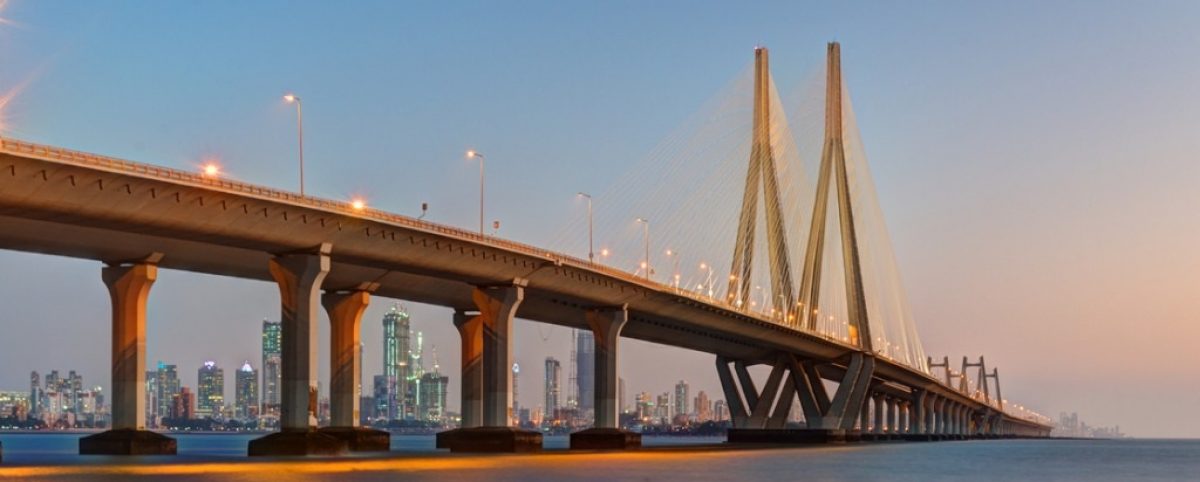
bandra-worli-sea-link-mumbai-picture-id915681526