
Are you ready for the facts on how much India has changed?

(Based on an article by Monika Halan, consulting editor at Mint and writer on household finance, policy and regulation)

Indian elections have just opened – so, how long does it take to find out if your name is on the Indian electoral role? Go to the Election Commission site, it asks you to SMS to check if your name is on the list—thirty seconds later, you will get a confirmation that your name is or is not there. Things move fast in modern India.

As Monika Halan writes – “Most people get their Provident Fund (PF) balance on SMS too. Also, the passport and visa processes are mostly all automated and keeps us well-informed about the progress of the process.”

So, what else works fast and well in India?

The metro network where it exists, in cities like Delhi and Kochi, is superb.

trains2

Getting or renewing a passport used to be a total nightmare a decade back. Enter private sector plus technology and the average time it takes for the passport application process is 30 minutes to under 4 hours. The passport reaches home by courier in a couple of days. At every stage, you get an SMS informing you what will happen next.

What about getting a driving licence? At least in Delhi, the process is mostly painless—online form filling, and 30 minutes to three hours of time in the local office. The licence reaches home in just a few days – according to Monika Halan.

Property registration used to be a nightmare. But Halan says “That again is a breeze. Again, a mix of technology and processes has reduced transaction time and pain hugely.”

Payments is the other huge success story of modern India. Forgetting your wallet at home is no big deal anymore. The money is in the phone. In a wallet, on an app or available through mobile banking. Riding on the backbone built by the National Payments Corp. of India (NPCI), transaction options and ease are both world-class.

payment

So how long does it take you to get a Wi-fi connection? How long does it take you to open a bank account? At least in the big metros, a Wi-fi connection happens within a day. Opening a bank account takes lesser time. The average time for these services in most developed countries is much longer. In most of Europe, for instance, it takes at least a month to get both these services.

Modern India is fast. Click on “buy” at 11pm and hear the doorbell ring at 9am the next morning.

A huge shift has happened in India and even Indians have failed to notice. The mix of technology, competition and cheap labour – plus reformist governments – means modern India has some of the simplest and fastest processes in the world.

All of this in just over a decade.

Time to catch up with what is really happening in modern India?
Australian media – especially Fairfax – misrepresent modern India

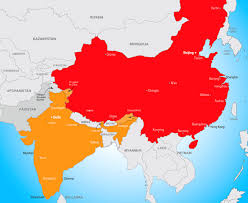
India is not understood in Australia – China continues to hold our national imagination. Our myopia on India is a problem because within ten years India is tipped to become the third largest economy in the world.

Multiple cliched views of India dominate – slums (despite millions lifted out of poverty), public sector corruption (despite serious advances through use of IT) and the so-called Hindu fundamentalism of Indian Prime Minister Narendra Modi (despite four years of relative communal stability).

How does Australia get India so wrong? Our media influences our national perspective on India, and recent coverage of developments in the holy city of Varanasi (The sacred as strategy, The Age, 9 April) shows how we focus on cliché and miss the big picture. The article branded development in this city as Modi’s move to “insert religion into the centre of the political debate”.

So, what is happening in India and why should Australia care?

Four things are important for Australia – India’s investment growth, rising local consumption, over a decade of around 7% economic growth per year and governments (central and 29 states) awash with money due to the GST.

As a result, every part of this country is being transformed and demand is rising for products and services of the type Australia is good at. By contrast, our trade with India is stagnant – if not for rising numbers of Indian students, trade would be in decline. Clearly, we are missing something.

What is the real picture in Varanasi? Sure, as reported a major new promenade is being built – as much as anything to enhance the tourism appeal of this great city. Branding it as driven by a religious view is as silly as claiming tourist development around Uluru is “divisively pro-indigenous”.

But the bigger picture is far more interesting. Varanasi is just one of one hundred “smart cities” being developed across India, with new roads, freeways, cleanliness, sewage treatment, trade and convention centre, traffic management and more upgraded within five years. Located on the banks of the River Ganges, the city will also become a multi-modal river and road transport hub, supporting local industry.

Varanasi is preparing for a 25 per cent growth in tourist numbers, fuelled by a combination of India’s middle class and international visitors.

To see this as promoting “a distinctly Hindu state” displays a stubborn refusal to see the bigger picture in India. What is happening here is happening across India.

Just look at tourist numbers for the Taj Mahal, India’s best-known symbol of Muslim India rule – located in Agra, another city having infrastructure upgrades as part of the Modi Government’s Smart City program. In the last year there were approximately five million tourists, of which 4.5 million were Indians of all beliefs. This weight of numbers demands infrastructure upgrade, and the Taj Mahal and Varanasi are examples of many across the country.

Indians are becoming more interested in their own history and they can afford travel. It makes no sense to link this to some divisive religious plot.

International yoga day is another example of Indians promoting and being confident about their heritage – celebrated in countries around the world with many millions in the west now more interested in yoga. That yoga grew within Hindu India is incidental.

Australia should know how much India is changed – we have just taken our first delivery of railway carriages made in India for Sydney’s public transport upgrade. Modi’s “Make in India” program is working.

Health is improving – a new study shows that the lives of 50,000 Indian children have been saved through a measles vaccination campaign run between 2010 and 2013.

We know a lot about the generosity of Bill Gates, but Indian tech billionaire Azim Premji has just given away US$21 billion to philanthropy, becoming the biggest endowment in Asia – our region.

At a BDO “Improving Business with India” seminar last month I tongue-in-cheek explained rapid change in India by launching my “India Shopping Mall Index”. Here goes – there were 3 shopping malls in India in 1999 – just 20 years later there are over 350 malls and another 85 in the pipeline.

The Indian Finance Minister has estimated India will have a middle class of around 600 million by 2030 when it becomes number three economy in the world.

All of this is exciting news for Australia – we would know about these great changes and opportunities if we avoided the old cliched views of India. If we continue to view India though a prejudiced lens, we will see only what we look for – such as Modi and Hindu nationalism or the poverty of slums – and we will miss the great changes that offer real possibilities for us.

Within our volatile and changing region, India could become our most important friend – but right now we are looking at India with blinkers on.

Stephen Manallack is a blogger at IntoIndia.blog and former President, Australia India Business Council (Victoria)

The above article was submitted to The Age on Tuesday 9 April – not yet published.

History in the making as India begins shipping trains to Australia  

When a consignment of six metro coaches built in Baroda was shipped from Mumbai on Friday, it created history in India’s manufacturing sector.

The metro coaches, built for the Australian government, was the first of its kind India has ever exported.

The coaches, which measure 75 feet in length and weigh 46 tonnes each, were loaded in house by the Mumbai Port Trust.

Over the next two-and-a-half years, a total of 450 ‘Made in India’ metro coaches will be exported to Australia.

This is also the first of its kind export India is doing ever since the launch of ‘Make in India’, which aims at turning the country into a global manufacturing destination.

Things are changing fast in India and it is good to see it linking with Australia as it creates history.

(Thanks also to my friend and former AIBC President Rashi Kapoor for alerting me to this story)

trains2

Pictured are “made in India” carriages for the Kochi metro system – so India is supplying for domestic demand as well as exporting

Indian governments “awash with money” as the GST has impact

Gross Goods and Services Tax (GST) collection by the Government of India reached Rs 1.07 trillion (US$ 15.41 billion) in March 2019, registering the highest monthly collection in FY19.

This is a stunning boost to both the Central and the 29 State Governments.

We used to advise businesses wanting to enter India that they should only deal with government there “if they have to”. But things have changed. Not only do the central and the State Governments have lots of money, they are all proactive in encouraging business – and competing hard to outdo each other on ease of business and encouragement for entrepreneurs.

gst5

So, our advice today – include governments in your list of people to talk to about doing business with India.


gst3

India’s product and services exports to hit US$540 billion this year

Can this be true?

India’s merchandise and services export would touch USD 540-billion mark this fiscal, Indian Commerce Minister Suresh Prabhu said Thursday.

Seems the figures back it up – India was once an isolated domestic economy but is now a major global exporter.

He said exports are growing at a healthy pace and shipments of goods would reach over USD 330 billion.  Similarly, services exports would touch about USD 200 billion.

The goods exports grew by 8.85 per cent this year and the Indian economy continues to hit around 7 per cent growth annually.

Surely this is one of the world’s great economic stories.

How China and India differ in the consumer goods market

India’s share in the consumption of consumer goods is expected to double by 2030 and favourable demographics (youth) will soon take it ahead of China in regional market dynamics, according to a report by Credit Suisse.

Interestingly, in India it is the home-grown brands like watchmaker Titan, hosiery company Rupa and another watchmaker Sonata which are gaining the most out of this propensity to spend in India.

consumer8

However, India is at a comparative disadvantage vis-a-vis China because of factors like less urbanisation, high concentration of urban pockets and lower enrolments in higher education.

It said in 2015, China had 150 million more people in working age than India, while by 2045, the northern neighbour will have 300 million less people than India in the bracket.

Additionally, China will also have to grapple with ageing related issues by 2045, it said, pointing out that the Communist country will have 350 million people aged over 65 as against 200 million in India.

consumer1

It marked out the apparel and meat sectors as the ones with ‘high’ growth potential as the per capital income of the country grows, followed by beverages, cars, cereals, personal computers, smart phones and education with ‘medium’ growth potential, while healthcare, consumer credit and tourism were the ones with ‘low’ potential.

consumer 4

From a consumption perspective, the Chinese prefer more of travel and entertainment-related options, it is staples that dominate the Indian story, the brokerage said.

India scores over China when it comes to spending intentions, the brokerage said, pointing out that the desire to spend is declining “more broadly” in China.

consumer3


IMF confirms India leads as a growth economy

India has been one of the fastest growing large economies in the world, the International Monetary Fund (IMF) has said, asserting that the country has carried out several key reforms in the last five years, but more needs to be done.

Responding to a question on India’s economic development in the last five years at a fortnightly news conference here, IMF communications director Gerry Rice Thursday said, “India has of course been one of the world’s fastest growing large economies of late, with growth averaging about seven per cent over the past five years.”

“Important reforms have been implemented and we feel more reforms are needed to sustain this high growth, including to harness the demographic dividend opportunity, which India has,” he said.

Details about the Indian economy would be revealed in the upcoming World Economic Outlook (WEO) survey report to be released by the IMF ahead of the annual spring meeting with the World Bank next month, he said.

This report would be the first under Indian American economist Gita Gopinath, who is now IMF’s chief economist.

“The WEO will go into more details. But amongst the policy priorities, we would include accelerate the cleanup of banks and corporate balance sheets, continue fiscal consolidation, both at centre and state levels, and broadly maintain the reform momentum in terms of structural reforms in factor markets, labour, land reforms and further enhancing the business climate to achieve faster and more inclusive growth,” Rice said.

World auto industry investing in Indian auto startups

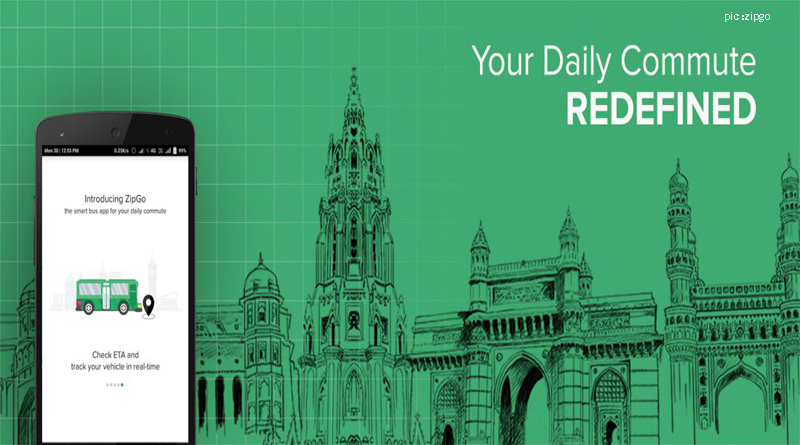
India is attracting global investment, especially in automotive startups – global automobile manufacturers have invested around $491 million in 2018 in Indian automobile industry start-ups, led by Essel Green Mobility’s investment of $300 million into Bengaluru-based on-demand AC bus service provider Zipgo, according to market intelligence firm Venture Intelligence.

essel

There were 13 investments during the year. In 2018, Taiwanese two-wheeler manufacturer Kwang Yang Motor, known as Kymco, invested $65 million in Gurugram-based electric two-wheeler maker Twenty Two Motors, while auto major Mahindra and Mahindra invested $40 million in self-drive car company Zoomcar.

Toyota Tsusho Corporation, the trading arm of Toyota Group, invested around $30 million in Droom Technology, the operator of India’s largest online automobile marketplace by co-leading Series D fundraising of the company. The firms also concluded a pact on the overseas expansion of the used car and motorcycle marketplace business.

essel2

5 essential tips for starting out in India

  1. Prepare for Culture Shock

For most of us, our first one or two trips to India is a culture shock. Chaos, arguments, the challenge of crossing the road, cattle in cities, people everywhere, sights and smells you have never experienced, the sounds of the Hindu temple or the Muslim call to prayer, clothing, facial decorations – most of these arise from an ancient tradition which you will grow to love. But, take your time.  This culture shock is more than superficial – prepare for your inner being and values to be challenged by a different way of life and way of thinking about life. With an open heart and open mind, you will learn fast. But if you make early judgements, you will probably never get to know India.

India is also a land of non-conformity where great value is placed on difference and heritage.  An Indian might continue to wear the clothing of their place of origin, even though they are living and working successfully in a major city. Unlike the west, your Indian host might want to know about your belief in God, your approach to diet or your family values.

  1. Stop Stereotyping

India will not work for you if you bring along your prejudices and stereotyping. Yes, you will see extremes of wealth or poverty – but balance this with the massive achievement of the last 20 years or so when millions have been lifted out of poverty. When meeting with your Indian hosts, it is insensitive to talk about the massive slum you drove past to get to the meeting. Yes, you will see men holding hands and women holding hands, but this does not necessarily mean they are gay – hand holding among the same sex is a simple sign of friendship. Yes, someone is bound to say “yes” when they cannot actually do what they said “yes” to – this is not being deceptive it is just a culture when saying “no” is almost forbidden. Going with an open mind is a key step to success. 

  1. Be flexible about your daily schedule

India is not a 9-5 place, it is more a 24/7 place. Meetings can happen anywhere and anytime, on any day of the week. The line between working life and family life is very thin and the two often merge. We used to say the Indian business day started late and finishes very late – but now most actually start early. Breakfast and dinner meetings are a regular part of getting to know you and prepare for these to go on a bit – breakfast can roll on to 10am and dinner might not even start until 9pm.

On top of the 24/7 approach, Indians will change your appointment at very short notice – sometimes as little as 15 minutes. You just have to expect the unexpected. For example, your one-hour meeting might go for two, and then the person you are meeting with decides to introduce you to the CEO – don’t rush off, you have made a good beginning!

All of this means if you are not a patient person, India might not be for you. Being flexible and adaptable are actually signs your Indian counterpart will be looking for – once they know you are easy to work with, things can progress.

  1. Be Diplomatic and more Formal

Indian society is collective and hierarchical, so it runs with a real focus on formality and politeness in every situation. Formality should last a long time in your relationship, and my guess is only after meeting three or four times should you be informal and relaxed in your manner. This formality can apply to clothing – your host might wear relaxed and comfortable hot weather clothing but you are probably best to be more formal. Addressing someone by their first name is just no-go territory and terms like Sir and Madam are often used – in parts of Indian culture addressing a person by their name is less polite than using these terms.

Indians are diplomatic and therefore are indirect in their approach to communication – maintaining face and relationships is the key so the best answer is given for those purposes rather than addressing the facts at hand. Any bad news will be approached in a very circuitous way, so you might not even realise you have received bad news.

Indians genuinely struggle to say “no”, so “yes” is their default answer. You will need to learn the art of asking open questions where a yes or no cannot be used. I have been offered very specific but totally wrong directions in India – again, the focus is on satisfying the relationship rather than finding the facts.

  1. Be Personal and Drink Tea

Indians are very much into people, they want to like you and hope you will share your personal life with them, so be prepared to talk to someone you have just met about your family, dreams and your diet. Sharing personal information is highly valued, so be prepared to open up.

Sharing a cup of tea is also important – symbolic even. This is a tea-loving country so get used to it. The tea at business and government meetings will be a milky and often sweet substance – just drink it. For Indians, this is all about building the relationship, being a kind host and getting to know you.


Bengaluru and New Delhi 3rd and 4th fastest growing office markets in world

Bengaluru (Bangalore) is the third fastest growing office market globally in terms of prime rental values for office space, mainly due to continued supply crunch, a recent survey found.

According to a global study by property consultant Knight Frank, the estimated growth in office rental values in Bengaluru by end of 2019 is expected to be 6.6 percent.

Bengaluru is the “Silicon Valley” of India, employing 35% of India’s 2.5 million IT professionals. But it is also big in food (Cafe Coffee Day), pharma and biotechnology, aerospace, cars, and is home to Ola Cabs (competitor to Uber).

The report evaluates 33 global cities and gives insight on office rental growth – it noted that New Delhi, in fourth position, is expected to see a rise of 6.5 percent in prime rental values in 2019. Delhi is more than a government centre – it is big in consumer goods manufacturing, IT, telecoms, banking, construction, retail and tourism.

connaughtplace

Delhi’s Connaught Place

Bengaluru is impacted by demand from the IT/ITeS and the start-up sectors, so the lack of quality space in key markets is pushing the rentals up.

BangaloreInfosys

Infosys headquarters in Bengaluru

Mumbai is however expected to see stable rentals in 2019 with an outlook of marginal rental growth due to anticipated supply for 2019 in the prime market.

Where would you locate your India headquarters? One challenge is that with so much regulation and the need to deal with government, wherever your HQ is based, your people will have to travel often to New Delhi.

But options exist outside of these three major cities and it is worth evaluating tier two cities.

Please share your thoughts and experiences…