Family businesses in India are the world’s most upbeat

Family businesses in India are on a growth trajectory, with 89 per cent of them expecting to grow in the next two years, according to a survey.

The global survey, ‘Family Business Survey 2019’ by PwC, was done among 2,953 family leaders across 53 countries, including 106 family business leaders, between April 20 and August 10, 2018.

The survey has revealed that 89 per cent of family businesses in India expect to grow in the next two years, with 44 per cent of them looking at growing aggressively and 45 per cent expecting steady growth.

“Regulatory changes are getting family businesses to bring in order and professionalise the business, and disruptive technology is pushing them to transform. These new market dynamics are cultivating a renewed sense of ambition in family businesses, making them resilient in the face of change,” PwC India Partner and Leader, Entrepreneurial and Private Business, Ganesh Raju K said.

In terms of expansion, a little more than half of the family businesses are open to internationalisation, while 40 per cent are looking at diversification, the survey said.

Nearly half of the family businesses in India are open to mergers and acquisitions both within India and outside thus reinforcing the belief that inorganic growth will facilitate synergies and achieve incremental revenue, it said.

A lot of Indian family business owners are looking at private equity or venture capital funding or are looking at listing their business on stock exchanges.

Further, the survey said, more and more companies looking at professionalising their business functions are distinguishing between ownership and management as they feel partnering with the right talent might help family businesses to adapt to the changes.

About 73 per cent of Indian family businesses have the next generation working in the business and 60 per cent plan to pass on the management or ownership to the next generation.

It also found that 92 per cent of family businesses in India allow family members to work in the business. When it comes to spouses or partners, three-fourth of family businesses allow them to own shares and two-third allow them to work in the business.

BUT – there is some evidence the next generation of young Indians will want to branch out and create their own startups rather than the traditional path of joining the family firm.YoungIndians 2

The next steps will be critically important for Adani in Australia

Now that the Adani mine in Queensland has passed what seems to be the final hurdle, while it will still be a focus of protests it is now important for Adani Group to create and build a long term image and relevance in Australia. Adani Group is widely misunderstood here.

Few if any Australians are aware of the diversified role of Adani in areas such as solar power (below).

adanisolar

There have been mistakes. While “overstating” projects might be good communication in many countries, it is a disaster in Australia which is the home of the “tall poppy syndrome” (want to chop you down) and cynicism. In Australia it is best to under-estimate a project and then deliver beyond expectations.

This initial approach hurt the project and much of the bravado might well have been the Queensland Government – but dealing effectively with local politics is another important task for the group.

Here are some challenges, opportunities and ideas for the future brand of Adani in Australia:

  1. Build up the media, political and community profiles of your local Australia team
  2. Create some leadership profile opportunities for Mr Adani
  3. Clarifying the Adani approach of “vertical integration” which is not well understood in Australia
  4. Accept that protests and negative media will continue but strive to at least get your proper share of media space
  5. Carefully select the media you will deal with – and provide media tours of Adani in India – with full transparency
  6. Support and become involved in coordinated media relations programs with Indian High Commission in Canberra
  7. Have Mr Adani seen as a “promoter of Australia” by leading an annual group of Indian business leaders to visit and explore opportunities in Australia
  8. Bring some scientific R&D work to Australia – for example with RMIT University as a collaborator – this has the advantage of giving Adani relevance outside of Queensland
  9. Create an alliance with Indian foundations which are high profile here – for example ASHA Foundation educates slum dwellers and is well known for having a slum young person graduate from Melbourne University. Provide scholarships for more to come here
  10. Create or support a meeting of leading Australian and Indian resources and environmental scientists in some annual dialogue
  11. Have a regular presence in Canberra
  12. Develop some “owned media” content that is highly professional, well written and not propaganda
  13. Facilitate Australian business and political missions to India, leveraging close contacts

Australia’s Cotton On enters India market

Cotton On, Australia’s largest fashion retailer, has made its entry into the Indian market through online shopping platform Myntra.

This is a smart move – low cost, quick results and great active market researh.

The brand plans to compete with the likes of H&M and Forever 21 in India, by opening its flagship store — either in Delhi or Mumbai — in the third or fourth quarter of 2020.

cotton3

AVS Global Network, a retailer of global fashion brands that focuses on retail through digital platforms, is responsible for launching Cotton On in the country.

AVS Global Network has managed to secure an exclusive contract with online retail platforms Flipkart, Myntra and Jabong to sell Cotton On products in India for the next year and a half.

Cotton On Group was established in 1991 and is present in 19 countries including New Zealand, South Africa and Singapore, with about 1,500 stores across the globe.

The Australian giant has eight brands in its kitty, namely — Cotton On, Cotton Kids, Cotton on Body, Factorie, Ruby, Typo, Supre and Lost. Each one of them caters to a different market segment.

Cotton On is testing the Indian waters by selling its products online before investing in stores.

I like this strategy for India, China and other South-East Asian countries – they are increasingly buying apparel online, compared to other Western markets.

Perhaps online is your starting point for India too?

Modi 2.0 – What will Modi do in 7 major policy areas?

Health

Telemedicine and diagnostic laboratories

More medical colleges

National immunisation programs

Modernisation

50 cities to have metros

Toilets for all Indians

State road network expansion

Inclusion

Banking access for all

Pension for small shop keepers

Poverty reduced to single digit

Economy

Grow to $5 trillion by 2025 and $10 trillion by 2032

Infrastructure spend

Credit scheme for MSME’s

Governance

Simultaneous elections

Time-bound delivery of public services

Upgrade governance standards

Education

Indian institutions to rate in top 500 in world

Medical and specialist doctors

Foreign Policy

Increase diaspora interaction

Multilateral cooperation on terrorism and corruption

Increase diplomatic corp

PLUS since this is PM Modi, expect the unexpected in this new 5 year term as Indian Prime Minister.

Be inspired! Some great quotes from Australian-Indian business leader Vivek Chaand Sehgal

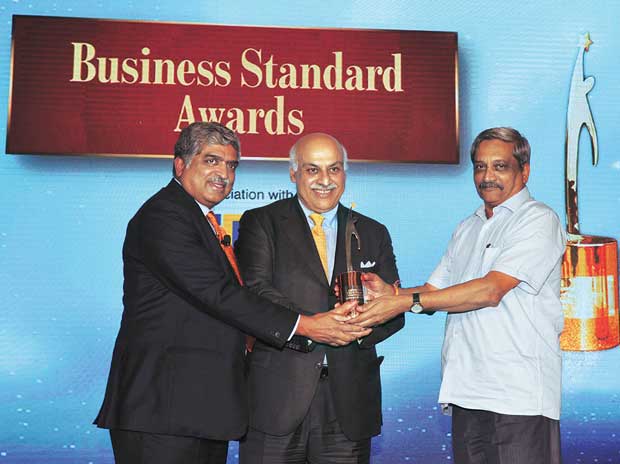
I recently saw some inspirational quotes from Australian-Indian business leader Vivek Chaand Sehgal, Chairman of Samvardhana Motherson Group (SMG).

“In Sanskrit we say that what doesn’t grow is dead.”

“A river, without other rivers flowing into it, will never reach the sea.”

VivekCEOofyearbusstandard

“In Hinduism we believe in four stages of life … the third is where you hand over what you have done, before going to the mountains, so I’m probably just about there.”

“There’s a saying in Sanskrit – ‘the world is a family’.”

“Only the most brainless businessman arbitrages labour or walks away when he doesn’t have to. He ignores the genius of a whole people, and our university partners have shown us that out-of-the-box thinking is still everywhere in Australia.”

Be inspired!

Just watch India’s TCS and Accenture dominate the future world of IT

Tata Consultancy Services Ltd (TCS) is set to surpass DXC Technology Co. to become the world’s third-largest software services provider in fiscal 2018-19 – behind IBM and Accenture.

TCS grew 9.6%, or added $1.82 billion in new business, to end with $20.91 billion in revenue in the year ended 31 March.

TCS’s strong performance over the two years has seen a change of guard at the top. In 2017, TCS entrusted Rajesh Gopinathan, who was then chief financial officer, to take over as chief executive and succeed N. Chandrasekaran, who was named the chairman of Tata Sons Ltd. Still, the company managed to retain all its senior executives and improved its growth and profitability, with the consensus view that this was one of the smoothest management transitions at an Indian corporate entity.

Experts predict the fight for world dominance will be between TCS and Accenture.

But when it comes to profitability, TCS is already way in front – TCS ended last year with a 25.6% operating margin, while Accenture and DXC had 14.8% and 14% profitability, respectively.

New era for India-Australia as Ms Petula Thomas becomes Director of Indo-Australia Chamber of Commerce

Exciting news for the India-Australia relationship – Ms Petula Thomas has been appointed the new Director of the Indo-Australian Chamber of Commerce.

Petula worked with the British Deputy High Commission (BDHC), Australian Trade Commission (Austrade) and British Airways in Chennai over the past 15 years and brings a wealth of experience in strategic leadership, international relations, marketing and business development.

Petula is a passionate innovator and supporter of Women in Leadership, so I feel she will make a big positive difference in this role.

PetulaThomas

She is also a strong communicator.

We need strong and effective communication to enhance the India-Australia role and to make it easier for business of both countries to get together.

I hope the IACC can pioneer more exchange of people, more two-way missions, great education, more collaboration, improved cross-cultural understanding and positive steps to ensure that business in both countries know best what works in each country.

By the way – Petula has an amazing track record, winning four global and regional performance awards from the Foreign & Commonwealth Office in London, when she headed Consular Operations for South India, leading on Customer Engagement for the MENASA region (Middle East North Africa and South Asia) and Communications/Digital strategy for India.

Petula has worked with Austrade, Australian Government, where she received commendation from the Deputy CEO Austrade for successfully delivering on multi-city Industry events in India & Australia. During her career with British Airways Plc. she received a Regional CASAMEA award (Central Asia South Asia Middle East & Africa) for Revenue Development/Sales from British Airways Plc.

Petula has a First class Masters Degree in Science and recent qualifications in Project Management and Customer Relationship Management (including Sales, Marketing and E-commerce).

We wish her every success and happiness in the important new role.

6 ways young Indians are taking a different approach to employment

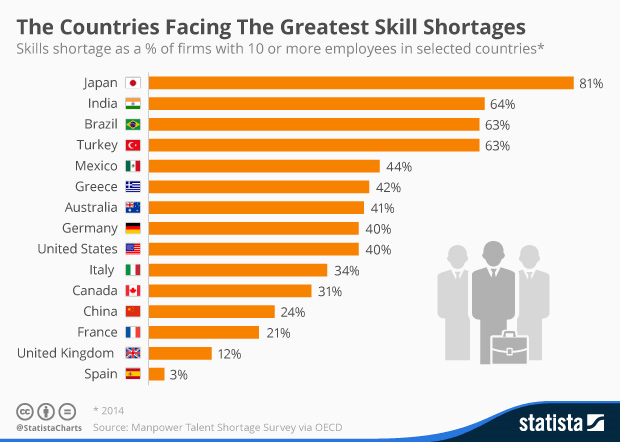
As the fastest growing economy today, India is home to a fifth of the world’s youth. Half of its population of 1.3 billion is below the age of 25, and a quarter is below the age of 14.

The World Economic Forum and the Observer Research Foundation recently collaboratively conducted a survey of more than 5,000 youth in India.

  1. Indian youth are independent, optimistic and open to a changing labour market

The influence of family and peers on the career and educational choices of India’s youth is in decline. Young people are increasingly seeking productive employment opportunities and career paths that reflect their individual aspirations. Moreover, a third of the respondents report being interested in entrepreneurship, and 63% report being highly or moderately interested in supplementing their income with gig work.

  1. Indian youth need more guidance and career counselling

Many youth report facing multiple barriers to finding desirable and suitable job opportunities. Factors like information asymmetries on jobs and skills, and lack of guidance for setting realistic career goals and making professional choices, are holding back young Indians. 51% of respondents report that a lack of information about available job opportunities that match their skill sets is a significant barrier. Around 30% report a lack of access to any kind of counselling or mentoring opportunities. 44% of respondents view this as the most important factor in the demand-supply mismatch.

  1. Young Indians are interested in pursuing higher education and skills development

84% of respondents consider a post-graduate degree as a requirement for their ideal job, while 97% aspire to a degree in higher education. They are also keen on other forms of ongoing education, with 76% of youth reporting that they are very interested in participating in a skills development programme. Increased employment opportunities and higher wages are the main motivators for this goal.

  1. The private sector must do more to bridge the skills gap

The private sector needs to play a more active role in enhancing the capabilities and skills of India’s youth. India is faced with a paradox: there is significant youth unemployment, and yet the private sector bemoans a lack of adequately skilled and market-ready workers. Notwithstanding the government’s role in providing basic education and training, there is a significant need for greater private sector involvement. This will ensure that training initiatives are demand-driven and impart skills that match industry requirements.

  1. India’s socio-cultural norms add further complexity

34% of the surveyed youth report that discriminatory and personal biases related to their marital status, gender, age or family background are a major barrier when looking for a job. 82% of female respondents said their ideal employment would be full-time, disproving the stereotype that women prefer part-time jobs. Similarly, despite the persistent view that household work and unpaid work are suitable and desirable for women, only 1% of surveyed female youth report this as being a desirable option for them.

  1. Social Media and the internet can play a bigger role in effective job-hunting

81% of survey respondents rely on media and internet sources for obtaining information about employment opportunities. The prevalence of social media and internet use among India’s youth presents an opportunity to expand their awareness about education pathways, employment opportunities, skill needs, and available skill development programmes.


Global Purchasing Power is moving to Asia

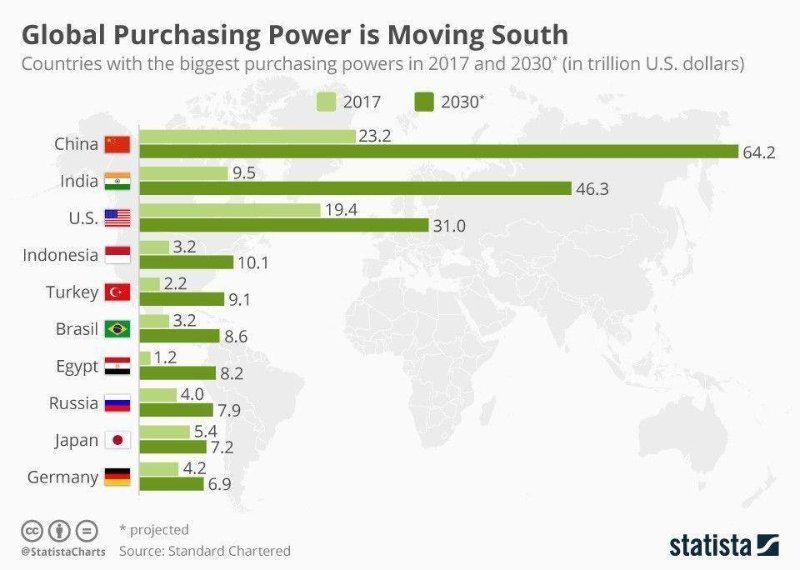
The biggest nation on Earth, China, is expected to keep its top spot as the country with the largest purchasing power on Earth and is on track to almost triple its purchasing power by 2030, according to an analysis by the British Bank, Standard Chartered.

India will almost quadruple its purchasing power, moving to rank 2.

China will double the USA while India will beat USA by approx 50%.

asia map

In the case of Japan, the country is expected to lose 5 ranks and emerge as the country with the 9th highest purchasing power worldwide.

Developing economies like Indonesia, Turkey, Brazil and Egypt are set to move into ranks four to seven respectively, toppling the reign of countries like Japan and Germany, which are still growing their purchasing power but at a much slower rate. The U.S. is expected to only drop one rank to position 3 but is grappling with slower growth.

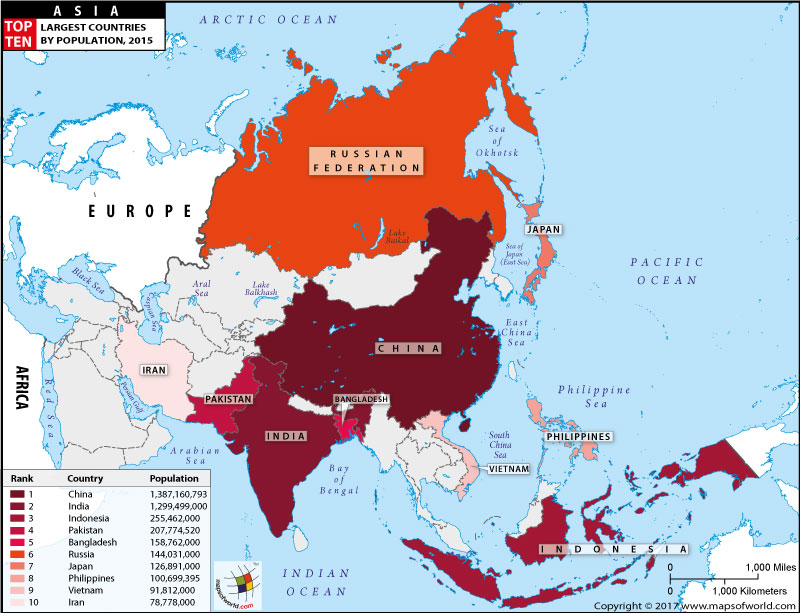
In summary – an amazing outcome for Asia – especially China, India and Indonesia.

asia map 2

How is your Asia engagement strategy going? Time to begin, change or reinvigorate? Get good advice so you avoid the mistakes of many before you.

Megacities right on Australia’s doorstep – opportunities in Asia-Pacific

In 1900 only 15% of the globe’s population resided in cities. By 2008 over half of the world’s population lived in cities. The trend continues.

Megacities have 10 million or more people and the future growth is in Asia Pacific.

In 2017, Asia Pacific accounted for the largest number of megacities, with 19 of the 33 (58%). China and India are the regional and global leaders, with six and four megacities each in 2017, respectively. For India these are Mumbai, Delhi, Bangalore and Kolkata. Chennai will join them within a decade.

mumbaitrain

Pictured – Mumbai, one of India’s four Megacities

Jakarta, capital of Indonesia, (picture below) will replace Tokyo as the globe’s biggest city – 35.6 million by 2030.

jakarta2

Ageing is expected to have an impact on many key megacities in East Asia over 2017–2030. Growth in the share of over 65-year-olds will be particularly apparent in Seoul, and Chinese megacities such as Beijing and Shanghai.

The twin opportunities for Australia – become involved in the move towards “smart cities” and provide services for the ageing populations. It’s right on our doorstep.