New airport for Navi Mumbai on the way

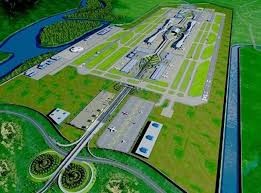
India’s infrastructure major, L&T (Larsen and Toubro), has bagged the contract for construction of the Navi Mumbai International Airport.

The company did not provide value of the contracts but said the orders fall under “major” category which ranges between US$ 715.40 million and US$ 1 billion.

navi3

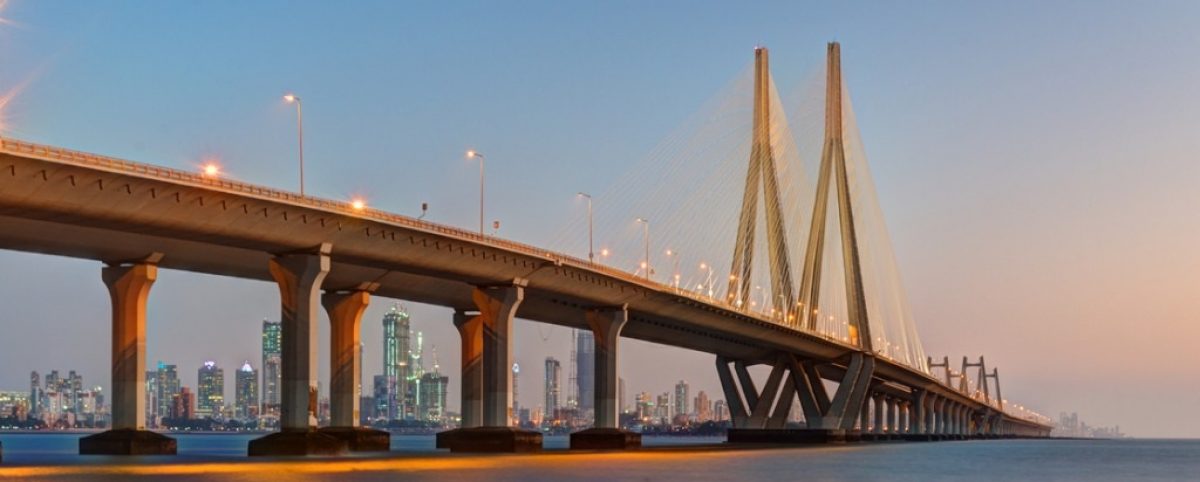
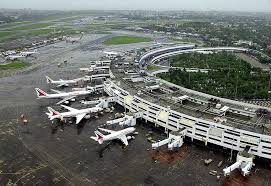
Navi Mumbai (shown in these pictures) is a part of Greater Mumbai and is a planned satellite city.

This second international airport for bustling Mumbai is no small venture – it is being developed to initially handle a capacity of 10 million passengers per annum. The project will subsequently be enhanced to handle 20 MPA.

navi7

Regular visitors to India will notice constant upgrades in infrastructure – infrequent visitors will be amazed at the global quality of many Indian airports.

navi5


The changing mindset of India

The mindset of India has split into two camps – one, the traditional, opposes spending and innovation – the other, entrepreneurial, chases innovation and adventure. It can be tough to navigate.

I was talking to an Indian colleague the other day about collaboration around Hydroponics – growing vegetables and some fruits in a liquid solution combined with various forms of protection such as glasshouses.

This is ideal for India – does not need good land, uses less water, produces the same quality 365 days per year and so on. Plus it grows crops that India’s growing urban populations demand – fresh capsicums, lettuce, broccoli, cucumber and strawberries.

But the early India response is an insight into the competing mindsets.

From one quarter of traditional banking, no thanks, it would cost money to install. Forget the benefits. Forget the competitive advantage. If it costs money, NO.

delhi2

From another side of the India mindset comes an enthusiastic response – an entrepreneurial and CSR view. This can make money plus help poor rural farmers and poor rural women. So, YES.

As an optimist, I am guessing the YES side will win on this one.

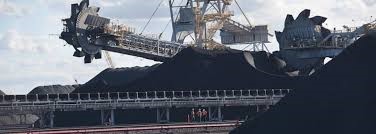
The Australian Government is probably facing this varying mindset as it seeks to heavily promote Australian coal exports to India.
coal2

Yes, our coal can provide India with uninterrupted power, increasing efficiency and quality of life (and add to the already overwhelming pollution).

No, it would cost money and we put up with interrupted supply anyway. And, No, because we do not have the distribution network so alternatives such as solar are attractive for rural villages (even if interrupted, “it’s better than nothing”).

I am guessing that the NO side might win on the coal issue. But let’s wait and see.

Why is the west being so jittery about the rise of Asia?

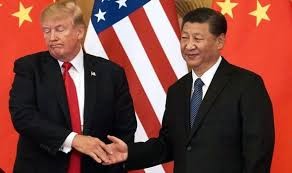
Trade war on China. Military action here and there.

The west is jittery. Yet all we have is the return to the normal state of affairs – until exactly 200 years ago China and India were major global economies. Now they are again.

So, why is the west so jittery about the rise of Asia?

First, the west “won” the cold war against Russia without firing a single shot. Great victory – but the pride of that has become hubris and shows in a belief that only western liberal democratic countries can succeed. And here comes China. Not western, not liberal and not democratic. Jittery.

russia2

Second, 9/11 was a shocking event that dominated the mind of the west then – and now.

Wile we focused on 9/11, two things happened – rising China joined the World Trade Organisation and the lowest earners in the USA were hit by a 50% decline in income.

Hence – Trump. And hence, lots of jittery decisions being made throughout the west.

Can the west get back to rational, calm and innovative leadership? I hope so.

Thanks to Kishore Mahbubani for inspiring some of the above.


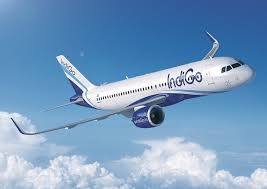
IndiGo is modern India – starting in 2006 and now the biggest airline

IndiGo airline is the story of modern India.

Now India’s largest airline, IndiGo expects to see a growth at 30 per cent a year over the next few years.

It is the largest airline in India by passengers carried and fleet size, with a 48.1% domestic market share as of June 2019.

Yet the company started flying in 2006.

Indian airport

IndiGo commenced operations on 4 August 2006 with a service from New Delhi to Imphal via Guwahati.

According to Dutta, chief executive of the airline, “We expect that half of that growth will go international, half will go domestic.” He is positive about the international operations of the airline.

The airline presently has around 238 aircraft in its fleet comprising of ATRs and narrow body aircraft.  The airline is looking at wide body aircraft.

Modern India – things change fast.

indigologo

Ho Hum! “Trade war” not worrying Indian companies active in China

Seems Indian companies active in China think that the USA-China trade war is all a bit “ho hum” – or maybe an opportunity?

tradewar3

Indian organisations working in China don’t expect any critical effect of the escalating trade war among Beijing and Washington on their business, a new survey conducted by the Confederation of Indian Industry (CII) has stated, including that most of the companies intend to put more in Beijing in 2019.

The survey of Indian organisations working in China indicates cautious optimism and certainty when contrasted with the past survey a year ago. “Most organisations don’t see a significant effect of the present trade situation between the US and China on their business,” said Mr Chandrajit Banerjee, Director General, CII.

In excess of 120 Indian organisations work in China separated from a sizeable number of merchants who have workplaces here; 57 of the organisations reacted to the CII poll.

As per the survey, two-fifths are considering inclining up their investment more than 2018. More IT and BPO organisations intend to make extra investment in 2019 contrasted with 2018.

My “top 10” of Indian companies active in China:

Adani Global; Essar; Jindal Steel & Power; Reliance ADAG; TCS; Tata Sons; Union Bank of India; Allahabad Bank; Bank of Baroda; Bank of India.

tcs

Also in China are Zee TV; Jet Airways; Apollo International; Ashok Leyland.

India and Australia to be key players in world’s largest free trade deal

Australia and India are poised to be key players in the world’s largest free trade deal – the Regional Comprehensive Economic Partnership which should be signed by mid 2020.

There are 15 countries in RCEP excluding the USA. Major players are China, Japan, Indonesia, India and Australia.

RCEP will have a market of over 3.5 billion people and almost 33% of the world’s GDP.

As we have noted before – Trumps’s trade war with China has given some urgency to RCEP negotiations and the 15 countries are set to complete the deal.

ModiMorrisonSmile2

Pictured the two Prime Ministers excited about RCEP – Australia’s PM Morrison (left) and India’s PM Modi

India’s richest man to target retail as a balance to energy investments

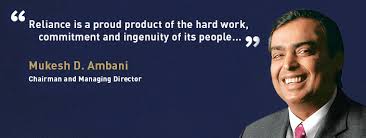
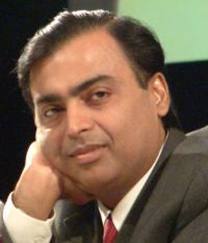
Mukesh Ambani, India’s richest man and boss of Reliance Industries Ltd (RIL), is launching an ambitious plan to boost retail revenue as a balance to his energy interests.

Mukesh Ambani

RIL will soon hire distributors to sell private-label brands owned by its retail unit through neighbourhood stores – across categories such as staples, food, home and personal care and general merchandise.

RIL sells these products through its retail stores under brand names such as Best Farms, Good Life, Masti Oye, Kaffe, Enzo, Mopz, Expelz and Home One.

Ambani expects the consumer businesses to contribute nearly as much to RIL’s overall earnings as the energy and refining businesses by 2025.

As part of this strategy, RIL is taking on online retailers such as Amazon and Flipkart in the e-commerce segment and the likes of Hindustan Unilever Ltd and ITC Ltd in the offline segment.

Watch this space!

Reliance Retail already operates neighbourhood stores, supermarkets, hypermarkets, wholesale, specialty and online stores.

Investing in India? The “investment grid” is a great source of information

Invest India runs a terrific website called the “India Investment Grid” and projects of all sizes and kinds are available there.

Terrific source of quality information.

https://indiainvestmentgrid.com/portal/

IIG-Logo-New-Black1

India Government to open state-owned firms to investors

The Modi Government plans to raise as much as US$ 47.4 billion in the next five years – by reducing the stakes in large state owned firms. It will include those in the oil, gas and power sectors.

I think this must be the country’s biggest privatisation move in more than two decades.

Finance Minister Ms Nirmala Sitharaman, in her maiden budget announced that there will be reduction in direct controlling of stakes in some state- run firms.

oil7

In its previous term, the government sold stakes in a host of companies to raise US$ 40.92 billion which was three times that of the previous government.

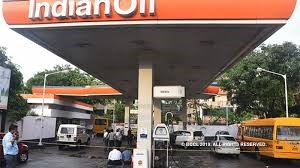
The government has identified several state-owned firms, including explorer Oil and Natural Gas Corp, oil refiner Indian Oil Corp, gas transmitter GAIL (India) Ltd, power producers NHPC Ltd and NTPC, miners NMDC Ltd and Coal India, and Bharat Heavy Electricals Ltd.

oil2

World GDP in one amazing chart

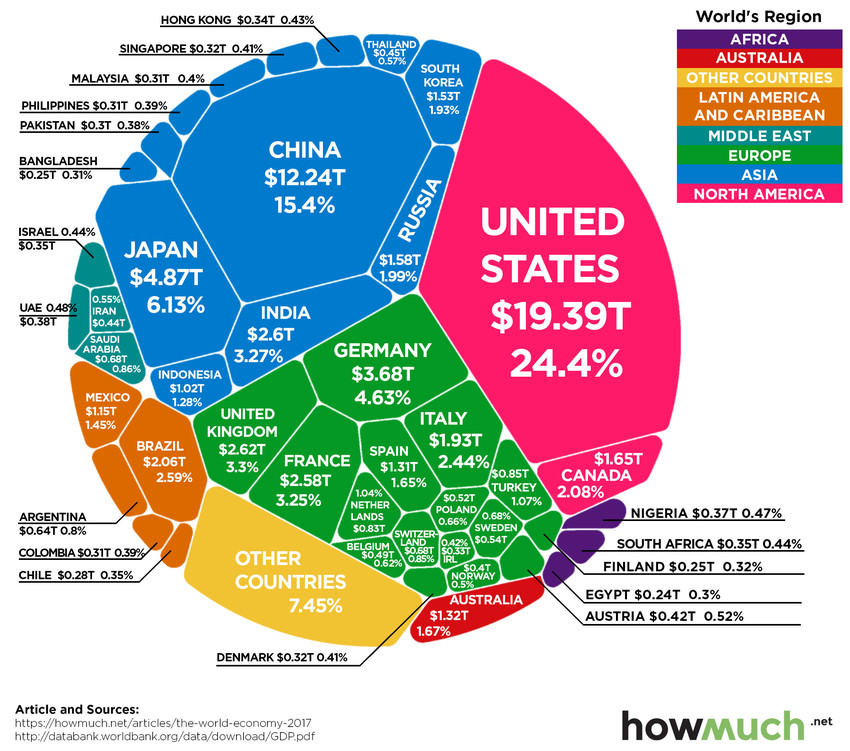
The latest estimate from the World Bank puts global GDP at roughly $80 trillion in nominal terms for 2017.

Today’s chart from HowMuch.net uses this data to show all major economies in a visualization called a Voronoi diagram – let’s dive into the stats to learn more.

The world’s top 10 economies

Here are the world’s top 10 economies, which together combine for a whopping two-thirds of global GDP.

Worldgdp

In nominal terms, the US still has the largest GDP at $19.4 trillion, making up 24.4% of the world economy.

While China’s economy is far behind in nominal terms at $12.2 trillion, you may recall that the Chinese economy has been the world’s largest when adjusted for purchasing power parity (PPP) since 2016.

The next two largest economies are Japan ($4.9 trillion) and Germany ($4.6 trillion) – and when added to the U.S. and China, the top four economies combined account for over 50% of the world economy.

Here are some of the most important recent movements:

India has now passed France in nominal terms with a $2.6 trillion economy, which is about 3.3% of the global total. In the most recent quarter, Indian GDP growth saw its highest growth rate in two years at about 8.2%.

Brazil, despite its very recent economic woes, surpassed Italy in GDP rankings to take the #8 spot overall.

Turkey has surpassed The Netherlands to become the world’s 17th largest economy, and Saudi Arabia has jumped past Switzerland to claim the 19th spot.