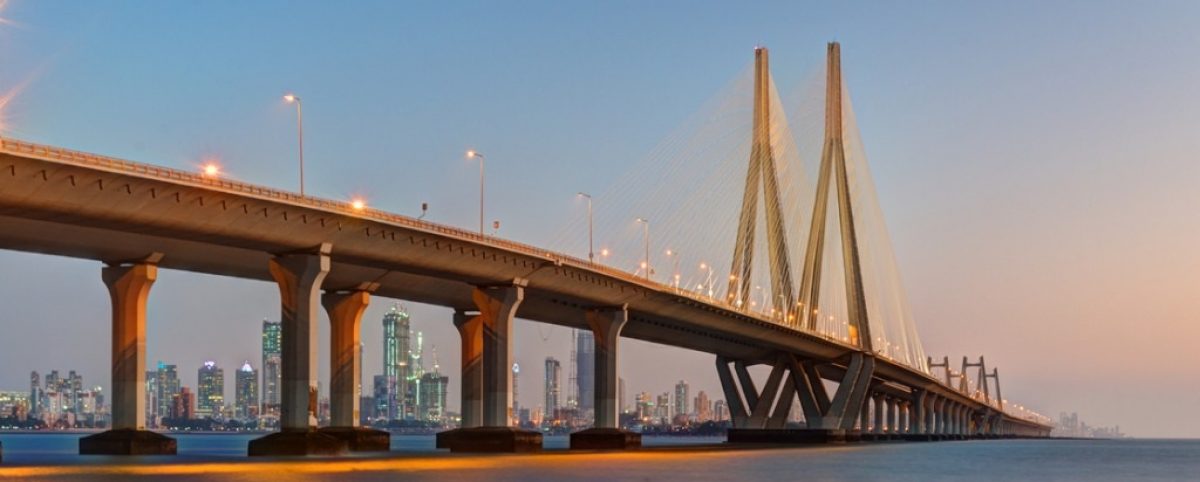
10 things that shape the mind of Australians

I am often asked by Indians what is it like to be an Aussie? Why are there so few people in Australia? It has made me reflect on what is it like to be an Australian, the country of my birth? Here are some thoughts:

An Island Home

Australia is the biggest island on earth. We often talk about the “tyranny of distance” as a factor in our history and personality – so far from anything, isolated. But isolation probably makes us feel vulnerable and as a result we have always sought big “friends” (Britain, and then USA).

Personal Space

road

It is a long way between anything in this land. You can drive for many hours without seeing another car or another person. Our feeling of space explains why Aussies visiting India or Europe soon long for the “peace and quiet” of home.

Stars

southerncross

Drive for an hour or two out of the light of our cities and the stars seem to go on forever and our beloved national symbol – the Southern Cross – is a comforting sign of being “home”. The Southern Cross is five stars – if joined by a line they would make the shape of the Christian cross. Seen from here, the Milky Way is ever present and so dense with stars it can look like a white haze. In Australia, the universe makes you feel small and vulnerable – one insight into the Australian world view.

A Fair Go and Tall Poppy Syndrome

fairgo

On this dry, isolated island home, we are all in this together. As a result, Aussies grow up believing in a fair go for all, in equality of opportunity, in support for those struggling to make it and in not standing out too much (the tall poppy syndrome). If you get too loud or too successful, we will cut you down (as in the flowers).

Direct and economical
cricketgo

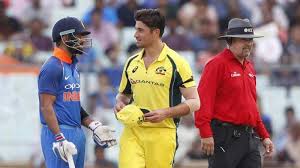
From our western origins as convicts or free settlers in a harsh environment, our speech became direct and to the point. It’s too hot and dry for idle chatter. Australian cricketers are direct and can be aggressively so – which in truth is much the same for all of us. We admire those who face our directness and “can take it”.

The original inhabitants

aboriginal

The British who settled here decided there was no-one here before they came – “Terra Nullius” is a Latin expression meaning “nobody’s land”, and is a nasty principle sometimes used in international law to describe territory that may be acquired by a state’s occupation of it. I don’t like it and nor do most Australians and it was not overturned until 1992. Thanks Britain! Meantime, a lot of harm was done to indigenous peoples. But many indigenous are successfully living as teachers, nurses, doctors, skilled workers. But it is not our style to celebrate this (see “Tall Poppy”).

Urban fringe

mcgmelb

Most Australians live in cities that cling on or close to the coast. These cities are stunningly good – well laid out, everything works, they have sophistication and a quality of life envied around the world. We have culture, sports facilities and urban gardens.

“Dormitory” suburbs

suburbs

When work is over, Aussies rush to their homes, close the door and do not go out again until work tomorrow. The quality of our homes plus the amount of technology to play with is among the best in the world.

Multicultural

multicultThe Chinese came here in the 19th century gold rushes. After World War Two, it was the Greeks and Italians who came to drive manufacturing in our cities. Then the Vietnamese, Serbians, Croats, Fiji Indians, Africans, South Africans, New Zealanders and Pacific islanders. Now – China and India vie for our leading source of migrants. We live side by side, mostly in harmony. We travel together, celebrate each other’s festivals, eat food from all countries…but in the back of our mind is the fragile land – and a kind of primal fear that too many migrants could spoil it.

Worldly

Yet the paradox of all the above is that Australians are not insular, we are outward looking, mostly well informed about the world and we travel a huge amount. But it is always comforting to “come home”.

There is such a thing as “Indian Time”

Different cultures can perceive time in different ways. In the west we see time as sequential, a straight line, whereas India sees time as synchronic, they see the past, present and future as interrelated.

Why do we need to know this? Knowledge of the culture of others is not about making judgments of others – rather, it helps us adapt to differences.

In a nutshell, this western approach to time explains why we are always rushing about, completing one meeting and rushing on to the next, while your Indian host seems relaxed, not in a rush, dealing with many other things while meeting with you and so on.

The Indian view of time partly explains the seeming “chaos” of Indian conferences – people constantly leaving or entering the room, private meetings can distract your attention and of course mobiles will ring and will be answered. All of this can be confusing for westerners, yet for the Indians, this is just a normal situation.

In a business meeting, the Indian you are talking to might also be signing letters, taking messages from staff, handling calls and seemingly not paying attention – but in fact knows exactly what you are saying despite what westerners would see as interruptions.

It is important for the visitor to adapt to this difference – especially on business visits. For example, filling your day with meetings could mean you miss the real opportunity, such as towards the end of a long meeting, your Indian host might want to introduce you to a superior or a friend in another company – this is a sign of your acceptance, the meeting has gone well, and they are honoring you. Without understanding this difference, you rush off and miss the opportunity.

Australia’s ‘An India Economic Strategy to 2035’ No. 5 – what are competitor countries doing to succeed in India?

The Australian trade and investment relationship with India is stagnating – even declining.

Part of finding the solution should be to look at what others are doing to succeed there – especially Japan, Singapore and Canada.

Much more competitor analysis would have added real value and real world outcomes to the “An India Economic Strategy to 2035” report.

For example, in the area of India’s plans for 100 Smart Cities, how have competitor countries won contracts?

canada2

Research among Japan, Singapore and Canada would show that when the projects are large, these countries have gone to India with a total and coordinated solution – the finance, the designs, construction, equipment, ongoing administration and maintenance – and more. These have been offers too good to refuse.

Can Australia build a more collaborative approach to India? Can we identify projects and take a total solution across? Doing this would be one step to creating better levels of trade and investment.

Current fragmented approaches are not working.

Finding the human story in the Mumbai hotel terrorist attacks – new film

One Less God

One Less God is the “inside the people inside the hotel” movie of the terrorist attack on the Taj Mahal Palace Hotel, Mumbai, where 166 died in November 2008.

This is equally tough to watch and impossible to stop watching, as it deftly moves from the outside world of news to the inside of the hotel and we lose any sense of time or media as we focus on both ends of the gun – the terrorists and their victims.

The film by first-time writer/director Lliam Worthington is unashamedly teaching us about the importance of humanity and compassion, and that people of all kinds can and should find a way to live together.

onelessgodKabir Singh as one of the two key terrorists delivers a human performance in an inhuman role – and we see his inner conflict as he tries to stop killing but cannot find another way. Only top direction and acting can make us feel almost that he, like his victims, is stuck and cannot escape.

It is one of over 60 films to screen at the Indian Film Festival of Melbourne, from 10-22 August 2018.

http://www.iffm.com.au/index.html

IFFM

The diversity of the cast in this Australian independent film industry movie underlines the central message of the film – humanity above race, religion or other belief.

It is hard to forget the voices of the terrorists as they go from room to room in the hotel, knocking on doors and in chillingly gentle tones saying: “Come out – we help you”.

onelessgod2

This film is gritty, dirty, bloody and smoky, and is also an important reminder of how much terrorism India has experienced, with much of it unknown in the west.


Australia’s ‘An India Economic Strategy to 2035’ No. 4 – more focus needed on cross-cultural understanding

It is true that the “An India Economic Strategy to 2035” did acknowledge the importance of culture, but I would have liked to see much more focus on it. There is nothing bigger keeping us apart.

Cultural misunderstanding is at the core of our lack of trade and diplomatic connectivity with India.

namaste

The importance of cross-cultural understanding is not about focusing on “difference” – it is about knowing what those differences are so we can then ADAPT our behavior, further, cross-cultural analysis is not claiming one view to be right and the other wrong.

Consider what the academics call “absolutism vs relativism” – we in the west are absolutist so we place all our energy on contracts, project plans and we never like surprises. India is a relativist culture, so it knows things can only be defined relatively, and whatever we decide upon will change as life inevitably changes. You can see how these two differing world views create problems for us.

The absolutist thinker puts rules above relationships – while the relativist thinker places relationship way above rules. Knowing this, we can adapt.

Also look at western “individualist” culture and compare with India”s “collectivist” culture. The west empowers individuals to make decisions, whereas in a collective culture decisions are made by the group and can take more time. Not such a problem when you understand it.Holi3

Plus consider that the west is called a “specific” culture while India is “diffuse”. What does this mean? The westerner is direct, open and always in a rush – cannot stay for dinner. The Indian prefers to be indirect, works around an issue rather than confronting it, takes time, wants you to stay for dinner and never says “no” even when that is the right answer, preferring the often misunderstood “I will try”.

With these differences and many more, if we train westerners to understand and ADAPT to the difference, we face much better prospects of success.

Cultural differences (without adapting) are coming between Australia and India – if we change this, we change the relationship for the better.

yoga4

Australia’s ‘An India Economic Strategy to 2035’ No. 3 – why creating forums can be a waste of time

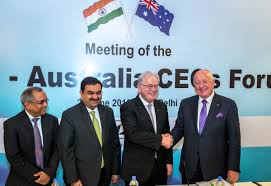
I am not a big fan of “CEO Forums” as an instrument of diplomacy or trade. Most of them are a formality, many attendees are pressured to be there and there is no natural energy. Good business arises when there is natural energy.

But the report “An India Economic Strategy to 2035” clearly loves them, and it called for a new CEO Forum and several other top level meetings to be created.

I could not see anywhere in the report where it actually asked if India wants these forums.

Nor could I see much in the track record of the Business Council of Australia (which the report nominates as the organiser of the forum) to suggest they have a deep interest in India at all.

What is the alternative?

Some of my best networking and business experiences in India have happened when I have attended a local Indian event – run by CII, FICCI, various universities and some city chambers of commerce.

In a collective culture such as India, going to a locally run event is your invitation into the collective, you can see first hand how it operates and find your own place. Indians love you turning up and appreciate the respect it shows. Networking becomes dynamic and business doors open to you.

Much better than a formal, imposed Australian CEO Forum idea.

This cultural point is central to my views – an Australian-created CEO Forum occurs “outside of the Indian collective” and although they will turn up, you are missing a key opportunity to be accepted into that collective – which of course is when you really do business.

Where a forum is a natural consequence of a growing trade relationship, then I am all for it – but creating one when there is no natural base for it could be a waste of time.

Let’s create a global Indian diaspora event in Australia

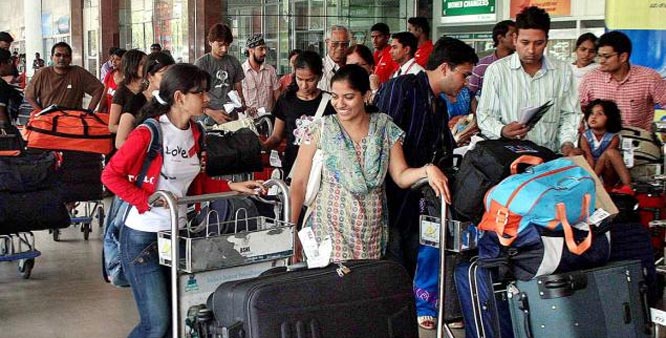
Modern Indians are becoming global tourists and Australia should strive to be in the top four destinations. There was a 10 per cent increase in visa applications from India in 2017 at 4.7 million compared to 4.3 million applications in 2016, according to data compiled by VFS Global.

The top five destinations for which visa applications were processed (in 2016 and 2017) were – the US, Malaysia, the UK, Canada and China, according to the data. The report said visa applications for Thailand witnessed the sharpest increase in 2017 compared to 2016.

Australia has a lot to attract Indian tourists – time to get the message into the Indian market.

Why not start by creating a global Indian diaspora event in Australia? Innovative thinking works, and the Indian diaspora here could be part of the active marketing program.


tourists2

Where Australia’s ‘An India Economic Strategy to 2035’ missed the point No. 1 – the threat to education is real

Australia finally has ‘An India Economic Strategy to 2035’ which is a good thing, with trade now declining to around A$14 billion.

A big part of that trade is education, with Indians big users of our universities and colleges.

The strategy mentions “visa employment conditions” as a potential threat – it should have been stronger. Changing visa conditions have had the intended consequence of employers now being uncertain and scared to offer employment to overseas graduates.

This is bad for Australia long term. Australian governments have one department discouraging Indian students (immigration) and the rest of the country hoping we can get more – time for the government to step in.

But even worse is that Indian graduates are not prepared for employment in Australia – and the report missed this key point. Their CV’s are not up to scratch, their English is difficult to understand, few have learnt presentation skills and their self descriptions often miss out their most attractive employment qualities. From our pilot study we know that these things can be quickly fixed, giving Indians a real chance of getting the jobs they want.

If this employment mismatch continues, we will have thousands of Indian graduates of Australian universities taking unskilled jobs – and word will get back to India – “don’t come to study in Australia because you will not be offered a job”. 

The report did call for our universities and businesses to work together to provide employment for students while they study – this is good. But the report made no mention of how unemployable these students are when sitting opposite corporate recruiters.

Missing this point was a big miss by the report. In addition to fixing the visa debacle, the government urgently needs to call the universities in, demanding a solution on employability skills.

Otherwise our trade will decline even further.

Australia finally has a strategy to build relations with India – but detail and time will tell

At last! Australia has ‘An India Economic Strategy to 2035’ — let’s hope this will have an impact and lead to change.

The strategy document noted that current trade with India is around $15 billion – it should have lamented this as a pathetic failure of previous initiatives. In contrast, current trade with China is $200 billion.

The report talks about several priority areas but only time will tell if the detail and approaches are right.

It misses on not placing enough emphasis on cross-cultural understanding. This is Australia’s biggest failing and underpins our poor outcomes with India – we just cannot talk to each other in a way we both understand.

The report also misses some strategic points – while it talks about declining US power in the region it could acknowledge that India has never understood our close alliance with the US. Nor does India have Australia’s (US based) global focus that we have to boost democracy etc. India is far more accepting of the world as it is. To know this is to have better diplomatic (and trade) relations.

It is also light on detail about how to benefit from the reach and connections of the 700,000 or so Indians who have migrated to Australia. But further focus and research will no doubt come from the report.

I really like that the report noted the Indian opportunities for Australia “would not fall into its lap and that the government would require a sharper national focus on India, an unambiguous commitment by Australian business and a deeper understanding by both government and business of the magnitude of what is unfolding in an Indian market place which will only get more crowded”.

More to come…

http://dfat.gov.au/geo/india/ies/index.html

Indian uni students coming to Melbourne for “western immersion” programs

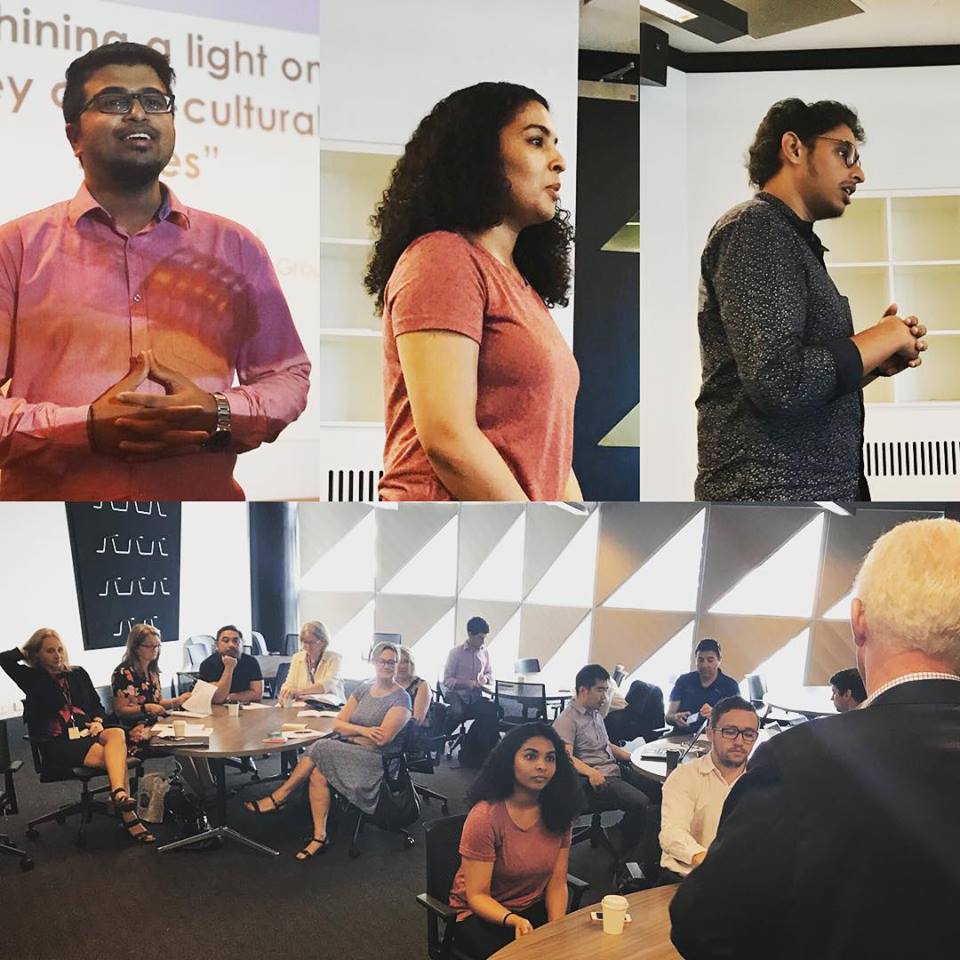
Swinburne University continues to host “Western Immersion” programs for Indian uni students – I am always pleased to speak about “Letting your light shine” to these groups – this one is from Tamil Nadu. With 50% of the India population under the age of 25, they face stiff competition for jobs – hope we helped give them an advantage with some of the secrets of PR and good communication. Especially focusing on teaching them how to do a “personal pitch”.

SwinJune2