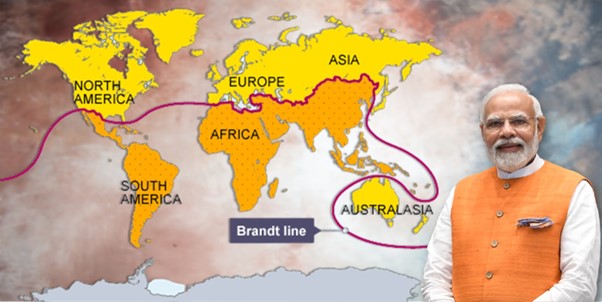
India now wants to lead development in the “Global South”

For several years we have speculated about India’s foreign policy agenda – fuelled by its multi-alignment strategy – where does India stand, ask many western commentators.

But just quietly India has gradually revealed its priority.

Of course, part of this is a response to China – a country which shares contested borders with India.

Many western leaders hoped to “bring India into the fold”, becoming an alliance partner of the USA and others in the west.

But India has made its own choices.

New Delhi plays an active role in multiple organisations – the QUAD (Japan, USA, Australia and India), the SCO (Shanghai Cooperation Organisation) and the BRICS (Brazil, Russia, India, China and South Africa) and remains in these in part to prevent China dominating.

But the “Global South” is now a top priority for Delhi.

India is building a unique bond between the developed and the developing world of the “Global South”. India alone can help the west engage and truly contribute to economic development in the region. For the USA, India can help Washington as it struggles to define and commit to the “Global South”.

It’s an exciting vision, put together by Prime Minister Modi and Foreign Minister Jaishankar.

This “Global South” vision of India does not stop its connections with the west – which remains an important source of technology and capital for India’s growth. It is a great balancing act by the Indian Government.

Since Australia shares its future with many of these “Global South” countries, where can Australia support India in this emerging vision?

Read a more detailed Lowy Institute analysis of India and “Global South” here:

https://www.lowyinstitute.org/the-interpreter/why-india-keeps-foot-both-camps#msdynttrid=FB8Fb-XPrVU8xav4ltaVW09Lm0iwxwP8NNavfmZ3oew

One minute of wisdom – lessons from India on how to relate to conflict

Can we take a more balanced approach to conflict?

In the week ahead, we will almost all face conflict – over politics, within families, at the shopping mall, in school, at work and more. People are on edge. We can protect ourselves from conflict with these simple lessons I picked up from various Indian sources.

Conflict within Yourself:

For most of us, conflict within ourselves is the most long-standing conflict in our life. There is another way. The moment you befriend yourself, everything changes.

Here’s one way to start – what can you forgive yourself for right now?

Conflict with Others:

A massive lesson from India is that relationships are central – they might even be everything. Looking back at the end of your life (if you can imagine) what will matter most is your relationships with the people you love. Do something simple to reinforce this feeling – make someone a cup of tea, reach out to someone you have neglected.

Conflict for The World:

It can get on top of us. Conflict everywhere – Ukraine war, climate change, election battles, communal violence – how can we cope? Pay some attention; you are part of the entire web of life. But try not to follow these conflicts minute by minute. Thinking constructively is a good alternative – for example, how is your lifestyle in conflict with the needs of our planet and the natural world?

In this week ahead, choose connection and relationships. It will lift the weight of conflict off your shoulders.

Trying to understand the mind of India? How to combine science and temples…

ISRO chief prays for success of Chandrayaan space moon mission at Chengalamma temple in Sullurpeta

Last week India celebrated landing on the moon, led by S Somanath, ISRO Chairman. Days before he was at a temple (pictured) praying for the success of the mission. How does his mind combine science and spirituality?

His words: “I am an explorer. I explore the Moon. I explore the inner space. So it’s a part of the journey of my life to explore both science and spirituality. I visit many temples and I read many scriptures. I try to find the meaning of our existence and our journey in this cosmos. It’s a part of the culture that we are all built to explore, find out the inner self as well as outer self. So for the outer, I do science, for the inner I come to temples…”

This quote from ISRO chairman was sent by my friend Vinay Sarawagi, Senior Vice President Digital, Times Group, and it describes Indian philosophy seamlessly. In many societies this would be seen contradictory.

As Vinay wrote: “Bharat teaches one to think multidimensionally, to appreciate the mystery and paradoxes of life.”

INTO INDIA would add that this is an intellectual challenge for many in the west, who tend to see things as one way and not the other. In foreign policy, it is why aligned countries struggle to understand India’s view of a multidimensional world – in which instead of alignment India pursues multi-alignment.

https://www.thehindu.com/news/national/andhra-pradesh/isro-chief-prays-for-success-of-chandrayaan-mission-at-chengalamma-temple-in-sullurpeta/article67076394.ece

Values like friendship and tolerance play a role in building cultural sensitivity and harmony

Australian Foreign Minister Penny Wong is a role model in cross-cultural adaptation

When Australian Foreign Ministers from Julie Bishop through to Penny Wong wear a headscarf or adapt in other ways to the culture they are visiting, they are an example to all of us of being a good guest, showing respect and acting with tolerance and friendship. Whether we travel as tourists, traders or diplomats, the old maxim of “when in Rome do as the Romans do” contains an underlying value of adapting to the local culture while staying true to our own.

We take our values with us – some of the values I would pack when going overseas would be the great Australian traditions of friendliness, flexibility, tolerance and a fair go.

The world is not “like us” – much of the world is religious rather than secular, where dress codes and traditions run deep. When you think about travel, part of the excitement comes from this difference and with an open mind we can explore difference in a way beneficial to both.

Organisations like Asialink, the Centre for Australia-India Relations and the Australia India Institute are helping prepare us to become “Asia ready” as we embark on this Asian century, and that readiness is going to involve doing things and wearing things which are not our normal experience. Again, this is adapting to others while being true to ourselves.

At business meetings in India there is frequently the lighting of the lamp, a Hindu tradition which westerners are generally invited to join. In Indian Hindu tradition, light is taken to symbolise knowledge, so it is an auspicious start to an exchange of views and ideas. Lighting of lamps is not something we do in Australia, but doing it when in countries where it matters is an act of tolerance and respect.

In Japan a greeting might include a respectful bow, while in India a welcome greeting might include placing the palms of the hands together in front of the chest while saying “Namaste” which literally means “I bow to you”. It is simply friendly and nice to reciprocate – even though our own way would be to just shake hands.

Throughout Asia, business meetings will often involve a large team of locals from the very senior to the junior – and while our egalitarianism makes us want to reach out and chat to juniors as well as seniors, the locals are at least confused and often offended by this action because in their culture all discussion is to the most senior person. Even the junior person engaged in conversation by the willing Aussie is generally flustered and embarrassed to receive this attention. Egalitarianism is a value that needs to be balanced by tolerance and adaptability – balanced, not “sold out”.

In Southeast Asia at many political and business functions the locals and guests will wear batik shirts – not to everyone’s taste, but adapting to this is not a betrayal of something sacred back home.

When a local business person generously offers to take me to their temple, I am often asked to wear the sari cloth skirt as a form of covering – and happily do so because this is what my host wants and I have never felt that I was selling out some Australian value.

In homes and buildings throughout Asia, guests might be asked to remove their shoes and it is simply respectful to do so.

Australia has embraced the indigenous “welcome to country” at national ceremonies and even sporting events, and I would like to see this performed at more international business meetings, trade missions and diplomatic gatherings.

Underlying this and other culturally sensitive activity is a value which would go a long way towards creating global harmony – the value of tolerance.

Good news you probably didn’t hear about – poverty reduction in India is the “most under-reported story of our time”

From our good friends at FUTURE CRUNCH who are determined to tell us stuff the media overlooks.

The decline of poverty in India is the most underreported story of our time.

Two weeks ago, the country’s biggest public policy think tank released a new report, and the numbers are mind-blowing. 135 million people were lifted out of multi-dimensional poverty between 2015-16 and 2019-2021, easily putting the world’s most populous nation (and fastest growing major economy) on course to achieve its SDG targets.

India and Australia? The best analysis you can read

Former Australian diplomat, John McCarthy AO, continues to be by far our best analyst and writer on relations with India.

John is a Vice Chancellor’s Fellow at the University of Melbourne, an Adviser to the Asialink Board and a former High Commissioner to India.

It is worth revisiting an Asialink Insight he wrote in May of this year.

The Insight is titled “The Strategic Illusion of India” and in two short paragraphs he makes the case for closer diplomatic ties with India:

“Over the past two decades Australia has rightly recognized the rise of India. Its population at 1.4 billion exceeds China’s. It is the world’s third biggest economy in purchasing power parity terms and it should soon be third in nominal terms.

“We now have four diplomatic offices on the ground in India. It is our biggest source of immigrants. It is our fourth biggest export destination. Education links are burgeoning. All to the good.”

But John McCarthy’s enthusiasm for India comes with warnings.

His first was “India does not share our world view.”

His second was: “It does not expect others to come to its aid and it will not join someone else’s war.”

So, he recommends we build the relationship with patience and realism.

Great analysis. Top advice. Read more…

https://asialink.unimelb.edu.au/insights/the-strategic-illusion-of-india

Melbourne Business Schools partners with India’s top business school and shows the way

Breakthrough deal in education relations of India and Australia.

The Melbourne Business School at the University of Melbourne has announced a partnership with India’s top business school – the Indian School of Business (ISB).

Now, this partnership will give MBA students a truly global perspective of emerging business trends.

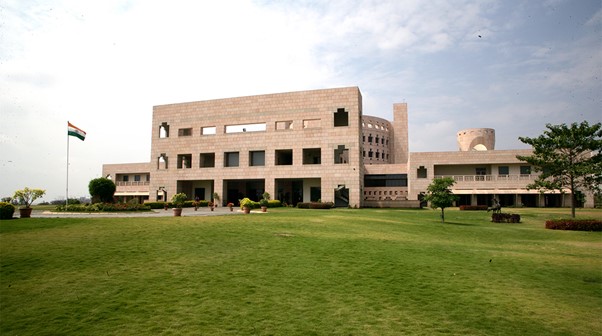
As part of the collaboration between the two schools, Executive MBA and Senior Executive MBA cohorts from Melbourne Business School will undertake immersion modules at ISB’s Hyderabad campus (pictured).

This is a brilliant deal and will contribute to the India-capability of Australian executives.

Read more:

https://mbs.edu/news/Indian-School-of-Business-MBS-partnership-2023

Old and new in India celebrated in stunning textiles exhibition at Melbourne Museum

Art in both traditional and contemporary form is alive and thriving in India, judging by a beautiful exhibition at the Melbourne Museum.

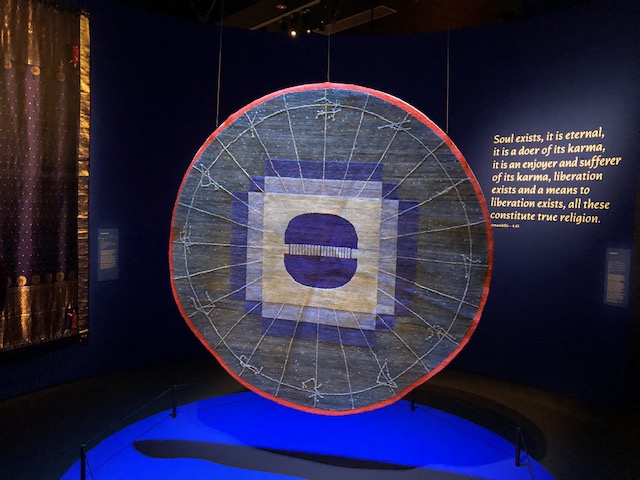
Sutr Santati curated by Lavina Baldota of the Abheraj Baldota Foundation is worth seeing for the quality and innovation of the objects, which is matched by the display which adds to the beauty.

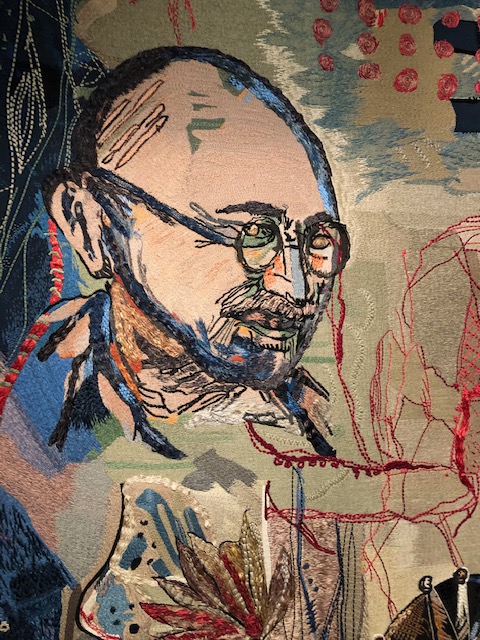
I was enthralled – but when I saw the great Mahatma Gandhi featured in one of the pieces, I just stopped and admired the way this exhibition pays homage to the history of free India and yet celebrates modern innovation.

It made me realise that it is only a little over 75 years when India had some of the finest FREEDOM FIGHTERS in the history of human struggle to be free.

Make sure you see this soon!

Celebrating 75 years of India’s independence, Sutr Santati showcases 75 hand-woven textiles created by contemporary Indian designers.

In May 2023, Melbourne Museum welcomes international exhibition Sutr Santati: Then. Now. Next. Stories of India woven in thread. Conceived and curated by Lavina Baldota of the Abheraj Baldota Foundation, the exhibition brings together diverse textile traditions of the country, conceived and created by some of its most prominent artisans, craftspeople and designers.

Sutr Santati means ‘continuity of thread’ in Hindi. As the exhibition title, it is a metaphor for ongoing dialogues in Indian culture and society, which shape its evolution, bridging the past with the future. The exhibition’s curatorial vision seeks to promote the ideals of organic and slow consumerism in reflecting India’s identity and the inherent collective, collaborative efforts which are required to push towards such goals.

The themes, techniques and materials of specially commissioned fabrics in the exhibition are viewed through the lens of innovation. In doing so, they reinforce the value of fabric – an important legacy of Indian independence – to define the country’s contemporary artistic landscape, and to push its creativity into the future.

Heartiest congratulations to Lynley Crosswell, CEO, Museums Victoria, and Rohini Kappadath, General Manager, Immigration Museum – you have given us a special opportunity to gain insights into India.

Vital connectivity for India depends on progress in the “north east states” region

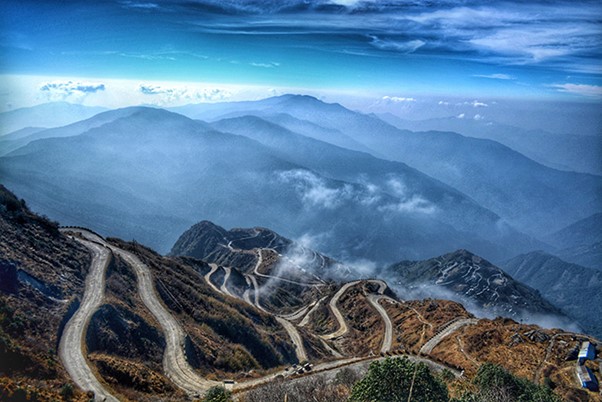
India’s “north east region” has long been neglected and is little known among western leaders – but it has a crucial future because of the role it can play in India’s strategic and commercial connectivity in the surrounding region.

The role of China in the Indo-Pacific increases the focus on this sensitive region.

India is now giving the NER priority – there are around 30 major road and highway links under construction, a complex process when border crossings are involved. There are also around 10 major railway construction projects including bridges and new lines.

This has been so well described by Sreeparna Banerjee and Ambar Kumar Ghosh, “India’s Northeast: Gateway to Connectivity with Eastern Neighbours,” ORF Occasional Paper No. 395, March 2023, Observer Research Foundation.

India’s northeast consists of eight states—Arunachal Pradesh, Assam, Manipur, Tripura, Sikkim, Mizoram, Meghalaya, and Nagaland. It shares 5,812 km of international boundaries with the neighbouring countries of Myanmar, China, Bangladesh, Nepal, and Bhutan. It is landlocked; seven of the eight states are linked to the rest of India only through the Siliguri Corridor in North Bengal—a narrow strip of land (22-km wide) that is also called the ‘Chicken’s Neck’. The corridor is flanked by Nepal in the north and Bangladesh in the south.

This region can serve as a pivotal connecting space between India and its neighbours to the east in South Asia, as well as to East and Southeast Asia and beyond, enhancing the country’s diplomatic, infrastructural, and commercial engagements.

India’s foreign policy priorities, reflected in its ‘Act East’ and ‘Neighbourhood First’ policies, also bring the northeast into focus as a connectivity gateway to the wider Indo-Pacific.

Japan, with its long-standing expertise in the infrastructure sector, continues to play a significant role in developing physical connectivity projects within and across the northeast.

Australia shares many of the strategic goals of India, and now through the QUAD (India, Australia, Japan and USA) the countries are closer together through their commitment to democracy, open and free cultures and more.

The focus on this region will continue – India is crucially positioned within South Asia and in the broader Bay of Bengal region. It needs to play a more vibrant role in the region, and to do so, must engage more strongly with its East and Southeast Asian neighbours.

Watch this space…

International students welcome in friendly Melbourne

Walking this week along Swanston Street past the Victoria Library and the feeling was like pre-covid. The international students are back in Melbourne.

It was the same up and around Melbourne University, then in Glenferrie Road near Swinburne and education locations across our city.

International students add so much to the life of Melbourne.

And it seems Melbourne works hard to ensure these visiting students have a good welcome into our city – as this article explains…

https://news.melbourne.vic.gov.au/five-reasons-why-melbourne-is-a-great-student-city/