Apple could be a case study in how not to do business in India

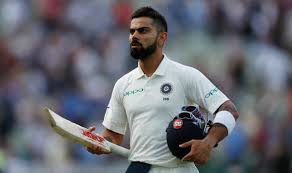
Apple is struggling with its iPhone in India and has not adapted to the Indian market, while Oppo (China), Samsung and Nokia have.  Noticed the Oppo logo on the Indian cricket team? Oppo from China is branding the Indian cricket team – smart positioning.

oppo

India is estimated to have 39 million new smartphone owners this year, according to eMarketer. More than 75% of the smartphones sold in the country cost less than $250 and 95% cost less than $500, analysts estimate. Most sales are less that $300 and come from local, unaffiliated shops in the countryside, where the majority of Indians live.

Among Apple’s current lineup, its lowest-priced phone in India is the iPhone 7, which typically costs around $550.

It is missing the target market on price, positioning and product – the features list is not right for India.

To succeed in India, you need product and marketing for India – that is the message of the Apple failure. Of course, the obstacles to the traditional Apple model of fully owned and branded stores are immense in India – so Apple needed to look for a new innovative model, but missed this boat.

The company hasn’t had the successes of fellow U.S. tech giants, who have found ways to claim some of India’s hundreds of millions of new consumers. Amazon.com Inc. has become a leading e-commerce player in the country. Alphabet Inc.’s Google and Facebook Inc. dominate online advertising. Netflix Inc. and Match Group Inc.’s Tinder are already among the biggest earning apps.

With 1.3 billion consumers, the country is the world’s biggest untapped tech market.

Just 24% of Indians own smartphones, and the number of users is growing faster than in any other country, according to research firm eMarketer.

The number of iPhones shipped in India has fallen 40% so far this year compared with 2017, and Apple’s market share there has dropped to about 1% from about 2%, research firm Canalys estimates. Some analysts call it a rout.

The list of market entry errors by Apple is impressive – wrong pricing in a price sensitive market, reluctance to change its traditional business model for selling the iPhone, rather than make a range of handsets, it has prioritized a limited number of coveted products, sold at high prices. The iPhone’s software features, like iMessage and AirDrop photo sharing, aren’t as big a draw for emerging-markets buyers, who often use Facebook and its WhatsApp messaging service to connect with friends and consume news and other content.

While competitors reacted to local consumer concerns—increasing battery life, for example, and offering less expensive models—Apple took an inflexible stand on its pricing and products.

The thing Apple is missing as it searches for market share in emerging markets is that if you can make it in India you can make it in the rest – Indonesia etc.

Meanwhile, competitors like China’s OnePlus, Xiaomi Corp. —sometimes called “the Apple of China”—and BBK Electronics Corp.’s Oppo and Vivo flooded India with smartphones, many of which cost less than $200. Some signed on Bollywood and cricket stars, among India’s biggest celebrities, to promote their products – and Oppo is on the cricket team shirts.

Unlike Apple, which typically spurns market research, competitors have conducted extensive on-the-ground research in India into local consumer habits, quickly incorporating functionality like special cameras for taking better selfies.

Now, that’s how you get into India – do your homework including market research, adapt to the market, make connections with existing sales and distribution channels, maximise what you can make there, utilise the local selling formats, adjust your product features and pricing and then link marketing plans with what works locally – cricket and Bollywood.

indiagate

To know culture deeply you need to ask the right questions – not just “how are we different?”

To do business we need to have some idea how people will behave. That is why operating globally and across borders requires a high level of cultural awareness.

But if all we do is gain a general idea of the culture and how they differ from us, we are likely to be unprepared.

We are amazed when the person we are dealing with does not fit the culture picture. The American we are trying to impress is in fact quiet and retiring, not brash and out there as we thought. Or the Indian we expected to be incredibly polite and reticent turns out to be brash and in your face.

Why do we get this wrong?

We have only asked one question instead of digging deeper. We have asked “What culture do they have and how does it differ from ours” – it is an important question but this is only the beginning of being prepared.

molinsky

What questions should we ask in addition to the big “culture difference” one? For this I turn to a global leader in understanding culture, Andy Molinsky,Professor of Organizational Behavior at the Brandeis International Business School. He’s the author of Global Dexterity and Reach. Here are his three questions:

Question 1: What do you know about the region? Just as it is useful to learn something about culture norms when diagnosing your situation, it is good to learn something about region norms. For example, if you were doing business in the United States and assumed that people from the Northeast would be quite similar to people from the South or from the Midwest, you might find yourself surprised. Similarly, you’d be misguided if you assumed that Southern and Northern Italy are identical or that people from rural and urban areas of China tend to act in similar ways.

For India, there are at least four major regional differences (north, south, east and west) but a country with 26 major languages has multiple regional differences.

Question 2: What do you know about the company or industry? Like countries and regions, companies and industries also have distinctive cultures. How you would interact with a boss at Google is quite different from how you would interact with a boss at Microsoft or Intel.

In India, the boss of an established company like Tata Sons is going to be very different from the CEO of the latest startup or the new telco.

Norms for behavior in the advertising industry are quite different from norms for behavior in the agricultural industry, and so on.

Question 3: What do you know about the people? Finally, ask yourself what you know, or what you might be able to find out, about the people you are interacting with. Are you communicating with a 60-year-old senior executive or a 20-something manager?

In India age differences matter enormously – there is a real generation chasm between the under 40’s and the over 40’s. People who are older are often more likely to reflect the norms of the overall society.

It would also be useful to know if the people you are interacting with are locals, born and raised in that particular setting and without extensive travel experience, or if they are cosmopolitans, with extensive travel background. Locals are much more likely to reflect the norms of the immediate region you are in, whereas cosmopolitans are likely to be open to a wider range of potential behaviors.

In many East Asian and Southeast Asian cultures, such as India, China, and Korea, relatively indirect forms of communication are used, especially from a subordinate to a superior — whereas superiors in these cultures are often quite direct with their subordinates.

Finding the answers to these questions before you cross cultures can be tricky, but it is possible. Books and articles will often give you some insight into these nuances, but one of the best ways to anticipate what you’ll encounter is by talking with expats: people similar to you who have studied, lived, or worked in the country in question.

Doing your homework before entering a new culture is one of the keys for success. But unless you ask the right questions, you might end up mistakenly overlooking the real differences that matter.

For India – keep digging, asking, researching – and persevere.

gateway3


Adapting to India’s combination of “direct and indirect” culture

Most cross-cultural trainers will tell you India is an “indirect” culture, meaning it does not say things bluntly, goes around the topic rather than directly to the heart of the matter.

This is one of those generalisations that is only partly right – and if you rely on it you will be in for surprises in India.

The reality is that India combines direct and indirect communication.

direct

At the point of meeting you, Indians can be very direct – “are you married, why is your husband/wife not here with you, what do you earn, can you find me a job, will you distribute my product”. For most westerners this is confronting, because our style of meeting and networking is very gradual.

But at the point of issues arising, this is where Indians can be very indirect.

If there is a problem with what you are wanting or what India promised for you, the communication becomes more obscure. India’s indirect communication can be hard to spot, even for India trade veterans. Some tell-tale signs are when the India side says “we will try to meet your deadline” – this generally is leading to the heart of the problem which is that they cannot deliver.

This indirect communication is not motivated to deceive or make your life difficult. in fact, it is based on the value India places on its relationship with you and a desire to keep that relation intact. This is why Indians rarely use the word “no” – the relationship is more important than the truth.

Study shows which countries are best at preparing children for work


An analysis of the latest PISA report (Programme for International Student Assessment), which assesses how 15-year-olds in OECD countries are performing in science, mathematics and reading, has revealed the countries in which children are best at “collaborative problem-solving”.

Childrenworkingtogether

Employers highlight the importance of so-called “soft skills”, a suite of attributes that include social abilities like networking, communication, negotiation, team-building and problem-solving. At the root of these skills is how well a child gets on with others.

Asian countries Singapore, Japan and South Korea top the chart, with Canada, Estonia and Finland not far behind. Australia is at eighth spot. Denmark, the United States and United Kingdom also make the top 10.

children2

Soft skills and hard yards

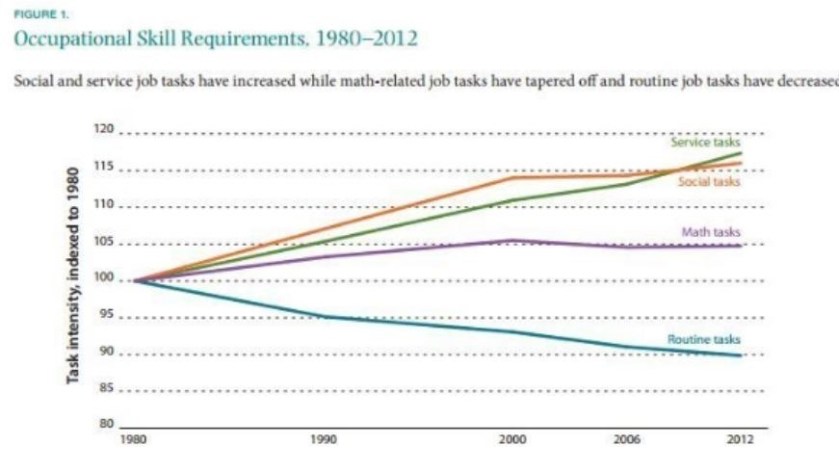
The World Economic Forum’s Future of Jobs report 2016 argued that by 2020: “Creativity will become one of the top three skills workers will need. With the avalanche of new products, new technologies and new ways of working, [employees] are going to have to become more creative in order to benefit from these changes.”

But, whatever qualifications, experience or technical abilities today’s job interviewees may possess, employers cannot necessarily count on them having the soft skills that are now required as soon as they walk through the door.

children

As an article on TrainingMag.com pointed out: “There’s a subtle irony in [the fact that] hard skills are relatively easy to learn, while soft skills are often hard to learn.”

It pointed out that “hard skills are specific, teachable abilities that include technical proficiencies and are easily defined and measurable. You usually obtain a degree or diploma when you have these skills, such as software programmer, mathematician, accountant, tool-and-die maker, forklift driver, etc.”

But it adds that soft skills are less tangible and harder to quantify. “There is no degree or diploma for soft skills. They’re mostly learned through life experience on the job, such as active listening, interpersonal skills, knowing how to recognize people, and demonstrating caring concern.”

Start ’em young

Such skills are likely to be best acquired at an early age and the PISA analysis shows that some education systems are taking steps in the right direction. Finland has already moved to a model where collaboration is part of the regular curriculum and France is eyeing similar moves as it shakes up its education system in an effort to boost economically deprived children.

However, companies will probably have to recognize that while schools and universities should teach core skills, the burden of providing much of the life-long skills learning employees are going to need will fall on them.

As Vishal Sikka, the former chief executive of Infosys, wrote in the Financial Times: “Curriculums should be modernized to encourage creative problem finding and solving, and learning through doing, with mandatory computer science learning as the bedrock for enabling digital literacy.

“Organizations also need to make life-long learning resources available for employees to enhance skills development. Indeed, they should be required to dedicate a percentage of their annual revenue to reskilling staff.”

Childrenworking2


Indian universities not preparing students for the workplace – study

Indian universities are losing ground to global competitors when it comes to preparing students for the modern workplace, according to a new “Global University Employability Ranking” study, produced by French HR consultancy Emerging.

Harvard University tops the list, followed by California Institute of Technology and Massachusetts Institute of Technology.

Amity20183

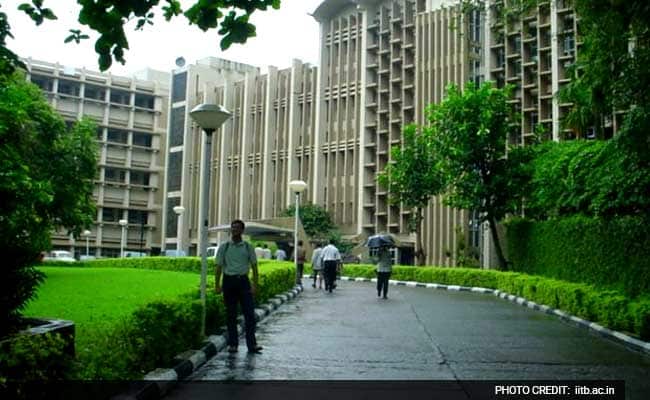
Leading in India are the Indian Institute of Science in Bangalore, Indian Institute of Technology in Delhi and IIT Bombay.

India still only has three universities in the top 150 for performance in employability.

The report shows that successful universities value soft skills such as collaboration, teamwork and communication. Employers are also increasingly ranking critical thinking skills as very important.

SwinJune

The capacity to adapt to a changing world and to keep learning are seen as essential.

Most improved this year according to the rankings were universities in East Asia and parts of Europe.

Hired2

Why everything you know about Indian tourism is wrong

Two recent major research reports show the high impact Indian tourists are having – with good news for the Asia-Pacific region.

The latest research published by Colliers International, ahead of Arabian Travel Market 2019 (ATM), showed Indians just love travelling west to Dubai and the gulf – the number of Indian visitors travelling to the Gulf Cooperation Council (GCC) nations over the coming five years will create an extra 10.8 million room nights, as Indians are among the world’s highest spenders per visit made abroad, according to new data.

The report predicts around nine million Indians will travel to the GCC states by 2022 37 per cent of India’s total outbound market with business, place of work and leisure underpinning this demand.

tourism6

But it is not just the gulf – numbers are up everywhere. Indian outbound tourists will account for 22.5 million worldwide tourists in 2018, with reports from the UN World Tourism Organisation (UNWTO) estimating this figure will increase by 122 per cent to reach over 50 million by 2022.

Adding to this, Indian tourists are among the world’s highest spenders per visit made abroad, with visitor spend expected to increase from USD 23 billion in 2018 to USD 45 billion by 2022.

tourism 5

There has been a huge amount of research and attention paid to the growth of outbound tourism for China, but a report issued last week from Tourism Research Australia looks at the current status and potential of the Indian market for tourism in Australia.

India has a population of around 1.3 billion, with consumer spending forecast to reach $3.6 trillion in 2020 – almost four times 2010 levels.

Between 2000 and 2015, outbound tourism grew more than four-fold to 21.8 million departures. The UNWTO predicts that by 2020, there will be around 35 million outbound departures from India – that is an average annual growth rate of 12% between 2015–20.

tourists

Indian tourism to Australia has grown even faster than the overall rise in outbound tourism from India, with a 6-fold increase between 2000 and 2015. Between 2005 and 2016, visitor arrivals from India grew by 299% to reach 262,300 – almost six times faster than the 51% growth in total inbound arrivals to Australia over the same period. Spend growth was even more impressive, increasing 350% to reach A$1.2 billion in 2016.

Using visitor numbers as a measure, Indian visitation to Australia is in about the same position as Chinese visitation was in 2004. India’s per-capita GDP is now at about the same level as China’s in 2005, so if GDP and tourism follow the same upward trajectory in the next decade in India as occurred in China in the last decade, then India has the potential to become a very important market in the future.

tourism7

TRA’s latest forecasts (TRA 2017) predict that arrivals from India to Australia will grow at an average annual rate of 8.7% between 2016–17 and 2026–27 to reach 642,000 visitors.

It is good news, but where you have a high local Indian population, a significant proportion are VFR – visiting friends and relatives. This means their economic impact is constrained. More than 40% of Indian visitors in 2016–17 were here for VFR purposes, relying on their hosts in Australia for accommodation, food and travel costs.

Have a happy Diwali

India’s DIWALI festival is one of the most joyous times to be in the country – lots of family and community gatherings, lamps lit in windows, and of course firecrackers going off day and night.

Diwali is, I think, the only festival that occurs in the whole of India.

Diwali20166Also known as Deepavali, a Sanskrit word meaning “rows of lighted lamps”, it is one of the most popular Hindu festivals celebrated across South Asia. But it is also celebrated by Jains and Sikhs.
Known as “the festival of lights”, it celebrates the victory of light over darkness, good over evil and knowledge over ignorance.

In my home city of Melbourne, Australia, DIWALI is big and celebrations take over the city centre’s Federation Square.

Happy Diwali – to all in the world, happiness in light, good and knowledge.

World’s tallest statue to be inaugurated today in India by PM Modi

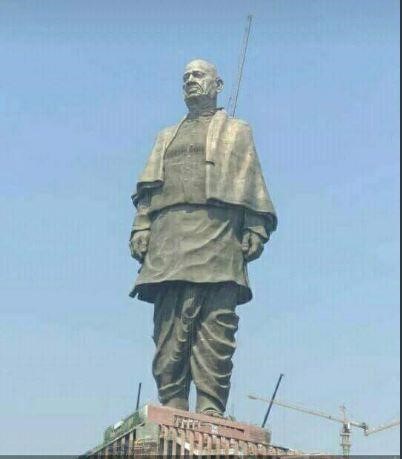
The world’s tallest statue – the ‘Statue of Unity’ to honour Sardar Vallabhbhai Patel – will be inaugurated today by the Indian Prime Minister Narendra Modi.

Sardar Patel, who was one of the founding fathers of the Republic of India, and became the first Deputy PM, has been credited for his role in uniting independent-divided India in 1947.

patel3

Here are the top 10 interesting facts about the project:

  1. The project was announced by PM Narendra Modi in 2010 when he was the chief minister of the state of Gujarat. He had laid the foundation stone in 2013.
  2. The statute is 182-metres tall and is built with 25,000 tonnes of iron and 90, 000 tonnes of cement.
  3. The height of the statue will be more than double the Statue of Liberty, which stands tall at 93-metres off the coast of New York City and four times that of Christ the Redeemer in Rio de Janeiro.
  4. The project involves a walkway, the four-lane approach highway, and the Shrestha Bharat Bhavan which is a three-star lodging facility with 52 rooms.
  5. The Statue of Unity is built on Sadhu Island in the Narmada river, approximately 3.2 km away from the Sardar Sarovar Dam.
  6. The world’s tallest statue will be able to withstand wind velocity up to 60 m/sec, vibration and earthquakes.
  7. The statue will have a viewing gallery at 153 m, which can accommodate up to 200 visitors and will offer an expansive view of the dam and environs.
  8. As the Sardar is known as the ‘Iron Man of India’, iron was collected from across the length and breadth of the country.
  9. The time for construction was fixed at 42 months and no escalation on labour, fuel, and material was allowed.
  10. There is a three-story base that comprises a memorial garden and a large Exhibit hall developed as an edutainment attraction.

patel4

Handling the two big cultural divides between India and the west

People often ask me “what are the main cultural differences between India and the west?”  That is, the differences that lead to misunderstanding and failure to do long term business.

For me, there are two major causes leading to a breakdown in trade and business discussions.

The first is what the researchers call Universalism vs Particularism. Universalism exists in the west – people believe you can discover what is true and good and can apply it as a general rule. Particularism is the culture of India – relationships are more important and unique situations more important, so each situation is considered on its merits.multicult

This difference is sometimes referred to as the “absolutism” of the west (things are absolutely good or bad, right or wrong etc) compared to the “relativism” of India (things are never wholly good or bad, it depends, relationship is more central).

Universalism is the culture of USA, England, Australia and Particularism is the culture of India, China and Thailand.

When it comes to agreements and contracts you can see this difference cause divisions – the west believes what is written down is permanent, fixed, never to be changed, while India and China realise that life is constantly changing, and variations might be needed.

Never give up

The second major cause of breakdown is that India is a “collective” culture, while the west is increasingly individual.

You will find in most Indian companies that decision making is a collective operation, even at Director level. Whereas in the west, a Director or Manager of a division has their yearly budget and puts a program to the board, and then gets on with it largely uninterrupted, your Indian counterpart involves the collective in almost every decision – even where the yearly budget and program are already set.

This also shows up in work styles – a western manager will set the task and assist, then largely stay out of things – whereas both sides in India will want moment by moment contact. For companies involved in the west and east, the western managers find this demand for constant feedback and contact very challenging.

Individualism is the culture in the USA, Canada and Australia while Collectivism is the culture of India, Japan and China.

I am not suggesting that one culture is “better” than the other – they are simply different, and it is important we know the difference. That way, we can adapt our behavior and succeed across cultures. Given that India has around 600 million people below the age of 25 (what a market!) we will all be better off if we can adapt and succeed together.

namaste

University students out of step with employers on what employers really want in new hires

A NEW survey has revealed the skills that employers value and how different they are to what university graduates think are important. The QS Global Employer Survey 2018 has highlighted the misconceptions students have about what skills employers want and the areas where there is a graduate skills gap.

For the report released last month, more than 11,000 employers were surveyed around the world and their answers were compared to responses from 16,000 prospective students.

aboriginal

A key finding is that students relatively overvalue the importance of creativity and leadership skills, and undervalue the importance of flexibility/adaptability and teamwork.

The development of soft skills, such as team-playing and resilience, had become almost as important as the technical skills and knowledge acquired during a degree. What are known as “enterprise skills” such as problem solving, communication, teamwork and digital literacy, were in demand.SwinJune

The skills employers ranked as the most important for graduates:

  1. Problem solving
  2. Teamwork
  3. Communication
  4. Adaptability
  5. Data analysis
  6. Resilience
  7. Organisation
  8. Technical skills
  9. Creativity
  10. Leadership
  11. Language
  12. Commercial awareness

The skills students thought were the most important:

  1. Creativity
  2. Organisation
  3. Problem solving
  4. Leadership
  5. Teamwork
  6. Communication
  7. Resilience
  8. Commercial awareness
  9. Adaptability
  10. Technical skills
  11. Language
  12. Data analysis

India Students

The biggest difference between the two answers was for creativity, which students placed as the most important skill but employers ranked ninth among their priorities.

This was followed by data analysis, which employers ranked highly as the fifth most important skill but students ranked 12th.

Students were also confused by leadership, which they ranked as fourth most important, but employers rated as 10th.

Employers also rated adaptability highly, in fourth place but students put this in ninth place.

The only skill to feature on the top three for both employers and students was problem solving.

The report suggests students around the world underestimate how much employers value flexibility/adaptability and analytical skills, as well as resilience. They wrongly assume creativity, leadership and organisational skills are more important.

Our Employability Skills Master Class helps students align with what employers want, and builds in the skills to thrive in the era of the Fourth Industrial Revolution.

cropped-steve22.jpg