The next steps will be critically important for Adani in Australia

Now that the Adani mine in Queensland has passed what seems to be the final hurdle, while it will still be a focus of protests it is now important for Adani Group to create and build a long term image and relevance in Australia. Adani Group is widely misunderstood here.

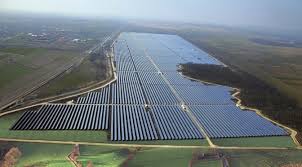
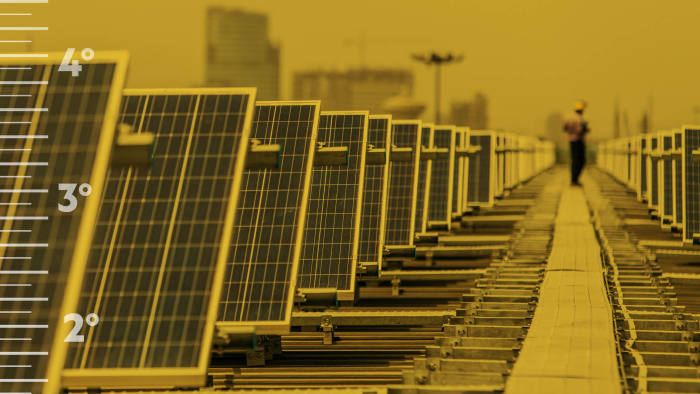
Few if any Australians are aware of the diversified role of Adani in areas such as solar power (below).

adanisolar

There have been mistakes. While “overstating” projects might be good communication in many countries, it is a disaster in Australia which is the home of the “tall poppy syndrome” (want to chop you down) and cynicism. In Australia it is best to under-estimate a project and then deliver beyond expectations.

This initial approach hurt the project and much of the bravado might well have been the Queensland Government – but dealing effectively with local politics is another important task for the group.

Here are some challenges, opportunities and ideas for the future brand of Adani in Australia:

  1. Build up the media, political and community profiles of your local Australia team
  2. Create some leadership profile opportunities for Mr Adani
  3. Clarifying the Adani approach of “vertical integration” which is not well understood in Australia
  4. Accept that protests and negative media will continue but strive to at least get your proper share of media space
  5. Carefully select the media you will deal with – and provide media tours of Adani in India – with full transparency
  6. Support and become involved in coordinated media relations programs with Indian High Commission in Canberra
  7. Have Mr Adani seen as a “promoter of Australia” by leading an annual group of Indian business leaders to visit and explore opportunities in Australia
  8. Bring some scientific R&D work to Australia – for example with RMIT University as a collaborator – this has the advantage of giving Adani relevance outside of Queensland
  9. Create an alliance with Indian foundations which are high profile here – for example ASHA Foundation educates slum dwellers and is well known for having a slum young person graduate from Melbourne University. Provide scholarships for more to come here
  10. Create or support a meeting of leading Australian and Indian resources and environmental scientists in some annual dialogue
  11. Have a regular presence in Canberra
  12. Develop some “owned media” content that is highly professional, well written and not propaganda
  13. Facilitate Australian business and political missions to India, leveraging close contacts

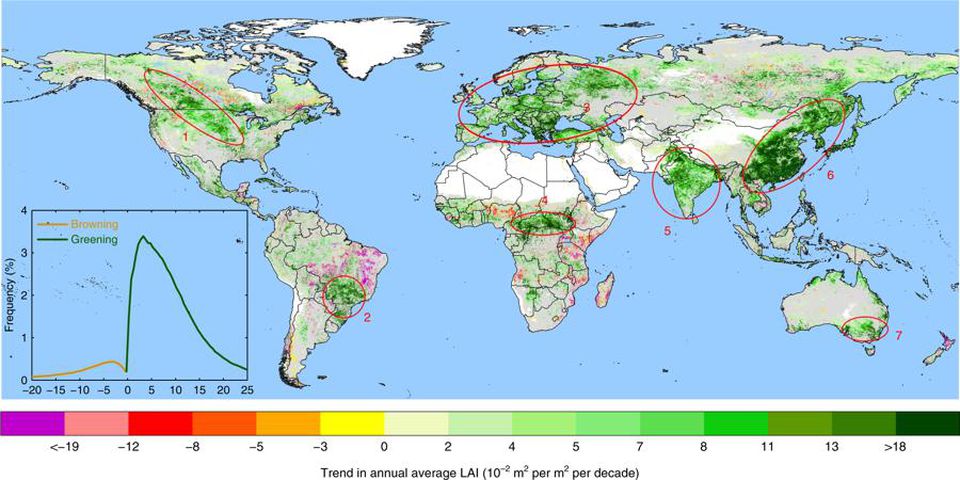
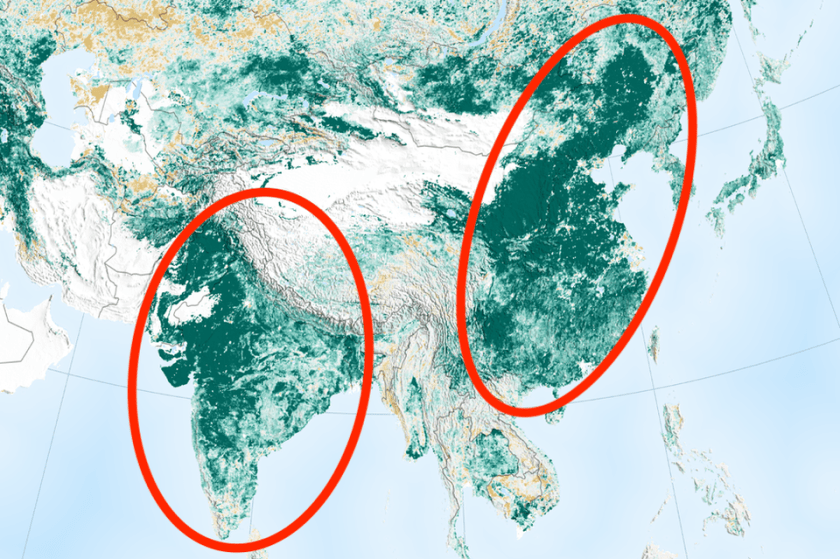
Let’s give credit where due – India and China are greening the planet!

Congrats to India and China – these two are doing heaps to green the planet.

NASA discovered the good news – the world is a greener place today than it was 20 years ago. What prompted the change? Well, it appears China and India can take the majority of the credit.

The countries are responsible for the largest greening of the planet in the past two decades. The two most populous countries have implemented ambitious tree planting programs and scaled up their implementation and technology around agriculture.

India continues to break world records in tree planting, with 800,000 Indians planting 50 million trees in just 24 hours.

So – let’s give praise where it is due.

Green2

Why I am an optimist

Seeing the massive changes in India and China, it is clear that in five years they will have less pollution and better health than today.

In fact, there is a lot of good news around if you look for it in the right places.

news1

These reports come from my friends at FUTURE CRUNCHhttps://futurecrun.ch/goodnews

Volkswagen, the largest car manufacturer in the world, responsible for 1% of global carbon emissions, has committed to going fully carbon neutral by 2050. NYT

America has officially entered coal cost crossover. 74% of existing coal plants now cost more to operate than to replace with wind and solar. Utility Dive

Between 10th and 17th March, Germany got 72.6% of its electricity from renewable energy resources. Did someone just say “baseload power?” Renew Economy

In January 2015, at the height of ISIS’s power, 7.7 million people were estimated to live under its rule. As of last week, that number is zero. CNN

Between 2010 and 2013, India ran a measles vaccination campaign. A new study estimates that it saved the lives of about 50,000 children. Nature

This year will see almost two billion people in 50 countries vote, the largest number in history. Did someone just say “death of democracy?” Al Jazeera

Indian tech billionaire Azim Premji is giving away $21 billion to philanthropy, the fifth largest endowment in the world and the biggest in Asia. ET Tech

Clever win by animal rights activists. Australia has passed a law that prevents companies using data from animal testing for developing cosmetics. The Age

Deep in the frozen forests of Russia’s far east, the Siberian tiger is staging a quiet comeback, thanks to government-led conservation efforts. CBC

And – the above is just one of their regular fortnightly summaries.

Good news – it’s there if you look in the right places.

There are also many locations where you will find constant “bad news” – the choice of where to get your information is up to you. Below are examples of news sources committed to spreading fear and despair…

news

World auto industry investing in Indian auto startups

India is attracting global investment, especially in automotive startups – global automobile manufacturers have invested around $491 million in 2018 in Indian automobile industry start-ups, led by Essel Green Mobility’s investment of $300 million into Bengaluru-based on-demand AC bus service provider Zipgo, according to market intelligence firm Venture Intelligence.

essel

There were 13 investments during the year. In 2018, Taiwanese two-wheeler manufacturer Kwang Yang Motor, known as Kymco, invested $65 million in Gurugram-based electric two-wheeler maker Twenty Two Motors, while auto major Mahindra and Mahindra invested $40 million in self-drive car company Zoomcar.

Toyota Tsusho Corporation, the trading arm of Toyota Group, invested around $30 million in Droom Technology, the operator of India’s largest online automobile marketplace by co-leading Series D fundraising of the company. The firms also concluded a pact on the overseas expansion of the used car and motorcycle marketplace business.

essel2

What’s the “biggest story in the world you have not heard about”? Happening in India right now

“The biggest global story you haven’t heard about right now is India’s sanitation drive,” according to my friends at FUTURE CRUNCH. See https://futurecrun.ch/ 

Since 2014, 90 million toilets have been built, 93% of households now have access, and 500 million people have stopped defecating in the open.

This is change on a massive scale – but not such a big story for the short concentration span of the major media.

swachbharat3

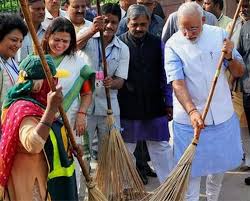
Pictured – Indian Prime Minister Modi launches the program in 2014

The government claims that since its Swachh Bharat Mission programme started in October 2014, 500 million people have stopped defecating in the open, down from 550 million at the beginning of the programme to less than 50 million today. Over 90 million toilets have been built across rural India under the Mission. 615 districts have been declared ODF, along with 30 ODF States and Union Territories, as per the government.

“A clean India would be the best tribute India could pay to Mahatma Gandhi on his 150-birth anniversary in 2019,” said Shri Narendra Modi, Indian Prime Minister, as he launched the Swachh Bharat Mission at Rajpath in New Delhi.

swachbharat

The Independent Verification Agency has presented their findings to the Expert Working Group (EWG) constituted for oversight of the survey, comprising representatives from organizations including the World Bank, UNICEF, Water Aid, Bill & Melinda Gates Foundation, India Sanitation Coalition, NITI Aayog, and Ministry of Statistics and Program Implementation.

Swachh Bharat Abhiyan or Swachh Bharat Mission is a nation-wide campaign in India for the period 2014 to 2019 that aims to provide sanitation, clean up the streets, roads and infrastructure of India’s cities, towns, and rural areas. The campaign’s official name is in Hindi and translates to “Clean India Mission” in English.

It is India’s largest cleanliness drive to date with three million government employees and students from all parts of India participating in 4,041 cities, towns, and rural areas.

Do you agree this could be the biggest story in the world today that you have not heard about?

I feel sorry for Adani Group, but wonder why they bought in the first place

I kind of feel sorry for the Adani Group. Here they are sitting on Australia’s biggest coal reserve, yet nobody wants them.

But, how did Adani Group get into this strife torn project?

After all, Australia has most of the world’s biggest and smartest coal miners. They all knew about the Carmichael but none of them would touch it. Did Adani ask why not?

No Australian bank would fund it. Did this give Adani pause to think?

Aussie politics was always going to be mixed on this one – yes, er, no. Did these give Adani concerns?

The whole scheme depended on a new railway and a port – right near the globally significant Great Barrier Reef. Promised the “world’s biggest coal mine” our governments offered billions to pay for railway and port. But then it became “just enough coal for Adani’s own power stations”. That’s a long way short of the early promise and politicians are looking for an out. Is this a surprise to Adani?

Importing coal is no longer popular in his country of India, which is moving in a big way to alternatives such as wind and solar. Did Adani factor this into their Aussie plans?

And finally – global demand for coal has taken a hit, demand just fell over the cliff. What did Adani market research tell them about this?

In Australia, Adani Group is lonely.

Adani might be a fine Indian corporation. But here in Australia they seem to have stumbled into something no Aussie firm would touch.

That’s why I kind of feel sorry for them.

Climate Change – India turns away from coal as Australia and Adani still dream of selling them more coal

More evidence that the Australian and Adani dream of selling coal to India is just a fantasy.

indiaeneregy

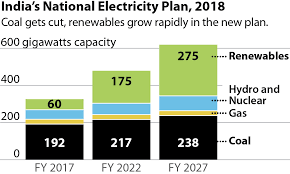
India is increasingly shifting towards green energy

Simon Mundy of the Financial Times reports that Indian power companies spent much of the past decade rushing to build coal-fired power plants in anticipation of surging electricity demand as economic growth took off.

You can see the article at https://on.ft.com/2GShz3Q

Now, many of those projects are mired in deep financial distress and private investment in coal power has ground to a near halt – making the Australian and Adani dream of selling more coal to India look deluded.

Mundy writes that the biggest driver of long-term uncertainty for the industry is one that few anticipated 10 years ago: an explosive take-off in the renewable power sector, as India joins the global push to tackle climate change by shifting towards green energy.

Soon after taking power in 2014, Prime Minister Narendra Modi’s government set a target of increasing India’s renewable energy capacity by 2022 to 175 gigawatts, equivalent to 40 per cent of the country’s total power capacity at the time of the announcement.

indiasolar

Indian coal power producers are considering renewable projects when they build new capacity © Getty

Mr Modi’s ambitions were stoked by a dramatic fall in the price of solar panels after a huge expansion of production in China, which is seeking to capitalise on the international drive to cut emissions. This was steadily making the cost of electricity from solar plants — once far more expensive than coal power — more competitive with plants running on the dirtiest fossil fuel.

Making a mockery of Australia’s long hopes of selling more coal to India, in the 2017 financial year, newly added renewable energy capacity overtook new coal-fired capacity for the first time. The renewable push attracted major investors such as Japan’s SoftBank, whose consortium last year sealed a deal that stunned the industry.

Mundy goes further on coal – this shift in the industry’s economics means that coal power — once one of the hottest prospects for Indian industrialists — is now a space where most fear to tread.

“You’d have to be quite courageous to invest in coal at this point,” said Navroz Dubash of New Delhi’s Centre for Policy Research.

Does Australia realise that India has plentiful supplies of coal in its eastern region?

This year, state-run NTPC — by far the biggest thermal power producer in India — has cancelled several plans for large coal projects, including one for a giant 4GW plant in southern Andhra Pradesh state.

Increasingly, large private-sector coal power producers are looking at renewable projects when they build new capacity.

adanisolar

Even Adani, which is in big strife with plans to mine and export coal from Australia, has invested more than $600m in a solar plant in Tamil Nadu — a southern state with abundant sunshine.

There is no longer an economic case for the highest-cost coal plants in inland areas of the country’s south and west, which are forced to rely on coal expensively transported over long distances from the northeastern coalfields, said Tim Buckley at the Institute for Energy Economics and Financial Analysis.

Credit Suisse estimates that more than half the debt owed by power companies is now stressed — with interest payments exceeding profits — amounting to a total of more than Rs2.5tn ($35bn).

Several coal-focused power groups are being dealt with under India’s new bankruptcy code, which will force them into liquidation if a swift sale is not agreed. Indian authorities have an incentive to minimise the distress in the coal power sector. State-controlled banks, reeling from a surge in non-performing corporate loans, are heavily exposed to this industry.

But the Modi Government is clear in favouring renewables, leading to long-term self-sufficiency, lower costs, more competitive industry and better climate outcomes. Even though major corporates like Tata and Essar are struggling with the economics of coal power plants, the Government remains unwilling to shift from renewables.

Which makes the Australian/Adani dream of creating our biggest coal mine and shipping it all to India look like a case of sticking to an old fantasy while the target market has moved on. Can Australia move on too?

Because Australia is expected to commit about A$1 billion towards the scaled down A$5 billion mine project, the Australian Prime Minister and the Queensland Premier need to have some serious discussions with Adani Group – and possibly Indian Prime Minister Modi – to get answers to some disturbing questions:

  • If Adani is simply planning to supply coal to its own power stations in India, what tiny fraction of the Carmichael coal reserve does this represent?
  • Does Australia face the worst of all worlds with no royalties and vastly fewer jobs than expected?
  • Exactly how many jobs will Adani Group commit to long term?
  • What would be the environmental degradation costs of the project?

With these answers both governments can assess the risk of being left holding a distressed or potentially stranded asset of no value to anyone.

Right now our politicians seem to want to resist the future, rather than embrace it.
wind2