Blog

“The Pitch” – the next big thing for Indian students

What reality are students facing on graduation? Employers are impatient and demanding in job interviews, often starting with a blunt “Why should I hire you instead of all these other people?” and ending quickly if the answer is not convincing. This is particularly the case in India where almost half of the population is under 25.

On top of this, students who want to move into startups and new businesses will find financiers and advisors similarly impatient.

The reality for student graduates is they are entering a fast-moving world that demands to be convinced, right now. Can they do the convincing?

Repeated studies by employer groups suggest students are not at all convincing, not articulate, inexperienced in teamwork and show little leadership aptitude. How could they be, when most universities do not teach these skills?

Can we solve this problem? Can we create a generation of graduates who are job ready, who can hit the ground running?

The answer is “yes”, and the key to this is not so much the old fashioned soft skills training programs but it is found in the exciting world of “pitching”.

In the last quarter of 2017, several parties combined to conduct an Indian Student Employability Pilot Program in Melbourne. These included Australia India Business Council, ISANA International Education Association and my company EastWest Academy Pty Ltd.

The objective was to test whether a short intervention could add significant value to the students in terms of: Presentation skills (pitching); Interview techniques; Linked In profiles; CV’s.

The program included three group sessions plus interaction via WhatsApp, email and personal contact. To add real zest and motivation, the final session was an opportunity for the students to pitch to the board of ISANA International Education Association – a challenging but exciting prospect to convince influential leaders.

By focusing our intervention on a rapid program of developing a dynamic “pitch” for the forthcoming board meeting, the students had a clear goal, timeline and motivation.

Outcomes were exciting to experience. The pitches were competitive, with much improved clarity and pacing, slower speech and clear transmission of information. What was really exciting was the students quickly learned that any claim they make needs to be supported by proof – generally one additional sentence.

In addition, the presentation to the board was interactive and showed a good ability to handle tricky questions and effective use a two-part answer – if the question is about weakness, outline what that might be and then state what steps you have taken to improve. Or if about strengths, again, outline what that might be and then show proof of when you used that strength.

The key to this success was the excitement around “the pitch” – this is what the students wanted, they saw it could work for them and they put energy and skill into making high impact pitches. They are ready for the future.Never give up

10 things to know about modern India

  1. Successful and confident

Economic success has restored Indian confidence. Indian entrepreneurs are now recognized around the world and there is a national expectation that the next Bill Gates will be an Indian. This entrepreneurial spirit permeates the nation (most dream of becoming entrepreneurs) which is now confident.

economy

  1. Never forget rural people

Indian business and political leaders may live the urban lifestyles, but they do not forget the small towns and villages at the centre of rural life – and it’s not just the politicians with an eye for votes, with major corporates such as Infosys pouring resources and funding into village developments.

ruralindia

  1. Avoid pointing the finger

India is a land of great cultural diversity, many languages and countless opinions, but two things unite the nation – cricket and the World Trade Organisation. Indians become instantly passionate when challenged on their high tariffs, especially if the challenge comes from the west. The message is, point the finger at India and you can expect a robust response.

  1. Oceans of patience

Indians have oceans of patience which can drive westerners crazy, but it gives them a special strength in negotiations. This patience is derived from deeply held spiritual views such as impermanence – Indians are constantly reminded of the impermanence of this life, everything changes, and they can wait when often we cannot. Who has the advantage in this negotiation?

  1. Not just an IT miracle

Do not be fooled with the view that the Indian economic miracle is just driven by call centres and IT. Important as these are, look also at insurance, energy, retail, clean technology, manufacturing, pharmaceuticals and even agriculture as areas where efficiency is producing startling results.

 BKC3

  1. Dragon and elephant can dance

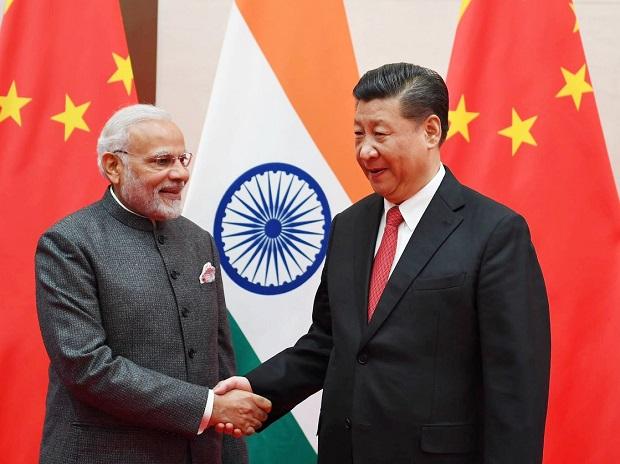
The dragon (China) and the elephant (India) have discovered that they can dance, and now China is India’s major trading partner. Competitors are becoming collaborators and western business leaders need to be aware that the Indians coming to negotiating tables will be leaders who confidently see that this century belongs to the east.ModiXi

  1. Not especially “Asian”

While India feels great about the success of “Asia”, in many ways it does not feel particularly “Asian”. First and foremost, Indians feel Indian, and to them that is vastly more relevant than being geographically part of Asia.

  1. Remember the “Father of the Nation”

Whether dealing with the young or the old, in India never forget the “Father of the Nation”, Mahatma Gandhi.

ATT00036_

  1. Equity up there with democracy

Partly because of Gandhi, Indian leaders are more concerned with equity than with spreading democracy around the world – and cannot understand the enthusiasm of the USA and its allies to champion democracy in unlikely locations.

  1. No junior partner

While many in the west still see India as a “developing” country and therefore a future player on the world stage, India has no intention of being a junior partner or a bit player in the world. Invite India in and you can expect them to want to be at the head of the table, making the running. This is a country whose time has come – and the people you deal with are highly aware of this.

Wipro wins biggest ever deal

Indian firm Wipro has won a more than $1.5 billion deal spread over 10 years from Illinois-based Alight Solutions LLC, achieving its largest ever contract. 

With this, the Bengaluru-headquartered software services exporter joins larger peer Tata Consultancy Services (TCS) in winning larger deals at a time when the outsourcing services industry is seeing a slowdown owing to emergence of digital services.

TCS bagged three such multi-year large deals totalling more than $5 billion in revenue since September 2017.

This is a big deal for Wipro’s new boss, Abidali Neemuchwala, who took over in February 2016.

wipro

“This deal will result in revenues of USD $1.5 to $1.6 billion for Wipro over the tenure (10 years). This is Wipro’s largest win to date. This engagement will enable the digital transformation of Alight’s offerings across health, wealth, HR and finance solutions,” said Wipro in a statement, adding that it would “enhance the employee experience of Alight’s clients by leveraging Wipro’s solutions in digital technologies, cognitive automation and data analytics.

“This is a testimony to the capabilities we have built through our strategic investments in Wipro Digital, cloud platforms and cognitive platform Wipro HOLMES. We will leverage this expertise to digitalize and modernize Alight’s core across platforms, technologies and operations,” Neemuchwala was quoted in the statement.

Wipro also said it has completed the transaction to acquire Alight HR Services India Pvt Ltd, the India arm of Alight Solutions.

Indian stock markets scale new highs

Indian stock markets extended their record run this week, with the Sensex and Nifty both scaling new peaks.

The Sensex gained over 244 points to touch 38,938 while the Nifty50 index hit 11,760 amid higher global markets.nse

Market heavyweight Reliance Industries (RIL) led the charge, with shares rising 2% to Rs 1,318.20.

ril

Metals, IT and auto stocks also had gains. The NSE metal index surged 1.8% amid a rebound in global commodity prices. Vedanta, Adani Ports, Maruti Suzuki, Axis Bank, Tata Steel and HDFC rose between 1% and 2%.

The NSE index, Nifty50, has had a record-setting run in the last two months, while the BSE has been Asia’s top performing index this year.

The new highs come as companies in India, the fastest growing major economy in the world, reported a 11.6% annual increase in profits for the June 2018 quarter, the strongest growth in five quarters.indiagate

Retail changing fast in India

The Indian retail market is changing fast, with a rapid consumer move to buying fast moving consumer goods (FMCG) via major retail outlets. This is happening across India but is fastest in urban centres.

India’s first major store was Big Bazaar which opened in Kolkata in 2001.  For the first time, following demonetisation and implementation of the goods and services tax (GST), modern trade has touched the double-digit mark, accounting for 10% of the overall revenue of the FMCG sector, according to market research and insights provider The Nielsen Co.

bigbazaar2

Modern trade’s growth stood at 25% during the April-June quarter, compared with 16% in the July-September quarter last year.

According to Nielsen, stores that stock FMCG products, operate on a self-service business model and provide shopping baskets or carts to customers are classified as “modern trade” stores.

bigbazaar5

Stores include names such as Big Bazaar and DMart.

For Marico Ltd, the maker of Saffola and Parachute oils, channels such as modern trade comprise 11% of India sales, and are growing at 39%. On the other hand, e-commerce, comprising 1% of India sales, is growing at four times the overall growth rate, according to recent report by SBICap Securities Ltd.

bigbazaar4

Urban retail is growing due to rising urban household incomes and increasing penetration of organised retail in urban centres. The share of urban retail is expected to grow from 49% in 2015-16 to 52% by 2019-20, according to a May 2018 report by Firstcall Research.

Modern retail is seeing retailers launch new stores and consolidate their footprints. For instance, in 2017-18, Avenue Supermarts Ltd, which runs DMart chain of stores, added 24 stores, taking its total count to 155.

bigbazaar3

Over the last few years, Kishore Biyani’s Future Retail Ltd has strengthened its footprint in western India with the acquisition of Hypercity Retail India Ltd. In the north, the company acquired Easyday chain from Bharti Enterprises and Big Apple. In South India, the retailer bought Nilgiris and Heritage Foods chains.

biyani

Can India help solve the western disease of unhappiness?

It seems many in the west struggle to live with wealth – there is evidence of considerable dissatisfaction, unhappiness and medical conditions that impact a sense of well-being. If you doubt that there is mental confusion in the west, just reflect for a moment on the western phenomena of “road rage”, surely the product of unhappy minds.

Could some of the answers to this western dilemma be found in India?

Prayer2

From Sri Sri Ravi Shankar and many others, including Buddhist thinkers, we learn that our attitude to events and people around us is the most important factor in our mental well-being. The west largely seeks this well-being through events and others, not through self contemplation.

People in the west have extensive material wealth but little focus on the mind and the spirit. Largely as a result, they continue to seek lasting happiness from things outside of their own mind – happiness through a job, travel, possessions, plastic surgery, new partner, bigger house and so on. Buddhist teachers remind us all these things can be fine – so long as we have a stable sense of inner well-being. That is, lasting happiness comes from within.

namaste

The Buddha taught in India that looking for lasting happiness outside of our inner life results in attachment (where we want more and more and fear losing what we have) and in aversion (where we blame others for our unhappiness). You can see how “enough is never enough” would drive these minds.

Another western phenomena is “busyness” which is evidence of impatient minds and the drive for external sources of happiness.

India has long taught patience – living with adversity, accepting the flaws of others – whereas the west is so driven that patience is a word rarely used.

himalaya

If the Himalayas were located in the west, people would flock there for bungy jumping, extreme ski sessions, jumping out of planes and other extreme sports. For India, the Himalayas have been a location of contemplation, monasteries, thought and mindfulness.

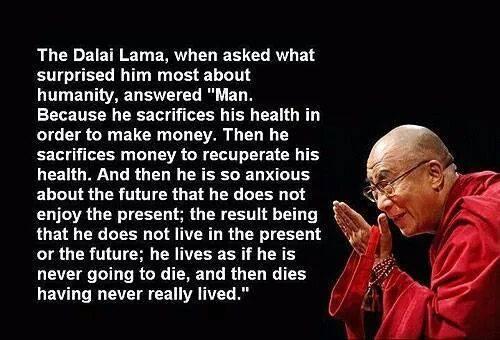
It has long been said that the ultimate western hero was Alexander the Great who conquered more than anyone before him – while a hero in India could be a guru sitting in contemplation under a tree.

In this comparison, could we find one key to happiness in the wealthy west?

How “culture” can divide the west and India – and how to overcome it

Every country has a culture – the way things are done, how people think and more. To succeed with another country, it makes sense to first understand their culture – that way, we can adapt to it.

Cultural misunderstanding is at the core of our lack of trade and diplomatic connectivity with India.

The importance of cross-cultural understanding is not about focusing on “difference” – it is about knowing what those differences are, so we can then ADAPT our behaviour. Further, cross-cultural analysis is not claiming one view to be right and the other wrong.multicult

Consider what the academics call “absolutism vs relativism” – we in the west are absolutist so we place all our energy on contracts, project plans and we never like surprises. India is a relativist culture, so it knows things can only be defined relatively, and whatever we decide upon will change as life inevitably changes. You can see how these two differing world views create problems for us.

The absolutist thinker puts rules above relationships – while the relativist thinker places relationship way above rules. Knowing this, we can adapt.

aboriginal

Also look at western “individualist” culture and compare with India’s “collectivist” culture. The west empowers individuals to make decisions, whereas in a collective culture, decisions are made by the group and can take more time. Not such a problem when you understand it.

Plus consider that the west is called a “specific” culture while India is “diffuse”. What does this mean? The westerner is direct, open and always in a rush – cannot stay for dinner. The Indian prefers to be indirect, works around an issue rather than confronting it, takes time, wants you to stay for dinner and never says “no” even when that is the right answer, preferring the often misunderstood “I will try”.

With these differences and many more, whether we are Indian or western, if we train to understand and ADAPT to the difference, we face much better prospects of success.Tourists1

Indian tourists choosing Australia – and Melbourne is a “must see”

Australia had a 19 per cent growth in Indian tourist arrivals between June 2017-May 2018, with 330,700 Indians visiting the country.

This has made India the eighth largest inbound market, after China, New Zealand, the US, Britain, Japan, Singapore and Malaysia, according to the data.

suburbs

Indians are also considered good spenders while travelling Down Under – spending by Indian tourists grew by 14 per cent between April 2017 and March 2018, with visitors spending AUD 1.53 billion.

melbourne2

In terms of spending, India stood seventh after China, the US, Britain, New Zealand, Japan and Korea.

This is the fourth year where Australia has recorded double-digit growth in both arrivals and spend, indicating the destination’s growing preference among Indians.

The recent government move to extend online visitor visa applications to all Indians also helped boost the numbers.

greatoceanroad

Melbourne is a “must see” – beautifully designed city, clean, green, lots of parks, the famous MCG (the city is a sporting capital, with Australian Open tennis and Grand Prix), galleries and great shopping – plus easy access to the Great Ocean Road and the Phillip Island penguins. This is Australia’s most multicultural (diverse) city with people from Greece, Italy, China, India, Vietnam, Malaysia, New Zealand, Britain and more, making it a rich food and cultural centre.

Independence Day – “India discovers herself again.”

Today is Independence Day for India – celebrated every year on 15 August. This freedom came in 1947 but had to be fought for with many great “freedom fighters” showing the way. Britain did not want to let go of this nation which had been a massive source of income for many years.

Because of that struggle, for all Indians Independence Day is a day to remember the people who fought the Britishers and gave up their lives to free the country from a foreign ruler – it is the day to “pledge and to protect the unity and integrity of our country.”

India Students

Independence Day is a national holiday and is celebrated with much fervour across the nation. Parades are held in all state capitals and district headquarters to celebrate Independence Day. Indians across the country also hoist the tricolour to mark the day. Many also fly kites, sing patriotic songs and exchange sweets to celebrate Independence Day.

On the eve of Independence Day, the President addresses the nation in a televised speech. On Independence Day, the Prime Minister greets the nation from the ramparts of the Red Fort in New Delhi.

Independence was proclaimed in 1947 by the first Prime Minister of India, Pandit Jawaharlal Nehru, who declared: “At the stroke of the midnight hour, when the world sleeps, India will awake to life and freedom. A moment comes, which comes, but rarely in history, when we step out from the old to the new, when an age ends and when the soul of a nation, long suppressed, finds utterance. We end today a period of ill fortune, and India discovers herself again.”

Well done India – and a very Happy Independence Day!

7 reasons India is the key to global economic growth

India is a source of growth for the global economy for the next few decades and it could be what China was for the world economy, the IMF said today, as it suggested the country take steps towards more structural reforms. Here are my 7 reasons India is the key:

  1. India now contributes, in purchasing power parity measures, 15 per cent of the growth in the global economy (IMF figures) – just behind China and USA.
  2. India has three decades before it hits the point where the working age population starts to decline. About 600 million people – half of India’s population – are under the age of 25. The next three decades is India’s window of opportunity in Asia.
  3. The IMF has forecast India’s growth to rise to 7.3 per cent in FY2018/19 and 7.5 per cent in FY2019/20, on strengthening investment and robust private consumption.
  4. The Indian economy is recovering surprisingly well from the two shocks that started from late 2016: demonetisation and then the implementation issues related to the GST. Long term, the GST is the biggest regulatory game changer in India.
  5. Reformed insolvency and bankruptcy codes are another big achievement of the Modi Government.
  6. The Reserve Bank of India is now formally and actively involved in inflation targeting – India has seen the benefits of that have lower inflation and inflation expectations.
  7. In the pipeline of Modi reforms are more changes to improve the business climate and further steps to liberalise Foreign Direct Investment (FDI).And then there are some of the key smaller steps like things to improve the business climate, steps to further liberalised FDI.

Sure, more reform is needed in labour laws, overall improvement in ease of doing business, more infrastructure activity and dealing with the banking and corporate sector balance sheet issues.

But current evidence is that India will avoid the trap of “growing old before it becomes rich”.