The population paradox in India

Wonderful article by Sunaina Kumar in THE INTERPRETER for the Lowy Institute.

https://www.lowyinstitute.org/the-interpreter/population-paradox-india#msdynttrid=JLdBTs_-HnNZRPTGkUBRWQGZleYD6CL9EmGS-LibtvE

India is growing in some states, declining in others – but rapidly ageing all over. Here are some elements of the “population paradox”:

1. In April 2023 when India reached 1,425,775,850 people, it surpassed China’s population to become the most populous country in the world.

2. India’s population is expected to grow for several decades and could peak at 1.7 billion by the 2060s, while China’s population is already in decline, according to UN estimates.

3. The total fertility rate in India has declined from 3.4 children per woman in 1992-93 to 2.0 children per woman in 2019-21.

4. Population in India will however continue to grow, concentrated mostly in the northern states of the country on the basis of demographic momentum, a phenomenon that results from a large number of young adults in childbearing years.

5. A north-south divide – population is growing in the north and declining in the south.

6. Compared to the north, the five southern states of India are economically more advanced and have been highly successful in slowing population growth by focusing on development and women’s empowerment.

7. India has one of the youngest populations in the world: 65 per cent of the country is under the age of 35.

8. By 2030 one out of every five working-age people in the world is projected to be Indian.

9. To reap the demographic dividend, India will need to add 7.85 million jobs every year until 2030.

10. Alongside this phenomenon, India like China is rapidly ageing, which is linked with declining fertility, falling mortality risks and higher life expectancy in both countries.

The speed and scale of ageing is a global concern but in a country like India, it is a race against time, as the country will need to get richer before it gets older.

Sorting out priorities given the many levels of this “paradox” is a task for Governments and policymakers.

Indians shaping as the big thing in Aussie tourism

Indian tourists to Australia on the rise, spending more and trending to younger

Australia is now the second highest in India for awareness, consideration and active planning for touring Australia, just below Dubai and surrounds. The “big three” for Indians are Dubai, USA and Australia.

What is exciting about the Indian traveller market is that there is an attitudinal shift – from saving to spending.

Arrivals from India for the year 2023 were at 396,000; which were on par with 2019 levels.

Indian travellers are spending more – spending A$2.2 bn on their Australia trips (an increase of 20% when compared with 2019).

In addition to the shift to spending, there is a generational shift: Indians are travelling at a much younger age.

In my home state of Victoria and the city of Melbourne, India was Victoria’s second largest tourism market by value in 2019 and is the fastest growing international visitor market to return to Victoria following the reopening of Australia’s international borders.

Factors of greatest importance to Indian travellers are safety/ security, beautiful natural environments and value for money.

Seven in ten Indian travellers are aware of Australia as a holiday destination, with half considering travelling to Australia within the next four years and one in five who are actively planning their holiday.

Australia is strongly associated by Indians with world class beaches/ coastlines/ marine wildlife, having different and interesting wildlife, having a good range of accommodation, being family friendly and having good infrastructure.

That’s why our tourism organisations, Austrade and State Government trade offices are placing such focus on promoting Australian tourism.

It’s and exciting future for Australia.

Trump’s “transactional and mercantilist” approach to trade will test India in 2025

India at risk as Trump’s trade policies do not distinguish between friend and foe.

One certainty of 2025 – the terms of trade are set to change.

For India, this presents a major economic risk.

Trump has made trade a big focus of his second term as President of the USA – he is expected to upend the $24 trillion world goods trade and possibly the $7.5 trillion services trade.

This puts at risk India’s largest export market – the US.

The US has also been an important supplier of capital.

The US consumes as much as a fifth of India’s exports —  led by two shiny new growth spots in phone manufacture and global capability centers — and is also among the biggest sources of fund flows, reports Bloomberg’s India Edition, written by Menaka Doshi.

Australia well knows that Trump’s trade strategies do not distinguish between friends and foes – as one of the USA’s closest defence allies, Australia was a major victim of Trump’s anti-China moves.

India could be hard hit this time around as he continues a “transactional and mercantilist” approach to trade.

India and Australia should be making the final negotiations on a trade deal a top priority.

Is India the new China?

The stunning economic rise of India is causing a re- think – in 2023, India’s GDP was US$14.54 trillion, the world’s fourth largest economy, behind the United States, China and the European Union.

But what is prompting a rethink by many countries is India’s annual GDP growth of 7.6% – now outstripping all those other countries. India could match China’s 2023 GDP of $34.64 trillion in 14 years. On top of the growth rate advantage, India’s population overtook China’s in 2023, and the “demographic dividend” is kicking in.

This growth comes with an interesting twist, no doubt occupying minds in Washington and Beijing.

India’s military expenditure is now third behind the US and China.

When it comes to regional security in the Indo-Pacific region, India now counts as a major player. In addition to defence spending, location of this large landmass (the world’s seventh largest) means India is pivotal to trade routes crossing the Indian Ocean, as well as being close to China, the preeminent trading nation at the heart of the Indo-Pacific region.

Someone who is well aware of the growing power of India is of course Prime Minister Narendra Modi, a strong leader who stands as an equal with Chinese President Xi Jinping and soon-to-be President of the USA, Donald Trump.

The big question for countries like Australia and New Zealand is where do we fit in with this new scenario, who is listening to us, what does emerging “multi-lateralism” (championed by India) mean for us and how can future trade be assured?

Our diplomats and trade people are well placed and respected in New Delhi – but as the position of India becomes stronger, the diplomatic skills of both Australia and New Zealand will be needed to define our place in what is a new order.

Thanks to Chris Ogden, Associate Professor in Global Studies, University of Auckland, Waipapa Taumata Rau, for some of the above data.

Australia sets impressive trade records which newsrooms refuse to report

Australians are not good at celebrating good news – and some of the good news they don’t even get to see on major media.

Trade performance is a good example.

Australia has an outstanding national trade body – Austrade – with talented people around the world promoting our products and services.

In many countries – including India – most of our states also have Government offices working hard to build trade and investment.

They have been incredibly successful.

Of the 35 advanced countries in the Organisation for Economic Cooperation and Development (OECD) who reported last year’s exports to the World Bank, only three increased exports relative to gross domestic product (GDP) over 2022.

Of these, Australia’s expansion was the strongest.

The World Bank also affirms Australia’s ascendancy.

The World Bank’s development indicators show export and import outcomes for 138 economies from 1974 to 2023.

The World Bank measured Australia’s 2023 exports at a record 26.7% of GDP.

The success story continues…

Of the 35 advanced OECD member economies for which the World Bank has recorded last year’s export volumes, 17 experienced a decline. These include normally robust economies Ireland, Germany, the United Kingdom, Netherlands and Belgium.

Only 18 increased their exports over the previous year. Just four managed an improvement of more than 5%. Australia ranked third with 6.5% behind Denmark and Costa Rica.

Well done all those Australian providers of quality export goods and services.

Well done, Aussie!

9 reasons India is well placed for the next Trump era

What does the election of Donald Trump as the 47th President of the United States mean for India?

In the past Trump has taken steps to address the US trade deficit with India, like increasing steel and aluminium tariffs, removing GSP benefits, calling out India for high tariffs on motorcycles, dairy, technology items and also pushing for a much more stringent IPR regime.

INTO INDIA provides 9 reasons India is well placed for the next four years of President Trump:

  1. The Indian economy grows due to domestic demand – not trade

    India’s biggest advantage in any global trade war is that it relies much less on trade than most countries – India is flat our trying to meet growing domestic demand, and with a young population this will likely continue.

    But India’s largest trade partners are China and the USA – roughly equal. So, a trade feud between those two will have an impact in India.

    2. India has the advantage of a trade surplus with the USA

    Again, here India is better off than most as it has a trade surplus with the USA.

    3. India is seen as an alternative supplier to China

    Trump’s administration has talked about imposing tariffs of up to 60% on Chinese imports, potentially damaging China’s competitiveness in the US market. In this context, India stands to benefit as an alternate supplier for some of the products where China has dominated in the past, such as electronics, textiles, pharmaceuticals, and more.

    The US imports huge volumes of merchandise from China, such as smartphones, mechanical appliances, toys, furniture, and plastics. India’s share in these sectors is currently low, but the imposition of high tariffs on China could make Indian exports more competitive. For instance, India’s share in the US smartphone market is only 3%, compared to China’s 27%.

    Similarly, the pharmaceutical sector, where India already has a strong export presence, stands to benefit from ‘Trump tariffs’. India’s pharmaceutical exports to the US already account for a considerable share, and with China’s market share likely to shrink, India could see even more demand for its generics and other pharmaceutical products.

    4. Indian renewables might benefit from Trump’s “climate scepticism”

    Another area where India could see an uptick in exports is the renewable energy sector. Trump’s proposal to cut green energy subsidies in the US may create a gap that Indian green energy exporters could fill, particularly with photovoltaic cells used in solar panels.

    5. India has a counter to the 10% tariff challenge

    However, Trump’s proposed universal tariff of 10% on all imports to the US (as mentioned in his recent speeches) could trigger a global trade war, and India’s businesses may find themselves caught in the crossfire.

    But – the economic benefits India stands to gain from trade diversion away from China could well outweigh the costs of universal tariffs.

    6. Indian business optimistic and investing in the US

    Conversely, Indian businesses are optimistic about the favourable business environment in the US under Trump 2.0. For instance, the Aditya Birla Group has expressed intentions to increase its US investments, citing the historically favourable relationship between Trump and India. Trump loves new investment.

    7. India has a friendly investment ecosystem

    Investments are also expected to flow into India. According to a report by The Economic Times, Apple Inc. could boost its iPhone production in India to over $30 billion annually within the next two years.

    Here India’s timing is good – India has developed a strong, investment-friendly ecosystem, making it an appealing destination for global capital. The country’s growing market, skilled workforce, and regulatory improvements position it well to attract more investment, especially as businesses seek alternatives to China.

    8. India has ordered large numbers of US aircraft

    India has another bargaining tool – it makes large aircraft orders, generating jobs in the US, clearly demonstrate why India will be at the Washington DC negotiating tables.

     9. The Trump and Modi friendship runs deep

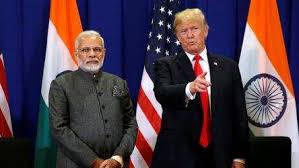
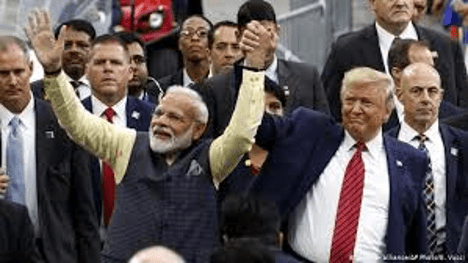
    Both leaders are seen as outsiders in the establishment of their capitals – New Delhi and Washington DC. Both are anti traditional approaches to governing. Both are often described as alpha – strong – leaders. From my direct experience in India during the first term of Trump – he knows he has a huge fan club in the Indian PM and among Indian businesses.

    To understand Indian business you need to know the leadership of the great Ratan Tata

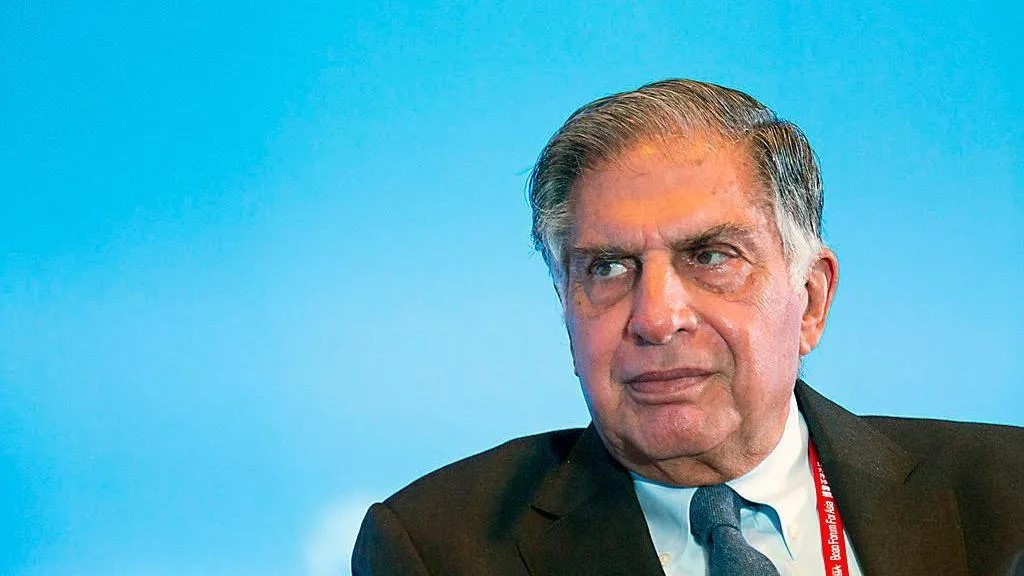
    This is INTO INDIA’s sincere tribute to Ratan Tata who has passed away aged 86.

    Kind, compassionate, humble but also very business wise – he is the role model for so many contemporary Indian business leaders.

    During his 20 year tenure as chairman of the Tata Group, the conglomerate made several high-profile acquisitions, including the takeover of Anglo-Dutch steelmaker Corus, UK-based car brands Jaguar and Land Rover, and Tetley, the world’s second-largest tea company. It became global.

    Ratan Tata wanted India to be better: “I am proud of my country. But we need to unite to make a unified India, free of communalism and caste. We need to build India into a land of equal opportunity for all. We can be a truly great nation if we set our sights high and deliver to the people the fruits of continued growth, prosperity and equal opportunity.”

    He was also not a “profit at all costs” business leader.

    This summed up his attitude: “Some foreign investors accuse us of being unfair to shareholders by using our resources for community development. Yes, this is money that could have made for dividend payouts, but it also is money that’s uplifting and improving the quality of life of people in the rural areas where we operate and work. We owe them that.”

    Indian Prime Minister Mr Narendra Modi said that Mr Tata’s legacy stretches far beyond the business world.

    “His contribution went far beyond the boardroom. He endeared himself to several people thanks to his humility, kindness and an unwavering commitment to making our society better,” the prime minister wrote.

    In the words of Ratan Tata, here are some major insights into his mind and the mind of so many business leaders inspired by him:

    “I do not know how history will judge me, but let me say that I’ve spent a lot of time and energy trying to transform the Tatas from a patriarchal concern to an institutional enterprise. It would, therefore, be a mark of failure on my part if it were perceived that Ratan Tata epitomises the Group’s success. What I have done is establish growth mechanisms, play down individuals and play up the team that has made the companies what they are. I, for one, am not the kind who loves dwelling on the ‘I’. If history remembers me at all, I hope it will be for this transformation.”

    History will remember Ratan Tata.

    Lost in Translation? Auto-translate? Handy, but it’s not the whole story!

    INTO INDIA sees too many online communications that use English without cultural finesse – or use Hindi just as a translation exercise.

    Communicating across cultures is always more complex than that.

    Our preference for India is to use experts in India to provide the translation PLUS the cultural nuance.

    Our friends at THE INFORMATION COMPANY are a good example.

    TIC recently created a multilingual website for Bureau Veritas.

    TIC and the Bureau Veritas website was built from the ground up in English, Spanish, and Japanese. Bureau Veritas’ business and leadership has a key presence in said countries, making it all the more necessary to give it a truly organic and ‘local’ UX!

    But TIC knows this isn’t just a language switch—it’s a cultural switch! Each version features tailored content that resonates with local audiences, refined URLs, and meta-descriptions. It’s more than translation; it’s a seamless experience that speaks directly to users in their native tongue. The result? A multilingual website that doesn’t just translate—it connects. Now that’s what we call speaking the user’s language!

    INTO INDIA is happy to connect you (FREE) to our friends at TIC.

    “Let’s talk it over” is a western obsession which does not work in India

    Cultural differences can be extreme – and yet as human beings we share so much in common and want the same things – we want happiness, safety, ease of living, connections and more.

    But the west has a huge obsession about the power of talking.

    There is a dispute – “Let’s talk it over”.

    An argument at home – “Let’s talk it over”.

    We in the west truly believe this works – despite substantial evidence that “talking it over” entrenches division, builds argument and can lead to much unhappiness.

    What is a cultural alternative?

    I recently heard India’s Gurudev Shri Shri Ravi Shankar responding to a question from a couple who could not live well together but could not separate.

    They asked “Should we talk it over?”

    His response was do not focus on each other and the differences.

    Instead focus on a goal. Focus on the few things you enjoy about each other.

    But above all, he said don’t talk it over because – my summary – that only makes the fighting worse.

    He and his wisdom will be in Sydney, Melbourne and Perth in October.

    Just quietly the IPEF could be replacing the TPP and building a stronger Indo-Pacific

    We haven’t been hearing much about the Trans Pacific Partnership (TPP).

    But we might be about to hear more about the Indo-Pacific Economic Framework (IPEF).

    It is quietly working towards many of the goals of the ambitious TPP.

    IPEF aims to establish “high-standard commitments” in four pillars: (1) Connected Economy (selected trade issues); (2) Resilient Economy (supply chains); (3) Clean Economy (clean energy, decarbonization, infrastructure); and (4) Fair Economy (tax, anti-corruption issues). Pictured is India’s Piyush Goyal with the signed supply chain agreement.

    Today, approximately two years since the launch of the Indo-Pacific Economic Framework for Prosperity (IPEF) in Tokyo, the 14 IPEF partners are – Australia, Brunei Darussalam, Fiji, India, Indonesia, Japan, Republic of Korea, Malaysia, New Zealand, Philippines, Singapore, Thailand, the United States, and Vietnam.

    Low profile, step by step the IPEF could build a solid Indo-Pacific community of nations. This has been much needed for some time now.