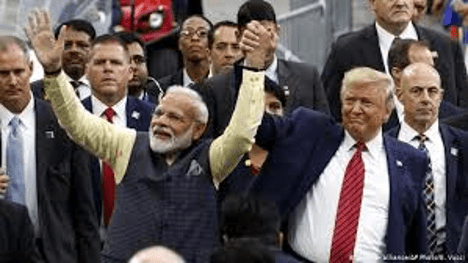
India relies on a friendly USA for progress and peace – but Trump is making this difficult

INTO INDIA last month asked this question – can the USA-India releationship survive President Trump?

This month the answer is even less certain.

New Delhi has some fears on this front – knowing that India’s growing economy and innovation needs a friendly USA. Even more so, the India-USA relationship is a key to ensuring an Asia NOT dominated by China.

India wants agreement with the USA.

Without some effort from Washington, India will just have to find new relationships to secure its position in Asia.

 If India and the United States become more distant to each other, both would have a weaker hand to play when it comes to China.

India is anxious to reduce its reliance on China as a source of supply and also its reliance on the USA as a source of demand.

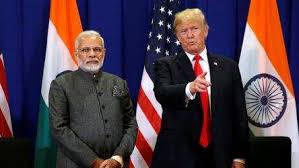
Trump is softening his approach to China while he goes harder on India.

There are serious levels of concern in New Delhi about this.

First, the China border problem continues to fester.

Second, both the USA and China are moving closer to Pakistan = which is also a volatile border for India.

Corporate India seems to have made up its mind – several of India’s largest corporations are seeking a presence or partnerships in China.

But political India continues to look for new friends.

Beyond the Hype: My Take on Navigating AI with Clarity


This is INTO INDIA with a difference – in this blog I am handing over to my friend Vinay Sarawagi who has written the clearest summary of how you should proceed with AI. Vinay is the Founder, The Media GCC | Mindful Media l AI Trust and Safety and is a former Senior Vice President – Digital at The Times Group.

READ HIS REPORT ON “BEYOND THE HYPE”:

Artificial intelligence is the most transformative tech of the century. This doesn’t change another fact: we’re in a hype cycle. Snake oil is being sold in AI’s name.

The Big Tech Reality Check

Organizations and governments are overwhelmed by AI. Smart money sticks to first principles.

Watch what organisations like Apple and Google do. When they slow certain AI implementations, despite hundreds of billions in revenue at stake, it tells you something critical. The technology shows bright sparks. It’s not there yet.

This isn’t about legacy companies being outpaced by emerging tech. Google has done more AI research than most universities combined. These companies aren’t behind the curve. They’re mindful of the gap.

When an AI startup claims breakthrough capabilities that Apple, Google, or Microsoft can’t match, take it with a bucket of salt. These tech giants possess both the expertise and cash reserves, running into hundreds of billions, to acquire any capability they lack.

First Principles in an Age of Disruption

Stop panicking. Avoid emotional responses that swing between overwhelming fear and outright denial.

Two priorities matter: educate yourself your teams on AI’s capabilities and limitations. Stick to your business fundamentals.

Market Psychology and the Innovation Cycle

Markets behave like human psychology. A decade ago, predicting a tech that could replace half of all jobs within 2-3 decades would have seemed absurd. Most believed fundamental innovations were complete. Only incremental progress remained possible.

Then ChatGPT arrived. A public-facing tool that gave everyone a glimpse into generative AI’s power. BOOM! Gold rush mentality.

Markets respond with boom and bust cycles. This process rediscovers the new normal. The challenge: distinguishing hype from real potential while living through it.

This requires a multi-dimensional approach. Grounded, pragmatic, sharp, incisive, data-driven. Also lateral and far-reaching. Finding the sweet spot demands all these perspectives simultaneously.

Separating Signal from Noise

AI will redefine everything we know about our world. True statement.

Today, a lot of AI marketing is snake oil. Also true.

Develop filters. Differentiate real capability from hype. Know what’s right for your business adoption strategy. Always return to first principles.

Strategic Implementation Framework

One week of data can blind you. One month isn’t much better. Long-term data matters. Qualitative benchmarks matter too.

When trillion dollar tech giants proceed cautiously, pay attention. Their restraint reflects deep understanding of current boundaries, not innovation failure.

The future belongs to those who harness AI’s power while avoiding its pitfalls.

vinay@thegcc.media

Australia has a record number of Federal MPs from an Asian background

Pictured is Zanetta Mascarenhas (Swan, WA), an MP originally from India

After the recent elections, there are now eight MPs from a South Asian background and six of Chinese background in the Australian Parliament – which now has a record number of MPs from Asia.

This is a good outcome – but they still only account for about seven per cent of the Federal Parliament compared with about 17 per cent of the population.

Good result – but we need more!

The governing Labor Party will now have six MPs with some Chinese ancestry in its federal ranks after the election, led by Foreign Minister Penny Wong who was the only Chinese background Labor MP in 2019.

They are pre-existing MPs Sally Sitou (Reid, NSW) and Sam Lim (Tangney, WA) along with the newly elected MPs Zhi Soon (Banks, NSW); Julie-Ann Campbell (Moreton, Queensland); and Gabriel Ng (Menzies, Victoria).

 The Government (Labor) now also has four federal MPs of south Asian descent in incumbents Cassandra Fernando (Holt, Victoria) from Sri Lanka; Zanetta Mascarenhas (Swan, WA) from India; Varun Ghosh (WA Senator) from India; and newcomer Ash Ambihaipahar (Barton NSW) from Sri Lanka.

The conservative parties have two MPs of Indian background in NSW Senator Dave Sharma and newly elected Leon Rebello (McPherson, Qld). The Greens have a Pakistan background Senator in Mehreen Faruqi and former Labor Senator turned Independent Fatima Payman is from Afghanistan.

Incumbent Independent Vietnamese MP Dai Le (Fowler, NSW) was returned to Parliament with a small increase in support after an unusual diaspora election battle with Labor’s fellow Vietnamese candidate Tu Le.

This is now a record number of Federal MPs from an Asian background and possibly the largest number ever from a non-Anglo background.

Australia is a major MULTICULTURAL society, and this is beginning to be reflected in our Parliament.

(SOURCE – thank you to Asia Society Australia for the above data)

Things are changing fast in this world as India rises

You could say it has truly become a “funny world”.

Now we hear that one of the world’s leading quality car makers – Japan – is in the top five export destinations for Made-in-India cars.

Key exporters include Suzuki Motor Corporation and Honda Motor Company’s local units, which are increasingly positioning India as a production hub.

According to commerce ministry data collated by the Society of Indian Automobile Manufacturers (SIAM), vehicle shipments to Japan rose to US$ 616.45 million in the first nine months of FY25.

Maruti Suzuki began exporting its Jimny Sport Utility Vehicle (SUV) to Japan in January, signaling an acceleration of this trend.

Honda Cars India exported 45,167 units of its Elevate SUV, mainly to Japan, more than double its domestic sales.

Maruti Suzuki’s Fronx and Jimny SUVs are also available in Japan, with the Jimny generating around 50,000 orders within four days of launch.

Yamaha plans to export premium motorcycles to Japan, leveraging India’s lower sourcing and labour costs.

While my thought was “funny world” – my considered reflection was “well done India for entering one of the world’s toughest and highest quality markets”.

Growth in “sports culture” part of India’s push of soft power and hopes of hosting the 2036 Olympics

Now Indian PM Modi is chasing an Olympic Games for India

Sport is on the mind of the Government of Indian Prime Minister Mr. Narendra Modi.

No doubt the next election he and the BJP face will have a big sports focus.

And words are being backed up by action – the Indian Government has a US$474 million sports budget this year.

PM Modi has always been ambitious for India – and his spending will create a sporting infrastructure boost to underpin the India push to host the 2036 Olympic Games.

A future Olympic Games could capture the minds and pride of Indians everywhere, including the large Indian diaspora here in Australia.

PM Modi recently stated that India’s soft power will grow with the development of a sports culture. Speaking at the inauguration of the Khelo India Youth Games, he highlighted the government’s focus on modernising sports infrastructure with the goal of hosting the 2036 Olympic Games.

A significant portion of the US$ 474 million sports budget for the year is being allocated to this purpose.

India has submitted a Letter of Intent to the International Olympic Committee to host the Games and is competing with countries such as Qatar, Saudi Arabia, Turkey, South Korea, Indonesia and Chile for the hosting rights.

The sports budget has increased more than threefold in the past decade, with over 1,000 Khelo India centres now operating across the country, including more than three dozen in Bihar.

Australia has been doing well via cricket – opening new training facilities and programs in India and chasing other collaborations.

PM Modi’s big sports spend shows the timing is good for all areas of sports in Australia to get over to India and actively participate in this growing sector.

India is available – but are WE capable?

Here is the paradox – Indian growth means there is demand for almost every product and service – but Australian business is not over there selling hard.

Perhaps we Aussies do not have an export mentality?

This was one possible reason canvassed today when I met with Leigh Howard, CEO of Asialink Business.

We agreed that there is still a need to sell the vision of exporting to India.

Asialink Business is really about building “Asia capability” and is keen to do more for the SME sector. You can sign up for an online “Doing Business with India” session this coming Wednesday here – https://asialink.unimelb.edu.au/business/course/academy-intro-india/

We also discussed how our universities could be paving the way for the rest of us to make it in India – their presence is now “bricks and mortar” and both Melbourne University and Deakin University are showing the way.

So, are you capable? Sign up now.

The population paradox in India

Wonderful article by Sunaina Kumar in THE INTERPRETER for the Lowy Institute.

https://www.lowyinstitute.org/the-interpreter/population-paradox-india#msdynttrid=JLdBTs_-HnNZRPTGkUBRWQGZleYD6CL9EmGS-LibtvE

India is growing in some states, declining in others – but rapidly ageing all over. Here are some elements of the “population paradox”:

1. In April 2023 when India reached 1,425,775,850 people, it surpassed China’s population to become the most populous country in the world.

2. India’s population is expected to grow for several decades and could peak at 1.7 billion by the 2060s, while China’s population is already in decline, according to UN estimates.

3. The total fertility rate in India has declined from 3.4 children per woman in 1992-93 to 2.0 children per woman in 2019-21.

4. Population in India will however continue to grow, concentrated mostly in the northern states of the country on the basis of demographic momentum, a phenomenon that results from a large number of young adults in childbearing years.

5. A north-south divide – population is growing in the north and declining in the south.

6. Compared to the north, the five southern states of India are economically more advanced and have been highly successful in slowing population growth by focusing on development and women’s empowerment.

7. India has one of the youngest populations in the world: 65 per cent of the country is under the age of 35.

8. By 2030 one out of every five working-age people in the world is projected to be Indian.

9. To reap the demographic dividend, India will need to add 7.85 million jobs every year until 2030.

10. Alongside this phenomenon, India like China is rapidly ageing, which is linked with declining fertility, falling mortality risks and higher life expectancy in both countries.

The speed and scale of ageing is a global concern but in a country like India, it is a race against time, as the country will need to get richer before it gets older.

Sorting out priorities given the many levels of this “paradox” is a task for Governments and policymakers.

Trump’s “transactional and mercantilist” approach to trade will test India in 2025

India at risk as Trump’s trade policies do not distinguish between friend and foe.

One certainty of 2025 – the terms of trade are set to change.

For India, this presents a major economic risk.

Trump has made trade a big focus of his second term as President of the USA – he is expected to upend the $24 trillion world goods trade and possibly the $7.5 trillion services trade.

This puts at risk India’s largest export market – the US.

The US has also been an important supplier of capital.

The US consumes as much as a fifth of India’s exports —  led by two shiny new growth spots in phone manufacture and global capability centers — and is also among the biggest sources of fund flows, reports Bloomberg’s India Edition, written by Menaka Doshi.

Australia well knows that Trump’s trade strategies do not distinguish between friends and foes – as one of the USA’s closest defence allies, Australia was a major victim of Trump’s anti-China moves.

India could be hard hit this time around as he continues a “transactional and mercantilist” approach to trade.

India and Australia should be making the final negotiations on a trade deal a top priority.

9 reasons India is well placed for the next Trump era

What does the election of Donald Trump as the 47th President of the United States mean for India?

In the past Trump has taken steps to address the US trade deficit with India, like increasing steel and aluminium tariffs, removing GSP benefits, calling out India for high tariffs on motorcycles, dairy, technology items and also pushing for a much more stringent IPR regime.

INTO INDIA provides 9 reasons India is well placed for the next four years of President Trump:

  1. The Indian economy grows due to domestic demand – not trade

    India’s biggest advantage in any global trade war is that it relies much less on trade than most countries – India is flat our trying to meet growing domestic demand, and with a young population this will likely continue.

    But India’s largest trade partners are China and the USA – roughly equal. So, a trade feud between those two will have an impact in India.

    2. India has the advantage of a trade surplus with the USA

    Again, here India is better off than most as it has a trade surplus with the USA.

    3. India is seen as an alternative supplier to China

    Trump’s administration has talked about imposing tariffs of up to 60% on Chinese imports, potentially damaging China’s competitiveness in the US market. In this context, India stands to benefit as an alternate supplier for some of the products where China has dominated in the past, such as electronics, textiles, pharmaceuticals, and more.

    The US imports huge volumes of merchandise from China, such as smartphones, mechanical appliances, toys, furniture, and plastics. India’s share in these sectors is currently low, but the imposition of high tariffs on China could make Indian exports more competitive. For instance, India’s share in the US smartphone market is only 3%, compared to China’s 27%.

    Similarly, the pharmaceutical sector, where India already has a strong export presence, stands to benefit from ‘Trump tariffs’. India’s pharmaceutical exports to the US already account for a considerable share, and with China’s market share likely to shrink, India could see even more demand for its generics and other pharmaceutical products.

    4. Indian renewables might benefit from Trump’s “climate scepticism”

    Another area where India could see an uptick in exports is the renewable energy sector. Trump’s proposal to cut green energy subsidies in the US may create a gap that Indian green energy exporters could fill, particularly with photovoltaic cells used in solar panels.

    5. India has a counter to the 10% tariff challenge

    However, Trump’s proposed universal tariff of 10% on all imports to the US (as mentioned in his recent speeches) could trigger a global trade war, and India’s businesses may find themselves caught in the crossfire.

    But – the economic benefits India stands to gain from trade diversion away from China could well outweigh the costs of universal tariffs.

    6. Indian business optimistic and investing in the US

    Conversely, Indian businesses are optimistic about the favourable business environment in the US under Trump 2.0. For instance, the Aditya Birla Group has expressed intentions to increase its US investments, citing the historically favourable relationship between Trump and India. Trump loves new investment.

    7. India has a friendly investment ecosystem

    Investments are also expected to flow into India. According to a report by The Economic Times, Apple Inc. could boost its iPhone production in India to over $30 billion annually within the next two years.

    Here India’s timing is good – India has developed a strong, investment-friendly ecosystem, making it an appealing destination for global capital. The country’s growing market, skilled workforce, and regulatory improvements position it well to attract more investment, especially as businesses seek alternatives to China.

    8. India has ordered large numbers of US aircraft

    India has another bargaining tool – it makes large aircraft orders, generating jobs in the US, clearly demonstrate why India will be at the Washington DC negotiating tables.

     9. The Trump and Modi friendship runs deep

    Both leaders are seen as outsiders in the establishment of their capitals – New Delhi and Washington DC. Both are anti traditional approaches to governing. Both are often described as alpha – strong – leaders. From my direct experience in India during the first term of Trump – he knows he has a huge fan club in the Indian PM and among Indian businesses.

    To understand Indian business you need to know the leadership of the great Ratan Tata

    This is INTO INDIA’s sincere tribute to Ratan Tata who has passed away aged 86.

    Kind, compassionate, humble but also very business wise – he is the role model for so many contemporary Indian business leaders.

    During his 20 year tenure as chairman of the Tata Group, the conglomerate made several high-profile acquisitions, including the takeover of Anglo-Dutch steelmaker Corus, UK-based car brands Jaguar and Land Rover, and Tetley, the world’s second-largest tea company. It became global.

    Ratan Tata wanted India to be better: “I am proud of my country. But we need to unite to make a unified India, free of communalism and caste. We need to build India into a land of equal opportunity for all. We can be a truly great nation if we set our sights high and deliver to the people the fruits of continued growth, prosperity and equal opportunity.”

    He was also not a “profit at all costs” business leader.

    This summed up his attitude: “Some foreign investors accuse us of being unfair to shareholders by using our resources for community development. Yes, this is money that could have made for dividend payouts, but it also is money that’s uplifting and improving the quality of life of people in the rural areas where we operate and work. We owe them that.”

    Indian Prime Minister Mr Narendra Modi said that Mr Tata’s legacy stretches far beyond the business world.

    “His contribution went far beyond the boardroom. He endeared himself to several people thanks to his humility, kindness and an unwavering commitment to making our society better,” the prime minister wrote.

    In the words of Ratan Tata, here are some major insights into his mind and the mind of so many business leaders inspired by him:

    “I do not know how history will judge me, but let me say that I’ve spent a lot of time and energy trying to transform the Tatas from a patriarchal concern to an institutional enterprise. It would, therefore, be a mark of failure on my part if it were perceived that Ratan Tata epitomises the Group’s success. What I have done is establish growth mechanisms, play down individuals and play up the team that has made the companies what they are. I, for one, am not the kind who loves dwelling on the ‘I’. If history remembers me at all, I hope it will be for this transformation.”

    History will remember Ratan Tata.