

I am often asked by Indians what is it like to be an Aussie? Why are there so few people in Australia? It has made me reflect on what is it like to be an Australian, the country of my birth? Here are some thoughts:
An Island Home
Australia is the biggest island on earth. We often talk about the “tyranny of distance” as a factor in our history and personality – so far from anything, isolated. But isolation probably makes us feel vulnerable and as a result we have always sought big “friends” (Britain, and then USA).
Personal Space

It is a long way between anything in this land. You can drive for many hours without seeing another car or another person. Our feeling of space explains why Aussies visiting India or Europe soon long for the “peace and quiet” of home.
Stars

Drive for an hour or two out of the light of our cities and the stars seem to go on forever and our beloved national symbol – the Southern Cross – is a comforting sign of being “home”. The Southern Cross is five stars – if joined by a line they would make the shape of the Christian cross. Seen from here, the Milky Way is ever present and so dense with stars it can look like a white haze. In Australia, the universe makes you feel small and vulnerable – one insight into the Australian world view.
A Fair Go and Tall Poppy Syndrome

On this dry, isolated island home, we are all in this together. As a result, Aussies grow up believing in a fair go for all, in equality of opportunity, in support for those struggling to make it and in not standing out too much (the tall poppy syndrome). If you get too loud or too successful, we will cut you down (as in the flowers).
Direct and economical
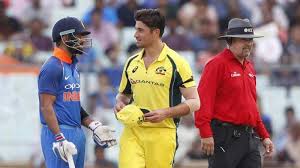
From our western origins as convicts or free settlers in a harsh environment, our speech became direct and to the point. It’s too hot and dry for idle chatter. Australian cricketers are direct and can be aggressively so – which in truth is much the same for all of us. We admire those who face our directness and “can take it”.
The original inhabitants

The British who settled here decided there was no-one here before they came – “Terra Nullius” is a Latin expression meaning “nobody’s land”, and is a nasty principle sometimes used in international law to describe territory that may be acquired by a state’s occupation of it. I don’t like it and nor do most Australians and it was not overturned until 1992. Thanks Britain! Meantime, a lot of harm was done to indigenous peoples. But many indigenous are successfully living as teachers, nurses, doctors, skilled workers. But it is not our style to celebrate this (see “Tall Poppy”).
Urban fringe

Most Australians live in cities that cling on or close to the coast. These cities are stunningly good – well laid out, everything works, they have sophistication and a quality of life envied around the world. We have culture, sports facilities and urban gardens.
“Dormitory” suburbs

When work is over, Aussies rush to their homes, close the door and do not go out again until work tomorrow. The quality of our homes plus the amount of technology to play with is among the best in the world.
Multicultural
 The Chinese came here in the 19th century gold rushes. After World War Two, it was the Greeks and Italians who came to drive manufacturing in our cities. Then the Vietnamese, Serbians, Croats, Fiji Indians, Africans, South Africans, New Zealanders and Pacific islanders. Now – China and India vie for our leading source of migrants. We live side by side, mostly in harmony. We travel together, celebrate each other’s festivals, eat food from all countries…but in the back of our mind is the fragile land – and a kind of primal fear that too many migrants could spoil it.
Worldly
Yet the paradox of all the above is that Australians are not insular, we are outward looking, mostly well informed about the world and we travel a huge amount. But it is always comforting to “come home”.


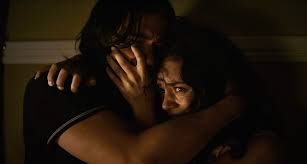
 Kabir Singh as one of the two key terrorists delivers a human performance in an inhuman role – and we see his inner conflict as he tries to stop killing but cannot find another way. Only top direction and acting can make us feel almost that he, like his victims, is stuck and cannot escape.
 Into India