Megacities right on Australia’s doorstep – opportunities in Asia-Pacific

In 1900 only 15% of the globe’s population resided in cities. By 2008 over half of the world’s population lived in cities. The trend continues.

Megacities have 10 million or more people and the future growth is in Asia Pacific.

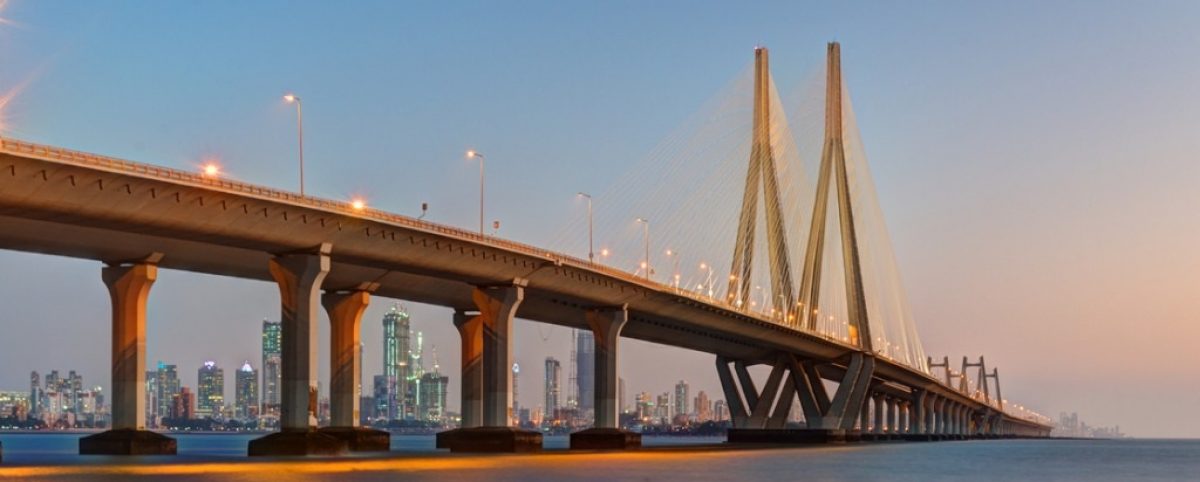
In 2017, Asia Pacific accounted for the largest number of megacities, with 19 of the 33 (58%). China and India are the regional and global leaders, with six and four megacities each in 2017, respectively. For India these are Mumbai, Delhi, Bangalore and Kolkata. Chennai will join them within a decade.

mumbaitrain

Pictured – Mumbai, one of India’s four Megacities

Jakarta, capital of Indonesia, (picture below) will replace Tokyo as the globe’s biggest city – 35.6 million by 2030.

jakarta2

Ageing is expected to have an impact on many key megacities in East Asia over 2017–2030. Growth in the share of over 65-year-olds will be particularly apparent in Seoul, and Chinese megacities such as Beijing and Shanghai.

The twin opportunities for Australia – become involved in the move towards “smart cities” and provide services for the ageing populations. It’s right on our doorstep.

Yes Steve SIR!

In the last 10 years I have been to China once and India 7 times. Why? Both are exciting and the new thing. I choose India because it is more than a destination – it is an EXPERIENCE.

Experience Number One – is actually here in Australia, where I work as a volunteer helping Indian university students improve their employability skills. They are so polite. By contrast, Australia has a very informal culture where everyone is regarded as equal – old and young, rich and poor, powerful and not. First names are used everywhere – 10 year olds at my golf club often say “How was your game STEVE?” But Indians have a formal courtesy which is charming and it is the only time in Australia I am called “Sir”. I ask the students – can you adjust to our informal culture here and call me Steve? Their answer – yes we can Steve SIR.

More experiences of India in following blogs…Anna3

Are you ready for the facts on how much India has changed?

(Based on an article by Monika Halan, consulting editor at Mint and writer on household finance, policy and regulation)

Indian elections have just opened – so, how long does it take to find out if your name is on the Indian electoral role? Go to the Election Commission site, it asks you to SMS to check if your name is on the list—thirty seconds later, you will get a confirmation that your name is or is not there. Things move fast in modern India.

As Monika Halan writes – “Most people get their Provident Fund (PF) balance on SMS too. Also, the passport and visa processes are mostly all automated and keeps us well-informed about the progress of the process.”

So, what else works fast and well in India?

The metro network where it exists, in cities like Delhi and Kochi, is superb.

trains2

Getting or renewing a passport used to be a total nightmare a decade back. Enter private sector plus technology and the average time it takes for the passport application process is 30 minutes to under 4 hours. The passport reaches home by courier in a couple of days. At every stage, you get an SMS informing you what will happen next.

What about getting a driving licence? At least in Delhi, the process is mostly painless—online form filling, and 30 minutes to three hours of time in the local office. The licence reaches home in just a few days – according to Monika Halan.

Property registration used to be a nightmare. But Halan says “That again is a breeze. Again, a mix of technology and processes has reduced transaction time and pain hugely.”

Payments is the other huge success story of modern India. Forgetting your wallet at home is no big deal anymore. The money is in the phone. In a wallet, on an app or available through mobile banking. Riding on the backbone built by the National Payments Corp. of India (NPCI), transaction options and ease are both world-class.

payment

So how long does it take you to get a Wi-fi connection? How long does it take you to open a bank account? At least in the big metros, a Wi-fi connection happens within a day. Opening a bank account takes lesser time. The average time for these services in most developed countries is much longer. In most of Europe, for instance, it takes at least a month to get both these services.

Modern India is fast. Click on “buy” at 11pm and hear the doorbell ring at 9am the next morning.

A huge shift has happened in India and even Indians have failed to notice. The mix of technology, competition and cheap labour – plus reformist governments – means modern India has some of the simplest and fastest processes in the world.

All of this in just over a decade.

Time to catch up with what is really happening in modern India?

Australian media – especially Fairfax – misrepresent modern India

India is not understood in Australia – China continues to hold our national imagination. Our myopia on India is a problem because within ten years India is tipped to become the third largest economy in the world.

Multiple cliched views of India dominate – slums (despite millions lifted out of poverty), public sector corruption (despite serious advances through use of IT) and the so-called Hindu fundamentalism of Indian Prime Minister Narendra Modi (despite four years of relative communal stability).

How does Australia get India so wrong? Our media influences our national perspective on India, and recent coverage of developments in the holy city of Varanasi (The sacred as strategy, The Age, 9 April) shows how we focus on cliché and miss the big picture. The article branded development in this city as Modi’s move to “insert religion into the centre of the political debate”.

So, what is happening in India and why should Australia care?

Four things are important for Australia – India’s investment growth, rising local consumption, over a decade of around 7% economic growth per year and governments (central and 29 states) awash with money due to the GST.

As a result, every part of this country is being transformed and demand is rising for products and services of the type Australia is good at. By contrast, our trade with India is stagnant – if not for rising numbers of Indian students, trade would be in decline. Clearly, we are missing something.

What is the real picture in Varanasi? Sure, as reported a major new promenade is being built – as much as anything to enhance the tourism appeal of this great city. Branding it as driven by a religious view is as silly as claiming tourist development around Uluru is “divisively pro-indigenous”.

But the bigger picture is far more interesting. Varanasi is just one of one hundred “smart cities” being developed across India, with new roads, freeways, cleanliness, sewage treatment, trade and convention centre, traffic management and more upgraded within five years. Located on the banks of the River Ganges, the city will also become a multi-modal river and road transport hub, supporting local industry.

Varanasi is preparing for a 25 per cent growth in tourist numbers, fuelled by a combination of India’s middle class and international visitors.

To see this as promoting “a distinctly Hindu state” displays a stubborn refusal to see the bigger picture in India. What is happening here is happening across India.

Just look at tourist numbers for the Taj Mahal, India’s best-known symbol of Muslim India rule – located in Agra, another city having infrastructure upgrades as part of the Modi Government’s Smart City program. In the last year there were approximately five million tourists, of which 4.5 million were Indians of all beliefs. This weight of numbers demands infrastructure upgrade, and the Taj Mahal and Varanasi are examples of many across the country.

Indians are becoming more interested in their own history and they can afford travel. It makes no sense to link this to some divisive religious plot.

International yoga day is another example of Indians promoting and being confident about their heritage – celebrated in countries around the world with many millions in the west now more interested in yoga. That yoga grew within Hindu India is incidental.

Australia should know how much India is changed – we have just taken our first delivery of railway carriages made in India for Sydney’s public transport upgrade. Modi’s “Make in India” program is working.

Health is improving – a new study shows that the lives of 50,000 Indian children have been saved through a measles vaccination campaign run between 2010 and 2013.

We know a lot about the generosity of Bill Gates, but Indian tech billionaire Azim Premji has just given away US$21 billion to philanthropy, becoming the biggest endowment in Asia – our region.

At a BDO “Improving Business with India” seminar last month I tongue-in-cheek explained rapid change in India by launching my “India Shopping Mall Index”. Here goes – there were 3 shopping malls in India in 1999 – just 20 years later there are over 350 malls and another 85 in the pipeline.

The Indian Finance Minister has estimated India will have a middle class of around 600 million by 2030 when it becomes number three economy in the world.

All of this is exciting news for Australia – we would know about these great changes and opportunities if we avoided the old cliched views of India. If we continue to view India though a prejudiced lens, we will see only what we look for – such as Modi and Hindu nationalism or the poverty of slums – and we will miss the great changes that offer real possibilities for us.

Within our volatile and changing region, India could become our most important friend – but right now we are looking at India with blinkers on.

Stephen Manallack is a blogger at IntoIndia.blog and former President, Australia India Business Council (Victoria)

The above article was submitted to The Age on Tuesday 9 April – not yet published.

History in the making as India begins shipping trains to Australia  

When a consignment of six metro coaches built in Baroda was shipped from Mumbai on Friday, it created history in India’s manufacturing sector.

The metro coaches, built for the Australian government, was the first of its kind India has ever exported.

The coaches, which measure 75 feet in length and weigh 46 tonnes each, were loaded in house by the Mumbai Port Trust.

Over the next two-and-a-half years, a total of 450 ‘Made in India’ metro coaches will be exported to Australia.

This is also the first of its kind export India is doing ever since the launch of ‘Make in India’, which aims at turning the country into a global manufacturing destination.

Things are changing fast in India and it is good to see it linking with Australia as it creates history.

(Thanks also to my friend and former AIBC President Rashi Kapoor for alerting me to this story)

trains2

Pictured are “made in India” carriages for the Kochi metro system – so India is supplying for domestic demand as well as exporting

Why I am an optimist

Seeing the massive changes in India and China, it is clear that in five years they will have less pollution and better health than today.

In fact, there is a lot of good news around if you look for it in the right places.

news1

These reports come from my friends at FUTURE CRUNCHhttps://futurecrun.ch/goodnews

Volkswagen, the largest car manufacturer in the world, responsible for 1% of global carbon emissions, has committed to going fully carbon neutral by 2050. NYT

America has officially entered coal cost crossover. 74% of existing coal plants now cost more to operate than to replace with wind and solar. Utility Dive

Between 10th and 17th March, Germany got 72.6% of its electricity from renewable energy resources. Did someone just say “baseload power?” Renew Economy

In January 2015, at the height of ISIS’s power, 7.7 million people were estimated to live under its rule. As of last week, that number is zero. CNN

Between 2010 and 2013, India ran a measles vaccination campaign. A new study estimates that it saved the lives of about 50,000 children. Nature

This year will see almost two billion people in 50 countries vote, the largest number in history. Did someone just say “death of democracy?” Al Jazeera

Indian tech billionaire Azim Premji is giving away $21 billion to philanthropy, the fifth largest endowment in the world and the biggest in Asia. ET Tech

Clever win by animal rights activists. Australia has passed a law that prevents companies using data from animal testing for developing cosmetics. The Age

Deep in the frozen forests of Russia’s far east, the Siberian tiger is staging a quiet comeback, thanks to government-led conservation efforts. CBC

And – the above is just one of their regular fortnightly summaries.

Good news – it’s there if you look in the right places.

There are also many locations where you will find constant “bad news” – the choice of where to get your information is up to you. Below are examples of news sources committed to spreading fear and despair…

news

Indian governments “awash with money” as the GST has impact

Gross Goods and Services Tax (GST) collection by the Government of India reached Rs 1.07 trillion (US$ 15.41 billion) in March 2019, registering the highest monthly collection in FY19.

This is a stunning boost to both the Central and the 29 State Governments.

We used to advise businesses wanting to enter India that they should only deal with government there “if they have to”. But things have changed. Not only do the central and the State Governments have lots of money, they are all proactive in encouraging business – and competing hard to outdo each other on ease of business and encouragement for entrepreneurs.

gst5

So, our advice today – include governments in your list of people to talk to about doing business with India.


gst3

A “watch out!” for Australian education – the UK and Canada are competing big time

The UK and Canada are innovative and aggressive in their pursuit of international education – reminding Australia that if we regard international education as “just a transaction and revenue opportunity”, we might see decline in future.

First, from the UK:

Ambitions to grow international student numbers by 30% and boost the economic impact of the industry to £35bn annually by 2030 are at the centre of the new UK International Education Strategy. This is huge!

Among the key points of the strategy is an extension of the post-study work visa “to ensure the UK continues to attract and welcome” international students, and plans to improve the visa process and support student employability. Warning Australia – improve the work prospects for international students or expect a backlash.

Other propositions include the appointment of a new International Education Champion to develop global partnerships, tighter collaboration across government department on international education policy and a call for sector groups to bid into the £5m GREAT Challenge Fund to promote the UK internationally.

Current UK numbers are 458,000 international students – increasing to 600,000 under the plan. That’s competition for Australia.

canadaflag

Second, to Canada:

The government proposes to invest CA$147m and $8m per year after that to support work and study opportunities abroad, with the development of an outbound student mobility program, and to promote Canadian education abroad with a focus on its quality. Love this combination!

“In an increasingly global economy and labour market, Canadian youth need to develop a range of skills. These include adaptability, fluency in more than one or two languages and inter-cultural skills—skills that are best fostered through international experiences, such as travelling, studying and working overseas,” the budget text read.

“The investment…will give more students – including those from marginalised backgrounds – the international study and work opportunities so highly sought by Canadian employers,” a Universities Canada spokesperson said.

What should Australia do?

  • Improve employment rights for international students
  • Use international students (paid) to teach us their language and culture
  • Add value by increasing employability skills of international students
  • See students as a long term resource, building a bridge to key economies

What are your thoughts?

children3

5 essential tips for starting out in India

  1. Prepare for Culture Shock

For most of us, our first one or two trips to India is a culture shock. Chaos, arguments, the challenge of crossing the road, cattle in cities, people everywhere, sights and smells you have never experienced, the sounds of the Hindu temple or the Muslim call to prayer, clothing, facial decorations – most of these arise from an ancient tradition which you will grow to love. But, take your time.  This culture shock is more than superficial – prepare for your inner being and values to be challenged by a different way of life and way of thinking about life. With an open heart and open mind, you will learn fast. But if you make early judgements, you will probably never get to know India.

India is also a land of non-conformity where great value is placed on difference and heritage.  An Indian might continue to wear the clothing of their place of origin, even though they are living and working successfully in a major city. Unlike the west, your Indian host might want to know about your belief in God, your approach to diet or your family values.

  1. Stop Stereotyping

India will not work for you if you bring along your prejudices and stereotyping. Yes, you will see extremes of wealth or poverty – but balance this with the massive achievement of the last 20 years or so when millions have been lifted out of poverty. When meeting with your Indian hosts, it is insensitive to talk about the massive slum you drove past to get to the meeting. Yes, you will see men holding hands and women holding hands, but this does not necessarily mean they are gay – hand holding among the same sex is a simple sign of friendship. Yes, someone is bound to say “yes” when they cannot actually do what they said “yes” to – this is not being deceptive it is just a culture when saying “no” is almost forbidden. Going with an open mind is a key step to success. 

  1. Be flexible about your daily schedule

India is not a 9-5 place, it is more a 24/7 place. Meetings can happen anywhere and anytime, on any day of the week. The line between working life and family life is very thin and the two often merge. We used to say the Indian business day started late and finishes very late – but now most actually start early. Breakfast and dinner meetings are a regular part of getting to know you and prepare for these to go on a bit – breakfast can roll on to 10am and dinner might not even start until 9pm.

On top of the 24/7 approach, Indians will change your appointment at very short notice – sometimes as little as 15 minutes. You just have to expect the unexpected. For example, your one-hour meeting might go for two, and then the person you are meeting with decides to introduce you to the CEO – don’t rush off, you have made a good beginning!

All of this means if you are not a patient person, India might not be for you. Being flexible and adaptable are actually signs your Indian counterpart will be looking for – once they know you are easy to work with, things can progress.

  1. Be Diplomatic and more Formal

Indian society is collective and hierarchical, so it runs with a real focus on formality and politeness in every situation. Formality should last a long time in your relationship, and my guess is only after meeting three or four times should you be informal and relaxed in your manner. This formality can apply to clothing – your host might wear relaxed and comfortable hot weather clothing but you are probably best to be more formal. Addressing someone by their first name is just no-go territory and terms like Sir and Madam are often used – in parts of Indian culture addressing a person by their name is less polite than using these terms.

Indians are diplomatic and therefore are indirect in their approach to communication – maintaining face and relationships is the key so the best answer is given for those purposes rather than addressing the facts at hand. Any bad news will be approached in a very circuitous way, so you might not even realise you have received bad news.

Indians genuinely struggle to say “no”, so “yes” is their default answer. You will need to learn the art of asking open questions where a yes or no cannot be used. I have been offered very specific but totally wrong directions in India – again, the focus is on satisfying the relationship rather than finding the facts.

  1. Be Personal and Drink Tea

Indians are very much into people, they want to like you and hope you will share your personal life with them, so be prepared to talk to someone you have just met about your family, dreams and your diet. Sharing personal information is highly valued, so be prepared to open up.

Sharing a cup of tea is also important – symbolic even. This is a tea-loving country so get used to it. The tea at business and government meetings will be a milky and often sweet substance – just drink it. For Indians, this is all about building the relationship, being a kind host and getting to know you.


4 trends for Indian university students studying abroad

Trend 1

STEM courses (Science, Technology, Engineering, and Mathematics) will remain the top preferences for Indian students for studying abroad.

Trend 2

Unusual course choices to increase – The Open Doors Report on International Educational Exchange shows Indian students in the US are now showing a strong interest in off-beat courses like marine engineering, geophysics, game design and development. One main reason behind the shift is that these interdisciplinary courses are not easily available in their home countries. Also, as parents in India become more supportive of their children’s career choices, students are no longer shying away from choosing the road less travelled.

Trend 3

With the ongoing fourth industrial revolution and rapid progress in automation, machine learning and AI (artificial intelligence), traditional job roles are evolving, and new jobs are coming up. Courses such as Robotics, Automation and Mechatronics are likely to witness increased demand in 2019.

Trend 4

The USA, Canada and UK have been the top destination, but challengers will emerge or pass them – including Australia. Plus, spending on tuition and hostel fees by Indians studying overseas has gone up by 44 per cent from $1.9 billion in 2013-14 to $2.8 billion in 2017-18. Australia now has 68,000 Indian students.