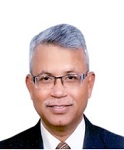
Time for the Nehru-Gandhi family dynasty to end for Congress Party

For almost 100 years, generations of the Nehru-Gandhi family have led the Indian National Congress Party – is this dynasty coming to an end?

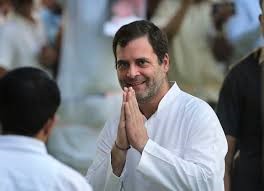
This question pre-occupies Indian commentators as Rahul Gandhi (pictured above) quit after leading the party to a disastrous 2019 election loss to Narendra Modi.

The modern Indian electorate is aspirational and finds little to like in the conservative and history obsessed Congress Party.

One key element of becoming a leader is that you are driven to do it, that becoming leader is your life’s passion. Rahul Gandhi never convinced in this – he looked like a man forced to run because of the dynasty.

In 1919, Motilal Nehru (pictured below) became the president of India’s oldest party, the Indian National Congress. Rahul was his great-great-grandson.

Motilal2

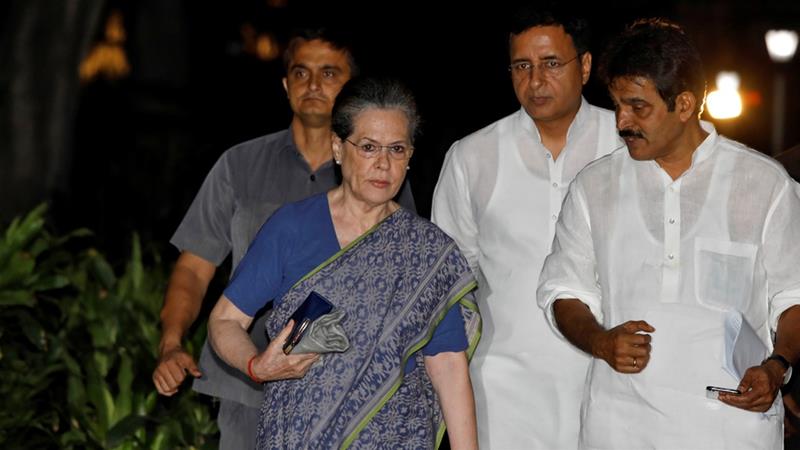
This dynasty goes from Motilal Nehru to his son Jawaharlal Nehru (independent India’s first Prime Minister), and then to Nehru’s daughter, Indira Gandhi (who had married a man named Feroze Gandhi, and since then the dynasty has been called the Nehru-Gandhi dynasty), and her two sons, Sanjay Gandhi and Rajiv Gandhi. After Rajiv Gandhi was murdered by a Tamil terrorist in 1991, the party eventually convinced his Italian wife, Sonia Gandhi (born Sonia Maino), to take over the steering wheel. Sonia brought into Indian politics her two children: Rahul and Priyanka, making them the fifth generation of the Nehru-Gandhi family line within the party leadership.

sonia

Sonia Gandhi returns as fill in leader of the Congress Party as it contemplates the future

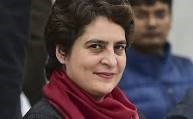
Many say Priyanka Gandhi Vadra (pictured below) has all the leadership qualities Rahul lacked, and could succeed to the leadership.

priyanka2

The huge victory for Prime Minister Narendra Modi’s Bharatiya Janata Party has only underlined how the BJP has replaced the Congress as “India’s natural party of government”.

Congress has been decimated, with only 52 (up 8) national parliamentary seats compared with the BJP’s 303 (up 21) and none from 19 of the country’s 36 states and territories. It is estimated that the BJP won 92 per cent of contests with a Congress candidate and only 52 per cent of direct contests with other parties.

“The Congress Party must radically transform itself,” Rahul Gandhi wrote in his resignation letter. The question is – can it look beyond the dynasty to find a new, modern leader and political brand?

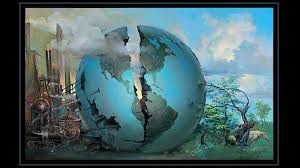
Watch Out! Divided world ahead!

You can see the world dividing, as the USA and China continue locked in a trade war.

The global division began when Trump pulled out of the Trans Pacific Partnership – of which Australia was a part. With the TPP, Trump could have dealt with China on behalf of “the world”. Once this was gone, he was free to just speak for America and that is where the divisions began. This seems to be what he wanted all along.

divided7

Then the trade war with China revved up and seems unstoppable.

One result (unintended consequence) of the Trump approach has been to unite the 15 countries trying to create the Regional Comprehensive Economic Partnership – the biggest free trade deal in history. Australia is part of this, as is, surprisingly, India. So too are Japan, China and Indonesia. The USA is not.

So what would a divided world look like? China on one side (potentially with Japan, Australia, India and the other 15 RCEP countries), USA on the other, different digital technologies and communication platforms – much more fundamental that just selling cheap shirts and tennis shoes. This is a huge divide, not just about trade.

divided4

Australia can probably play this division on both teams – we probably have to, but it will be one hell of a balancing act. Remaining close to America while engaging with China and others in the RCEP could see a win-win for Aussies. But others might have a different view.

India and Australia to be key players in world’s largest free trade deal

Australia and India are poised to be key players in the world’s largest free trade deal – the Regional Comprehensive Economic Partnership which should be signed by mid 2020.

There are 15 countries in RCEP excluding the USA. Major players are China, Japan, Indonesia, India and Australia.

RCEP will have a market of over 3.5 billion people and almost 33% of the world’s GDP.

As we have noted before – Trumps’s trade war with China has given some urgency to RCEP negotiations and the 15 countries are set to complete the deal.

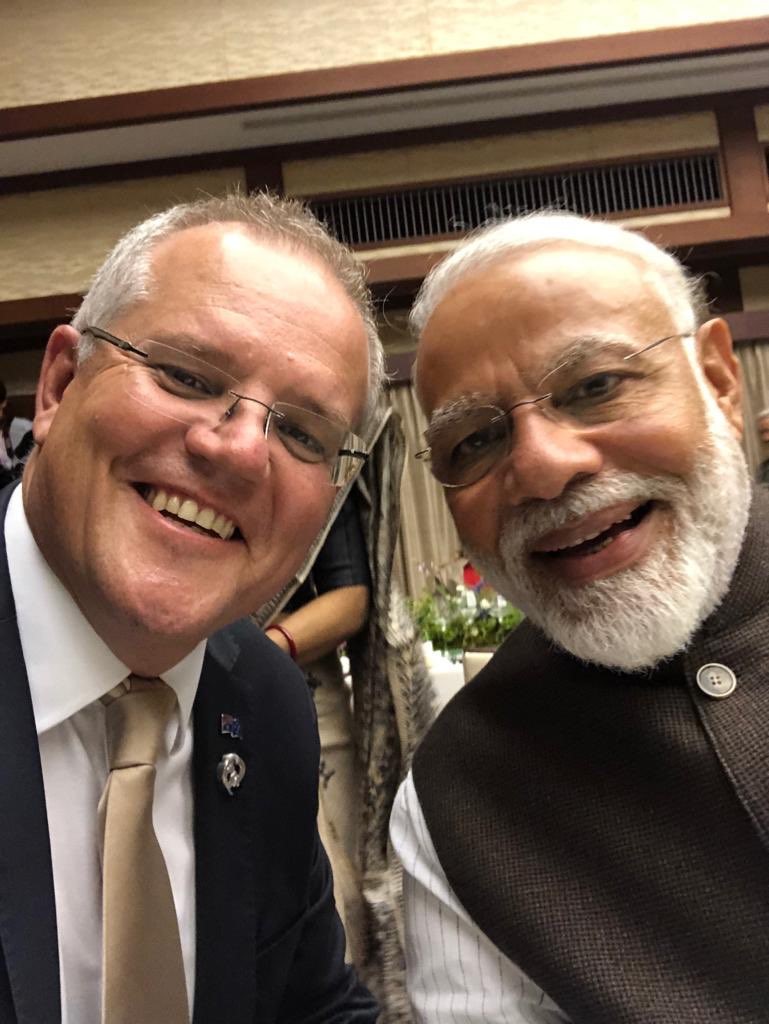
ModiMorrisonSmile2

Pictured the two Prime Ministers excited about RCEP – Australia’s PM Morrison (left) and India’s PM Modi

Revoking special status of Kashmir seems to be common sense by PM Modi

Not many people outside of India would be aware of the “special status” given to Kashmir – but all has changed as the status has been revoked by the Modi Government.

Under the previous special status Jammu and Kashmir had their own constitution and decision making rights for all areas except defence, communications and foreign affairs.

But the special status went further than that – forbidding Indians outside the state from permanently settling, buying land, holding local government jobs and securing education scholarships.

While it might have initially been designed to protect Jammu and Kashmir, we know from experience that special status like this also condemns the recipient to live in a kind of time warp, stagnating and excluded from the broad benefits of economic growth and social change.

In other words, the decision of the Modi Government to revoke the special status seems to be good common sense.

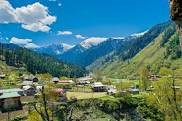
ladakh2

But there appears to be no end of trouble in this area disputed by India and Pakistan.

Maybe the India side can be peaceful via the longer term plan to split the state into two territories – Jammu and Kashmir with their own elected legislature and Ladakh (picture above) which will be ruled directly by the central government.

Let’s hope the move is positive and the people can be free from conflict.

Now the challenge for PM Modi is to find some resolution of the conflict with Pakistan – but that seems a challenge beyond resolution.

Austrade provides great insights into India opportunities

Austrade’s Senior Trade and Investment Commissioner in India, Dr Matthew Durban, (pictured below) analyses opportunities presented by India in this article for Austrade’s Insights. (Extracts)

Durban2

With trade wars, powerful neighbours, and the odds on a recession narrowing within the next two years, considering Indian market entry has never been more mission-critical for Australian business.

  • In 2018, Australia’s total exports to India grew 10% to A$22.3 billion. India ranked number five in Australia’s export destinations.
  • Two-way trade increased by a similar percentage to A$30.4 billion, making India Australia’s sixth largest two-way trade partner.1
  • Australian investment in India increased almost 12% to A$15.6 billion, slightly ahead of India’s investment in Australia at A$15.1 billion.2

However, according to the Australian Bureau of Statistics, in 2016–17 (the latest year for which there is data), only 2,087 exporters engaged with India, compared to 7,214 for China.3

Opportunities for Australian business

The election was largely fought on national security and rural support. However, Austrade has extrapolated opportunities for Australia business from past performance and Austrade’s Indian post network.

Mining equipment, technology and services (METS)

Minerals and fuels already account for almost A$13 billion or 75% of Australia’s total merchandise exports to India. Industry sources suggest the new government will restart the auction of currently moribund coal mines and allow 100% foreign direct investment.

The government is under pressure to meet projected energy demands and accelerate electrification. According to the BP Energy Outlook 2019, coal’s share in India’s primary energy consumption will decline from 56% in 2017 to 48% in 2040.7 But that is still nearly half of the total energy mix and way ahead of any other source of energy.

This will create ongoing demand for Australian METS, two-way mining investment in strategic minerals (this includes coking coal, rare earths and battery minerals), and trade in renewable technologies as well as smart infrastructure.

Food and agriculture

Demand for safe, reliable and quality Australian foods will continue in light of India’s projected population growth.

India’s already very large population will surpass China’s within the next decade. Population growth, currently at 1.1%, is expected to continue until mid-century, reaching an estimated 1.68 billion in the 2050s.8 Though the number of children has peaked, the workforce will continue to expand. According to Bain & Co, the growth of the Indian middle class will lift nearly 25 million households out of poverty. In addition, India will have 700 million millennials and Gen Z (those born between 1995 and 2009) consumers, who have grown up in a more open and confident country.9

The retail landscape in rural regions is developing, with large retailers such as Future Group opening supermarkets in tier-two and -three cities to cater to the nearby regions. Government support in establishing infrastructure facilities, such as cold storage, rural electrification and the internet, is likely to further drive further growth.10

The growth in modern retail opens up opportunities for Australian businesses to supply healthy, high-quality and nutritious packaged goods. Eighteen Australian brands are currently active in the market and there is room for many more.

Education and training

According to India’s human resource development ministry, the Modi Government will focus on setting up teacher training centres and increasing the intake capacity of Indian institutes in engineering, management, science and law by 50% over the next five years.

Telecommunications

Indian telecommunication companies are set to push ahead with investment in broadband infrastructure.11 The advent of 5G, autonomous technologies, edge computing and a digital marketplace for services will need to be balanced with the government’s desire to champion low-cost access, data localisation and e-commerce regulation.

Mitigating the risks with a tailored strategy

Execution remains the single largest risk for India. Doing business in India takes time. India is a diverse country, with 29 states and seven union territories, 22 official languages and innumerable dialects.

Local representation and careful location selection are essential to bridging gaps in understanding and miscommunication. And Australia can start from a position of strength. People-to-people ties are strong and growing. Around one in 50 Australians today (2.4%) were born in India12 and more than 108,000 Indian students enrolled to study in Australia at the end of 2018 – a 20% increase on 2017.13

For the Australian Government’s part, Peter Varghese’s India Economic Strategy lays out the opportunity by sector and geography to 2035. This has been well received by the Indian Government, and the Indian response – an economic strategy for Australia – is expected in the second half of 2019.

Austrade has been operating across India for more than 30 years and has experienced commercial representatives in six major hubs: Delhi, Mumbai, Chennai, Kolkata, Hyderabad and Bangalore. Contact any of our team in-market to learn more.

Dr Matthew Durban is Austrade’s Senior Trade & Investment Commissioner in India with responsibility for Austrade Posts in Mumbai, Bengaluru, Hyderabad and the in-market Resources & Energy industry team. He has almost 30 years’ commercial experience across five countries.

Have a go

Australia could benefit from Trump’s trade war with China

Here’s a very nice irony – Australia and India have really struggled to agree a Free Trade Agreement but one outcome of the Trump trade war on China is that the 15 countries in the Regional Comprehensive Economic Partnership (Including Australia and India) are now motivated to do a deal.

They are talking fast, negotiating hard and could come up with a sweeping deal this year that reduces the need for direct talks on an Australia-India FTA.

ModiMorrisonSmile2

Australian PM Morrison (left) and Indian PM Modi – pretty happy about the future

RCEP will have the potential to deliver significant opportunities to Australian businesses and consumers. RCEP will cover ten of Australia’s top 15 trading partners, and collectively RCEP participating countries will account for a combined GDP of US$23.8 trillion (2016). These countries account for almost 60 per cent of Australia’s total two way trade, and over 65 per cent of our exports.

Thanks Donald.

Indian budget to be presented today showing the way for Modi 2.0

The India Budget 2019 is due to be presented today by Finance Minister Nirmala Sitharaman (pictured).

This will be one of the most crucial Budgets for Modi 2.0 as it will become a guide for upcoming reforms and policies in the next five years of his government.

Modi2Promo

Come and learn more at our FREE Melbourne seminar (copy this and paste into your browser):

https://www.eventbrite.com/e/modi-20-journey-towards-greater-india-tickets-64489650280

‘Kithana acha he Modi!’ Morrison wrote in Hindi, which means “how good is Modi?”

The Australian Prime Minister took to Twitter on Saturday to share a cheerful selfie with Indian Prime Minister Narendra Modi — a fellow world leader attending the G20 summit in Osaka.

‘Kithana acha he Modi!’ Morrison wrote in Hindi, which means “how good is Modi?”.

Indian PM Modi replied in Aussie style – “Mate, I’m stoked about the energy of our bilateral relationship!”

ModiMorrisonSmile2

This relationship could be a key to a successful Regional Comprehensive Economic Partnership deal of 15 countries in our region – big step forward.

The personal connections of leaders can go a long way to overcome bureaucratic hurdles. Long may their relationship flourish!!

Let’s hope PM Modi and PM Morrison meet lots and do deals

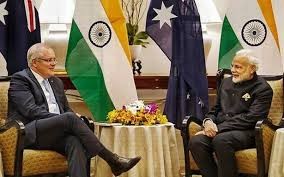
Now, this is the kind of photo I would like to see a lot more of.

Australian PM Scott Morrison (left) and Indian PM Narendra Modi in discussions.

ModiMorrison2

This is vital for Indian Ocean strategic issues plus our trade and investment relations.

Here’s a very nice irony – Australia and India have really struggled to agree a Free Trade Agreement but one outcome of the Trump trade war on China is that the 15 countries in the Regional Comprehensive Economic Partnership (Including Australia and India) are now motivated to do a deal – they are talking fast, negotiating hard and could come up with a sweeping deal this year that reduces the need for direct talks on an Australia-India FTA.

Thanks Donald.


My interview with His Excellency Dr A.M. Gondane, High Commissioner of India to Australia – first extract “tariffs and trade”

One 12 June, I had the privilege of a one-on-one interview in Canberra with the Indian High Commssioner, Dr AM Gondane. Here is the first of a series of short extracts from that interview:

Gondane

Dr Gondane: “Australian tariff rates are low and ours are at a higher level. There are differences and we know that Australia is a very open economy. It is natural for Australia to desire Indian tariffs to match the Australian model, but this will take time. We have actually made a lot of progress and opened more than 90% of our tariff lines for restarting the negotiations.

“There are some sticking points, but I think, with careful negotiation and goodwill, the free trade agreement could be reached. Because India’s tariffs are higher it will naturally take longer to get them down.

“Both Australia and India are negotiating the Regional Comprehensive Economic Partnership (RCEP) forum (meeting in Melbourne this week) which could be another avenue for increased trade.

“The  RCEP provides good scope for commonality and the opening up of India and Australia economies – both are active in the RCEP,” the High Commissioner said.

The 15 Member countries of RCEP are Australia, India, China, Japan, Republic of Korea, Singapore, New Zealand, Malaysia, Indonesia, Brunei, Cambodia, Laos, Myanmar, Vietnam, Philippines. They are meeting in Melbourne this week.

Dr Gondane concluded with a wide ranging comment about the Indian Ocean region and pointed to Prime Minister Modi’s vision for the Indo-Pacific:

Modi oath

“The period of doubling of Indian economy has reduced and we can reach US $ 5 trillion within the next few years. We are already the fifth largest economy in nominal terms and third largest in purchasing power parity. That is why the Indian Prime Minister has elaborated on what is our conception of the Indo-Pacific.  Australia is an important partner in the Indian Ocean. These two powers will be of great consequence in the next twenty years.”