
More on why you should be careful when you hear “yes” in India

I have written before around my question – Is India the world’s most polite country?

Everybody says “yes” in India. Nobody ever says “no”. It’s amazing. You arrive on your first trade mission, seeking new markets, and every meeting is a wild success – great friendship, much laughter, the response of “yes” to everything you ask. After day one you are exhilarated – how lucky am I to meet the right people? Day two is the same – “yes”. Days three, four and five provide more “yeses”.

yes2

Then you go home, report on your extraordinary success and close relations with Indians and wait for things to happen. You might wait a long time.

What is happening here? Indian culture values relationship above all else. By contrast, western culture puts truth and fact above relationship – willingly risking relationship in these instances. This is perhaps the biggest difference between India and the west.

In India, everyone you meet instantly has a “relationship” with you and it is their duty to help. Indians cannot say “no” without giving deep offense. The nearest they come to a “no” is “I will try”. So, “yes” they can import your product, “yes”, they would be a good agent, “yes”, they know how to take you to market.

yes

Is this “yes” just telling lies? Have you been deliberately deceived? If someone did this in the west, with our cultural background, their response of “yes” would indeed be an offensive lie.

But consider my experience of being lost in Colaba in southern Mumbai – I love to wander around this fabulous part of the city. Getting lost is a regular experience for me. The first time, I asked a young man if he knew the way to my hotel. He immediately instructed me – “Go straight ahead, turn right then left and you will surely find it”. How wonderful, I am saved. But 100 metres later it does not feel right. I ask another, who sends me back and he actually knows the way to my hotel. The first person simply did the very best he could in the relationship at that time.

So next time someone in India says “yes”, just remember you are in the world’s most polite country. Otherwise, like me, you might get lost.

namaste

The Himalayas can show us a key difference between India and the west

Do Indians have a different world view and culture to the west? Of course, each country or region of the world has their own culture and differences exist – understanding and adapting to difference is one key to succeeding across cultures.

This simple statement about the Himalayas might help you see the difference.

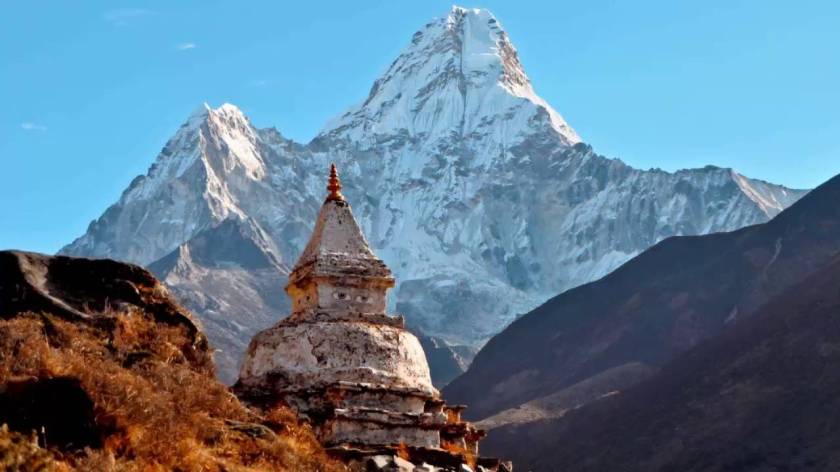
If the Himalayas were located in the west, people would flock there for bungy jumping, extreme ski sessions, jumping out of planes and other extreme sports. For India, the Himalayas have been a location of contemplation, monasteries, thought and mindfulness.

alexander

I saw a similar point made using the example of Alexander the Great. The west admires Alexander as a person of action, conquest, growth and acquisition – while a hero in India could be a guru sitting in contemplation under a tree.himalayaMy point is simple – when we understand cultural differences we can then adapt our behavior and communication while remaining true to our own culture.



guru

Cultural generalisations can be helpful but remember they are just generalisations – there will be exceptions and culture is riddled with paradox. Many westerners are great contemplatives, while Indian history has many action heroes.

7 tips – how Indians can communicate better with Americans and Aussies

Communicating across cultures is the key to future success as the world gets smaller. The trouble is – people from different countries who speak English imagine that they all think the same. They do not. Americans speak English but think American. Australians speak English but think Australian.

Here is how to prepare for better communication with Americans (and many Aussies):

Pitch

What’s the point— In America time is money and everyone is in a hurry. India’s “indirect” style of communication does not work well, it is too slow for them. You have to be good at PITCHING, using around 75 words which really grab their attention (or as Americans would say, “cut to the chase”).

Sports speak is the way to go— Americans and Aussies love sport (different ones). This shows up in their language and you should follow too – observe how they use “home run”, “slam dunk”. “stepping up to the plate” and many more – then use these yourself to make better connections.

americans3

Be much more informal— Americans and Aussies tend to be informal, and everyone can have a say regardless of status. This is generally not the case in India. Just because Americans and Aussies might dress casually or sound informal and relaxed, don’t think they are not deadly serious about doing business. It is not easy for most Indians but using first names soon after meeting is the norm (and not adding “Sir”).

You will be interrupted— Americans and Aussies love fast paced rapid fire conversations, with everyone jumping in to have a say – both are egalitarian cultures and even very junior people are encouraged to speak up. Interruptions are not seen as rude, rather they can see this as signs that things are going well. Silence on the other hand is never a good sign.

americans2

Present actively and immediately— Start with the finish – presentations that build slowly to a conclusion drive Americans mad.  Americans and Aussies want to be engaged and entertained. Dry powerpoint presentations about your company will not make connection. An active presentation that shows how you can solve a problem, add value or team up will attract and keep attention.

Brand

Make your presentations even faster— you can quickly bore Americans and Aussies – especially in America business is done at great speed. People feel time poor, stretched and become impatient. So – cut your message to the absolute essence, and you will succeed.

Silence is a warning sign— America does everything loud, and the Aussies are following. There is sound everywhere, TV’s are on, radio, computers, music all happening at once. Americans feel uncomfortable in silences and long pauses.

We’ve helped many Indian organisations communicate better with the west – and in every case it has been turn the presentation around, start with the problem and how you can add value. Any presentation beginning with “Let me outline the history of our company” is a recipe for failure in the west.


Finding the right words, the right you and making friends

Effective business leaders have the art of using the right words at the right time.

I like a combination of my grandmother and the Buddha for inspiration.

Grandma used to put it this way: “If you can’t say something nice, say nothing.” This is a wise caution against being too critical of others. She would have liked this quote from the Buddha: “If you know anything that’s hurtful and untrue, don’t say it. If you know anything that’s helpful and untrue, don’t say it. If you know anything that is hurtful and true, don’t say it. If you know anything that is helpful and true, find the right time.”

This becomes an effective restraint against communication mistakes, but how can we project ourselves and connect with others?

Brand

By changing the way you see yourself, and changing the way others see you, your personal brand and real leadership can develop and inspire others.

The first big change is to accept that in a modern world it is not enough to be very good at what you do – whether your skill is a profession, science, IT, engineering, health, a trade, finance or consulting. In addition to being the best at what you do, you have to have an impact on those you serve and this comes down to improving your communication and leadership. In that way, you create a positive personal brand.

You can improve communication by studying how business communicates, but also making big advances if we combine this with the wisdom of the ages, with the thoughts of great thinkers and spiritual leaders.

One of the barriers is that we make assumptions about people that often turn out wrong. If we assume a person is not interested in us, we become tongue tied or stay away – it is the assumption that is the barrier.

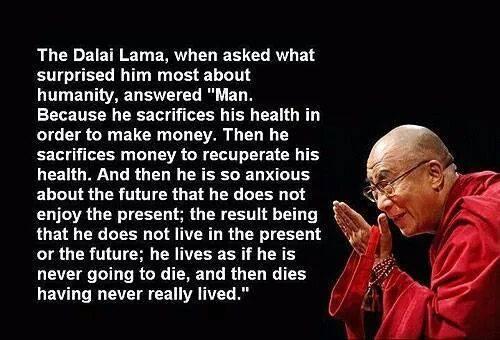
There is an alternative and I could find no better source than this quote from His Holiness the Dalai Lama: “Wherever I meet people, I always have the feeling that I am encountering another human being, just like myself. I find it is much easier to communicate with others on that level. If we emphasise specific characteristics, like I am Tibetan or I am Buddhist, then there are differences. But those things are secondary. If we can leave the differences aside, I think we can easily communicate, exchange ideas and share experiences.” This is a great soft skills lesson.HHDL quote

This western and eastern thought process was so beautifully developed by a western nun and great author in the Tibetan Buddhist tradition, Pema Chodron, who said: “When you open yourself to the continually changing, impermanent, dynamic nature of your own being and of reality, you increase your capacity to love and care about other people and your capacity to not be afraid. You’re able to keep your eyes open, your heart open, and your mind open. And you notice when you get caught up in prejudice, bias, and aggression. You develop an enthusiasm for no longer watering those negative seeds, from now until the day you die. And, you begin to think of your life as offering endless opportunities to start to do things differently.”

But this attitude needs to be combined with some of the communication lessons from corporate communication, showing how we can be more successful making new friends and lead by:

·      Listening to people

·      Speaking in ways they understand

·      Not being scared of being different

·      Creating something interesting to do

·      Making relationships fun

I know you can do it.

5 essentials to building business with India

There are 5 steps we should take to grow our trade ties with India.

Adopt a patient long term view

Focus on relationships

See beyond the politeness

Adapt to indirect communications

Realise that language and thinking are different

If we can adopt a caring, humble and inquisitive approach – learning cultural dexterity – we will build the relationships which are the key to success.

namaste

“The Pitch” – the next big thing for Indian students

What reality are students facing on graduation? Employers are impatient and demanding in job interviews, often starting with a blunt “Why should I hire you instead of all these other people?” and ending quickly if the answer is not convincing. This is particularly the case in India where almost half of the population is under 25.

On top of this, students who want to move into startups and new businesses will find financiers and advisors similarly impatient.

The reality for student graduates is they are entering a fast-moving world that demands to be convinced, right now. Can they do the convincing?

Repeated studies by employer groups suggest students are not at all convincing, not articulate, inexperienced in teamwork and show little leadership aptitude. How could they be, when most universities do not teach these skills?

Can we solve this problem? Can we create a generation of graduates who are job ready, who can hit the ground running?

The answer is “yes”, and the key to this is not so much the old fashioned soft skills training programs but it is found in the exciting world of “pitching”.

In the last quarter of 2017, several parties combined to conduct an Indian Student Employability Pilot Program in Melbourne. These included Australia India Business Council, ISANA International Education Association and my company EastWest Academy Pty Ltd.

The objective was to test whether a short intervention could add significant value to the students in terms of: Presentation skills (pitching); Interview techniques; Linked In profiles; CV’s.

The program included three group sessions plus interaction via WhatsApp, email and personal contact. To add real zest and motivation, the final session was an opportunity for the students to pitch to the board of ISANA International Education Association – a challenging but exciting prospect to convince influential leaders.

By focusing our intervention on a rapid program of developing a dynamic “pitch” for the forthcoming board meeting, the students had a clear goal, timeline and motivation.

Outcomes were exciting to experience. The pitches were competitive, with much improved clarity and pacing, slower speech and clear transmission of information. What was really exciting was the students quickly learned that any claim they make needs to be supported by proof – generally one additional sentence.

In addition, the presentation to the board was interactive and showed a good ability to handle tricky questions and effective use a two-part answer – if the question is about weakness, outline what that might be and then state what steps you have taken to improve. Or if about strengths, again, outline what that might be and then show proof of when you used that strength.

The key to this success was the excitement around “the pitch” – this is what the students wanted, they saw it could work for them and they put energy and skill into making high impact pitches. They are ready for the future.Never give up

10 things to know about modern India

  1. Successful and confident

Economic success has restored Indian confidence. Indian entrepreneurs are now recognized around the world and there is a national expectation that the next Bill Gates will be an Indian. This entrepreneurial spirit permeates the nation (most dream of becoming entrepreneurs) which is now confident.

economy

  1. Never forget rural people

Indian business and political leaders may live the urban lifestyles, but they do not forget the small towns and villages at the centre of rural life – and it’s not just the politicians with an eye for votes, with major corporates such as Infosys pouring resources and funding into village developments.

ruralindia

  1. Avoid pointing the finger

India is a land of great cultural diversity, many languages and countless opinions, but two things unite the nation – cricket and the World Trade Organisation. Indians become instantly passionate when challenged on their high tariffs, especially if the challenge comes from the west. The message is, point the finger at India and you can expect a robust response.

  1. Oceans of patience

Indians have oceans of patience which can drive westerners crazy, but it gives them a special strength in negotiations. This patience is derived from deeply held spiritual views such as impermanence – Indians are constantly reminded of the impermanence of this life, everything changes, and they can wait when often we cannot. Who has the advantage in this negotiation?

  1. Not just an IT miracle

Do not be fooled with the view that the Indian economic miracle is just driven by call centres and IT. Important as these are, look also at insurance, energy, retail, clean technology, manufacturing, pharmaceuticals and even agriculture as areas where efficiency is producing startling results.

 BKC3

  1. Dragon and elephant can dance

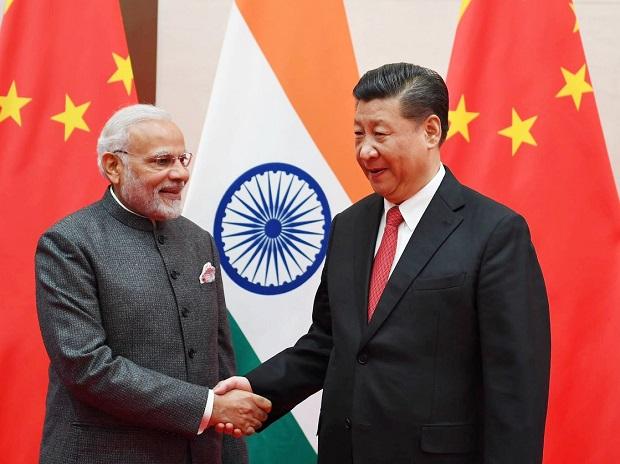
The dragon (China) and the elephant (India) have discovered that they can dance, and now China is India’s major trading partner. Competitors are becoming collaborators and western business leaders need to be aware that the Indians coming to negotiating tables will be leaders who confidently see that this century belongs to the east.ModiXi

  1. Not especially “Asian”

While India feels great about the success of “Asia”, in many ways it does not feel particularly “Asian”. First and foremost, Indians feel Indian, and to them that is vastly more relevant than being geographically part of Asia.

  1. Remember the “Father of the Nation”

Whether dealing with the young or the old, in India never forget the “Father of the Nation”, Mahatma Gandhi.

ATT00036_

  1. Equity up there with democracy

Partly because of Gandhi, Indian leaders are more concerned with equity than with spreading democracy around the world – and cannot understand the enthusiasm of the USA and its allies to champion democracy in unlikely locations.

  1. No junior partner

While many in the west still see India as a “developing” country and therefore a future player on the world stage, India has no intention of being a junior partner or a bit player in the world. Invite India in and you can expect them to want to be at the head of the table, making the running. This is a country whose time has come – and the people you deal with are highly aware of this.

Can India help solve the western disease of unhappiness?

It seems many in the west struggle to live with wealth – there is evidence of considerable dissatisfaction, unhappiness and medical conditions that impact a sense of well-being. If you doubt that there is mental confusion in the west, just reflect for a moment on the western phenomena of “road rage”, surely the product of unhappy minds.

Could some of the answers to this western dilemma be found in India?

Prayer2

From Sri Sri Ravi Shankar and many others, including Buddhist thinkers, we learn that our attitude to events and people around us is the most important factor in our mental well-being. The west largely seeks this well-being through events and others, not through self contemplation.

People in the west have extensive material wealth but little focus on the mind and the spirit. Largely as a result, they continue to seek lasting happiness from things outside of their own mind – happiness through a job, travel, possessions, plastic surgery, new partner, bigger house and so on. Buddhist teachers remind us all these things can be fine – so long as we have a stable sense of inner well-being. That is, lasting happiness comes from within.

namaste

The Buddha taught in India that looking for lasting happiness outside of our inner life results in attachment (where we want more and more and fear losing what we have) and in aversion (where we blame others for our unhappiness). You can see how “enough is never enough” would drive these minds.

Another western phenomena is “busyness” which is evidence of impatient minds and the drive for external sources of happiness.

India has long taught patience – living with adversity, accepting the flaws of others – whereas the west is so driven that patience is a word rarely used.

himalaya

If the Himalayas were located in the west, people would flock there for bungy jumping, extreme ski sessions, jumping out of planes and other extreme sports. For India, the Himalayas have been a location of contemplation, monasteries, thought and mindfulness.

It has long been said that the ultimate western hero was Alexander the Great who conquered more than anyone before him – while a hero in India could be a guru sitting in contemplation under a tree.

In this comparison, could we find one key to happiness in the wealthy west?

How “culture” can divide the west and India – and how to overcome it

Every country has a culture – the way things are done, how people think and more. To succeed with another country, it makes sense to first understand their culture – that way, we can adapt to it.

Cultural misunderstanding is at the core of our lack of trade and diplomatic connectivity with India.

The importance of cross-cultural understanding is not about focusing on “difference” – it is about knowing what those differences are, so we can then ADAPT our behaviour. Further, cross-cultural analysis is not claiming one view to be right and the other wrong.multicult

Consider what the academics call “absolutism vs relativism” – we in the west are absolutist so we place all our energy on contracts, project plans and we never like surprises. India is a relativist culture, so it knows things can only be defined relatively, and whatever we decide upon will change as life inevitably changes. You can see how these two differing world views create problems for us.

The absolutist thinker puts rules above relationships – while the relativist thinker places relationship way above rules. Knowing this, we can adapt.

aboriginal

Also look at western “individualist” culture and compare with India’s “collectivist” culture. The west empowers individuals to make decisions, whereas in a collective culture, decisions are made by the group and can take more time. Not such a problem when you understand it.

Plus consider that the west is called a “specific” culture while India is “diffuse”. What does this mean? The westerner is direct, open and always in a rush – cannot stay for dinner. The Indian prefers to be indirect, works around an issue rather than confronting it, takes time, wants you to stay for dinner and never says “no” even when that is the right answer, preferring the often misunderstood “I will try”.

With these differences and many more, whether we are Indian or western, if we train to understand and ADAPT to the difference, we face much better prospects of success.Tourists1

The way India thinks about time

How do we perceive time? And what does this mean for my appointments or travel schedule? In the west we see time as sequential, a straight line, whereas in India your host sees time as synchronic, they see the past, present and future as interrelated.

In a nutshell, this approach to time explains why westerners are always rushing about, completing one meeting and rushing on to the next, while your Indian host seems relaxed, not in a rush, dealing with many other things while meeting with you and so on.

Sequential cultures include the UK, USA, Canada and Australia. Synchronic is definitely India and probably all Asia.

Anyone who has been at an Indian business function will see this working out – while announcements and speeches are being made, people move in and out of the room, mobile phones ring and are answered (even by presenters), private discussions take place and the scene is a moveable feast. But the western equivalent will ask for mobiles to be switched off, will collectively frown when they ring, will sit and not move – paying attention to the single topic at hand.

On returning home from one of my early trips to India, for the first month or two I told everyone about one of the “disaster” meetings I had in India – while I was presenting my proposal, my Indian colleague was constantly interrupted, taking calls, signing letters, giving instructions and so on. At any time there seemed to be four or five people in his office, all actively doing things and distracting him – or so I thought. But two months down the track I discovered that he had been paying attention, knew what I proposed and even more, wanted to go ahead. Disaster to triumph without even knowing it!

Time – just one of several major areas of cultural difference that we face when engaging with wonderful INDIA.