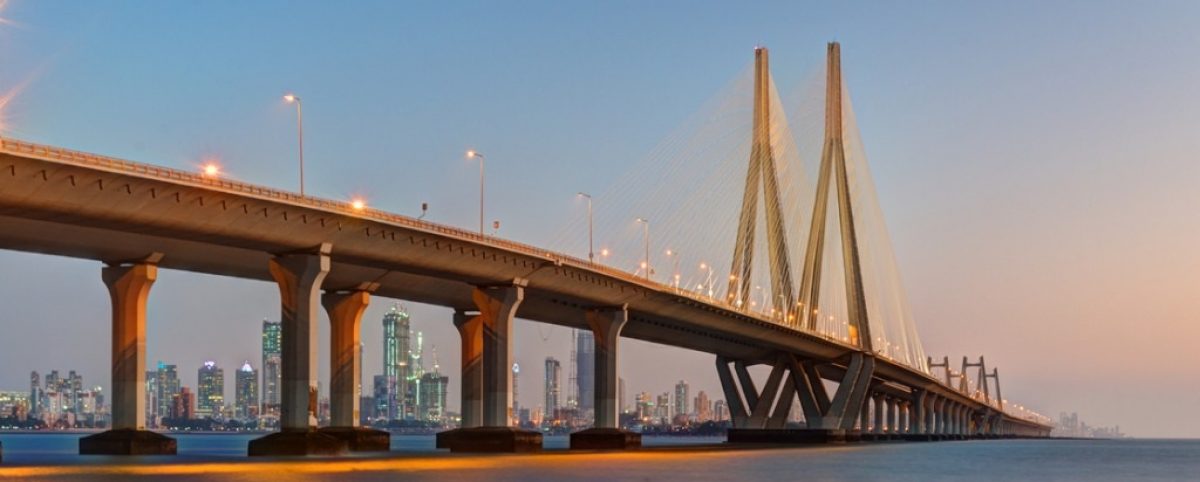
Watch Out! Divided world ahead!

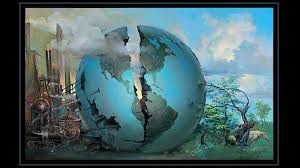
You can see the world dividing, as the USA and China continue locked in a trade war.

The global division began when Trump pulled out of the Trans Pacific Partnership – of which Australia was a part. With the TPP, Trump could have dealt with China on behalf of “the world”. Once this was gone, he was free to just speak for America and that is where the divisions began. This seems to be what he wanted all along.
divided7

Then the trade war with China revved up and seems unstoppable.

One result (unintended consequence) of the Trump approach has been to unite the 15 countries trying to create the Regional Comprehensive Economic Partnership – the biggest free trade deal in history. Australia is part of this, as is, surprisingly, India. So too are Japan, China and Indonesia. The USA is not.

So what would a divided world look like? China on one side (potentially with Japan, Australia, India and the other 15 RCEP countries), USA on the other, different digital technologies and communication platforms – much more fundamental that just selling cheap shirts and tennis shoes. This is a huge divide, not just about trade.

divided4

Australia can probably play this division on both teams – we probably have to, but it will be one hell of a balancing act. Remaining close to America while engaging with China and others in the RCEP could see a win-win for Aussies. But others might have a different view.

AustralianSuper leads the way on Indian infrastructure investment

The National Investment and Infrastructure Fund (NIIF) of India has just  announced that AustralianSuper, Australia’s largest superannuation fund, and Ontario Teachers’ Pension Plan (Ontario Teachers’), Canada’s largest single-profession pension plan, have each signed agreements for investments of up to USD 1 billion with the NIIF Master Fund.

niif

The agreements include commitments of USD 250 million each in the Master Fund and co-investment rights of up to USD 750 million each in future opportunities alongside the Fund.

AustralianSuper and Ontario Teachers’ will now join the Government of India (GOI), Abu Dhabi Investment Authority (ADIA), Temasek, HDFC Group, ICICI Bank, Kotak Mahindra Life Insurance and Axis Bank as investors in the Fund.

markdelaney2

Pictured Mark Delaney, CIO, AustralianSuper

AustralianSuper and Ontario Teachers’ will also become shareholders in National Investment and Infrastructure Fund Limited, NIIF’s investment management company. Domestic investors HDFC Life and Kotak Mahindra Life Insurance have further committed INR 600 million in the third round.

With this, NIIF Master Fund becomes the largest infrastructure fund in India with assets under management of over USD 1.8 billion and a co-investment pool of USD 2.5 billion, which will enable the Fund to invest at the scale required for the large infrastructure requirements in India.

Well done AustralianSuper – leading the way for investing in India.

AusIndiaFlags

India and Australia to be key players in world’s largest free trade deal

Australia and India are poised to be key players in the world’s largest free trade deal – the Regional Comprehensive Economic Partnership which should be signed by mid 2020.

There are 15 countries in RCEP excluding the USA. Major players are China, Japan, Indonesia, India and Australia.

RCEP will have a market of over 3.5 billion people and almost 33% of the world’s GDP.

As we have noted before – Trumps’s trade war with China has given some urgency to RCEP negotiations and the 15 countries are set to complete the deal.

ModiMorrisonSmile2

Pictured the two Prime Ministers excited about RCEP – Australia’s PM Morrison (left) and India’s PM Modi

Revoking special status of Kashmir seems to be common sense by PM Modi

Not many people outside of India would be aware of the “special status” given to Kashmir – but all has changed as the status has been revoked by the Modi Government.

Under the previous special status Jammu and Kashmir had their own constitution and decision making rights for all areas except defence, communications and foreign affairs.

But the special status went further than that – forbidding Indians outside the state from permanently settling, buying land, holding local government jobs and securing education scholarships.

While it might have initially been designed to protect Jammu and Kashmir, we know from experience that special status like this also condemns the recipient to live in a kind of time warp, stagnating and excluded from the broad benefits of economic growth and social change.

In other words, the decision of the Modi Government to revoke the special status seems to be good common sense.

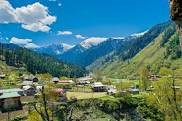
ladakh2

But there appears to be no end of trouble in this area disputed by India and Pakistan.

Maybe the India side can be peaceful via the longer term plan to split the state into two territories – Jammu and Kashmir with their own elected legislature and Ladakh (picture above) which will be ruled directly by the central government.

Let’s hope the move is positive and the people can be free from conflict.

Now the challenge for PM Modi is to find some resolution of the conflict with Pakistan – but that seems a challenge beyond resolution.

India’s richest man to target retail as a balance to energy investments

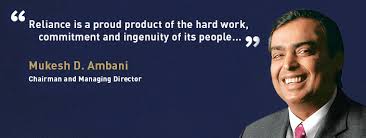
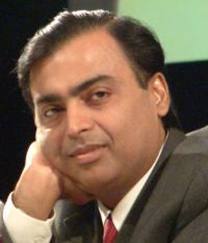
Mukesh Ambani, India’s richest man and boss of Reliance Industries Ltd (RIL), is launching an ambitious plan to boost retail revenue as a balance to his energy interests.

Mukesh Ambani

RIL will soon hire distributors to sell private-label brands owned by its retail unit through neighbourhood stores – across categories such as staples, food, home and personal care and general merchandise.

RIL sells these products through its retail stores under brand names such as Best Farms, Good Life, Masti Oye, Kaffe, Enzo, Mopz, Expelz and Home One.

Ambani expects the consumer businesses to contribute nearly as much to RIL’s overall earnings as the energy and refining businesses by 2025.

As part of this strategy, RIL is taking on online retailers such as Amazon and Flipkart in the e-commerce segment and the likes of Hindustan Unilever Ltd and ITC Ltd in the offline segment.

Watch this space!

Reliance Retail already operates neighbourhood stores, supermarkets, hypermarkets, wholesale, specialty and online stores.

India’s renewable energy reaches new highs

We often look at India from outside and just see pollution – but look closer and you will see major change is taking place.

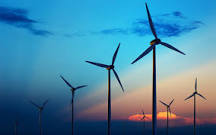
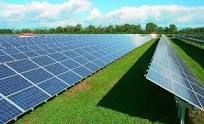
Solar and wind energy are taking off – “An aggregate of 80.46 GW of renewable energy limit has been introduced in the country as on June 30, 2019 which includes 29.55 GW from Solar and 36.37 GW from Wind control,” according to Power and New and Renewable Energy Minister Mr R K Singh.

solar2

The government has set a focus of 175 GW of clean energy capacity by 2022, including 100 GW solar and 60 GW of wind energy.

According to India’s submission to the United Nations Framework Convention on Climate Change on Intended Nationally Determined Contribution (INDC), a combined electric power limit of 40 per cent from non-fossil fuel-based energy resources is to be introduced by 2030.

The Ministry also told the House that a sum of 42 solar power parks with a total limit of around 23.40 GW have been approved by the government so far to encourage accomplishment of 100 GW target by March 2022.

Well done India – keep it going.

Modi reforms paying off in record FDI for India

India has just reached record levels of Foreign Direct Investment inflow of US$64.37 billion, evidence that the Modi Government reforms are having an impact on the global reputation of India.

When the Prime Minister Narendra Modi-led NDA government assumed power in 2014-15, the FDI inflows were US$45.14 billion.

indiagate

Tata’s big jump in global brand value rankings

For many years the Tata group has been the stand out leader among Indian corporates.

It regularly tops brand valuation charts.

But it has made a big leap forward this year, making the highest gain among the top 25.

Tata5

In the 2019 study by UK-based Brand Finance of the nation’s leading 100 brands, there was a sharp jump in brand valuation achieved by the “salt-to-software” business house.

The 2019 list shows a 37 per cent jump in brand value for the Tata group, to $19.55 billion for 2019, the highest in the top 25. Last year, the group had achieved a brand value of $14.23 billion, which was a jump of nearly nine per cent.

Well done Tata.

tcs

Investing in India? The “investment grid” is a great source of information

Invest India runs a terrific website called the “India Investment Grid” and projects of all sizes and kinds are available there.

Terrific source of quality information.

https://indiainvestmentgrid.com/portal/

IIG-Logo-New-Black1

India Government to open state-owned firms to investors

The Modi Government plans to raise as much as US$ 47.4 billion in the next five years – by reducing the stakes in large state owned firms. It will include those in the oil, gas and power sectors.

I think this must be the country’s biggest privatisation move in more than two decades.

Finance Minister Ms Nirmala Sitharaman, in her maiden budget announced that there will be reduction in direct controlling of stakes in some state- run firms.

oil7

In its previous term, the government sold stakes in a host of companies to raise US$ 40.92 billion which was three times that of the previous government.

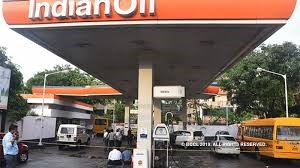
The government has identified several state-owned firms, including explorer Oil and Natural Gas Corp, oil refiner Indian Oil Corp, gas transmitter GAIL (India) Ltd, power producers NHPC Ltd and NTPC, miners NMDC Ltd and Coal India, and Bharat Heavy Electricals Ltd.

oil2