How to Create an Effective Cross-Cultural Training Program

As Australia builds closer relations in Asia while India strides into the western world, it becomes more important than ever that employees have cross cultural knowledge.

My reading on cross cultural training programs is that the best focus on the assimilation of workers from a variety of cultures into a common corporate culture (sometimes called “cultural congruence”). The best also teach “cultural differentiation” – how to maintain your own culture while recognizing the value of others. That has been my mantra – stay true to your culture while adapting where you can.

This messaging has to start from the CEO and flow down, improving internal and external cross-cultural communications.

But beware – many existing programs are basically just etiquette training—such as whether you should bow or shake hands—and do not deal with the bigger issues.

Also beware of just training people in the basics such as Americans do this, Indian do that, Aussies do something else. Interesting and useful – but does not prepare your ream for behaving in cross culturally different situations. This takes many employees outside of their comfort zone.

Boeing: A Mixed Approach

At Boeing, the world’s largest aerospace company with 330,000 employees in 28 countries, leaders use a mix of approaches and tools—from online modules to afternoon seminars to one-on-one training—to help staff become more culturally aware. All employees are trained using GlobeSmart, an online resource developed by Portland-based Aperian Global. Workers and their families embarking on overseas assignments are given one-on-one sensitivity training and cultural orientation sessions.

The goal is to make sure employees are “not just landing in a country and getting introduced for the first time,” says Lisa-Marie Gustafson, SPHR, a talent manager for Boeing’s supplier management group.

Boeing also arranges “lunch and learn” cultural talks, employee rotation programs to allow overseas staff to work for nine to 18 months in the U.S., and diversity summits twice a year in U.S. locations.

Good training programs address subtle differences between people of different cultures. How is trust built differently in this culture? What is the most constructive way to provide criticism?

SAP: One Size Doesn’t Fit All

SAP is a software giant based in Walldorf, Germany, with locations in 130 countries. It has an elaborate diversity program, which includes cultural sensitivity training.  

Employees embarking on overseas business trips can access online cultural briefings. All SAP employees can take classroom-based training and receive interactive instruction. The company uses a mix of internal and external trainers and customizes its training depending on the location destination and employees’ needs.

Professor Andy Molinsky and “Global Dexterity”

I am a big fan and user of programs from Professor Andy Molinsky from Brandeis University – he claims the best training programs should also teach employees how to act in cultural situations that make them uncomfortable. That is, training would ideally teach employees “global dexterity”—which is also the title of Molinsky’s book.

In his programs, a student from Asia who may be culturally programmed to remain quiet unless she’s asked to speak, would practice speaking out at meetings without being prompted. Or an American who’s uncomfortable giving blunt feedback could practice that skill. Molinsky says the idea is for students to be put in realistic situations and to benefit from feedback and analysis in a supportive environment.

Making a start

Of course, for most corporations the first steps in building effective cross cultural training come from knowing your employees and assessing current attitudes.

You can choose to start with a simple program – creating a workplace committed to treating every employee, customer and client with respect. Of course, the program should define what that means—such as using no racial terms, jokes or language, even if such conduct is legally permissible in a particular country.

Tesla shows why India is the number one market right now and for many decades

The beauty of scale and economic dichotomy. 20% of Indians are growing their incomes and about to increase discretionary purchases – this 20% is a great market of 280 million people.

Mugunthan Siva, Co-Founder of India Avenue Investment Management gives some valuable insights into how this scale and dichotomy works.

The other 80% of the population of 1.4 billion is the “factory of India”, which allows companies like Tesla to manufacture more cheaply out of India. Plus of course the rural population with increasing productivity.

The real beauty of this – as employment and skilling in this segment increases, it will also start participating in more consumption.

A beautiful summary of why India today is the market of choice.

Read more detail here:

https://www.businesstoday.in/technology/news/story/tesla-to-set-up-factory-in-india-within-2-yrs-start-ev-imports-next-year-406499-2023-11-21

Searching for India – during the joyous explosions of Diwali

I did not know about the Diwali Festival – this is one of my first visits to New Delhi and I am staying in the beautiful old art deco Taj Ambassador Hotel, close by to the Khan Market and, these days, to a Delhi Metro station. The hotel is an oasis of calm.

It’s the end of a busy day and I retire early, drifting off and then sitting up startled by the massive explosion outside – it seems to be on the road in front of the hotel.

I put on some clothes and race down to reception and breathlessly ask: “did you hear that! What is it?” The reception staff are beaming, their joy is obvious. “Sir, happy Diwali – Indians let off firecrackers to celebrate.” I ask: “At this time of night?” She replies: “Sir, it could be at any time, day or night, we never know – but there will probably be more tonight.”

Since I cannot sleep, I check out this Diwali festival. It is beautiful – if a bit loud.

There is nothing in India more joyous than the annual Diwali “Festival of Lights” celebrating the triumph of good over evil, light over dark and knowledge over ignorance. Surely this optimistic and hopeful theme is relevant to our world today?

Families come together for meals and exchange of gifts such as sweets and dried fruits. Children look forward to Diwali in India in much the same way as they look forward to Christmas in the west – with great excitement and anticipation.

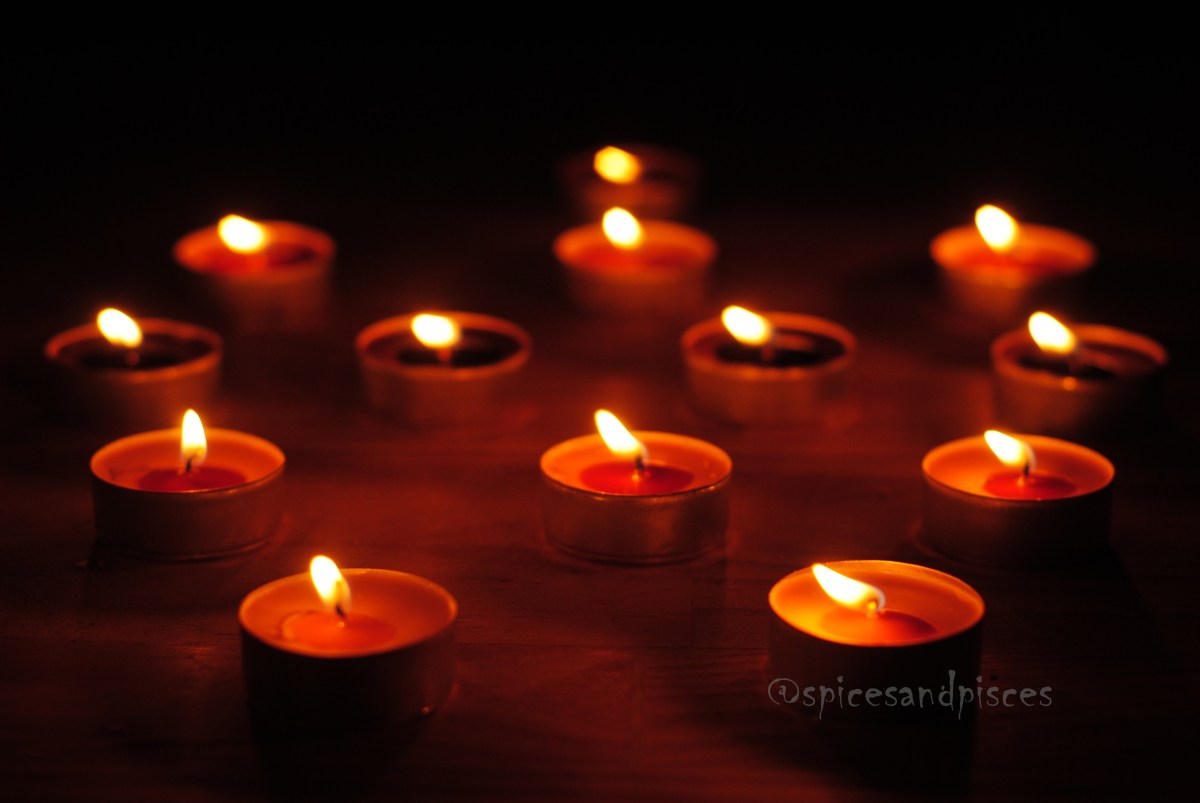
In towns and cities, public buildings are lit up and throughout India homes are surrounded by candles (diya), while people wear their smartest new clothes, and the atmosphere is one of hope. At the end of the day, the sky is lit up by firecrackers and sparklers.

People express their thanks for things like good health, wealth, knowledge and peace.

At heart, Diwali is an expression of goodwill to all people, and so its public face is not about the voice of one religion. One of the few festivals to be held across the whole of India and touching all 1.4 billion people, Diwali cuts across religions and is celebrated by Hindus, Jains, Sikhs and Buddhists.

Diwali is really a reminder of the beauty of this world and all things in it – what a great message of hope and optimism this is for all our children.

A final note on Diwali

Although my first encounter with Diwali – that explosion in Delhi – filled me with feat in this era of terrorism, yet with all that, Indians freely continue to celebrate as they always have. I admire that.

I was in Jaipur (the pink city) during one Diwali and vendors were selling firecrackers on the pavement – they were stacked about a metre high, and one vendor had about 10 metres of these giant explosives. Bigger than you would have seen when firecrackers were legal in the west. The vendor was happily sitting on top of the lethal pile, smoking a cigarette! Nobody but us noticed or cared. As I learn about India in my search, I am not suggesting selling firecrackers on the footpath, but maybe we can learn again to relax a little in the way Indians do.

As the influence of India grows and as the Indian diaspora in many countries also expands, I hope that the beautiful Diwali might become a truly global celebration of all that is good in us.

This is one of my first lessons as I continue my search for India.