The population paradox in India

Wonderful article by Sunaina Kumar in THE INTERPRETER for the Lowy Institute.

https://www.lowyinstitute.org/the-interpreter/population-paradox-india#msdynttrid=JLdBTs_-HnNZRPTGkUBRWQGZleYD6CL9EmGS-LibtvE

India is growing in some states, declining in others – but rapidly ageing all over. Here are some elements of the “population paradox”:

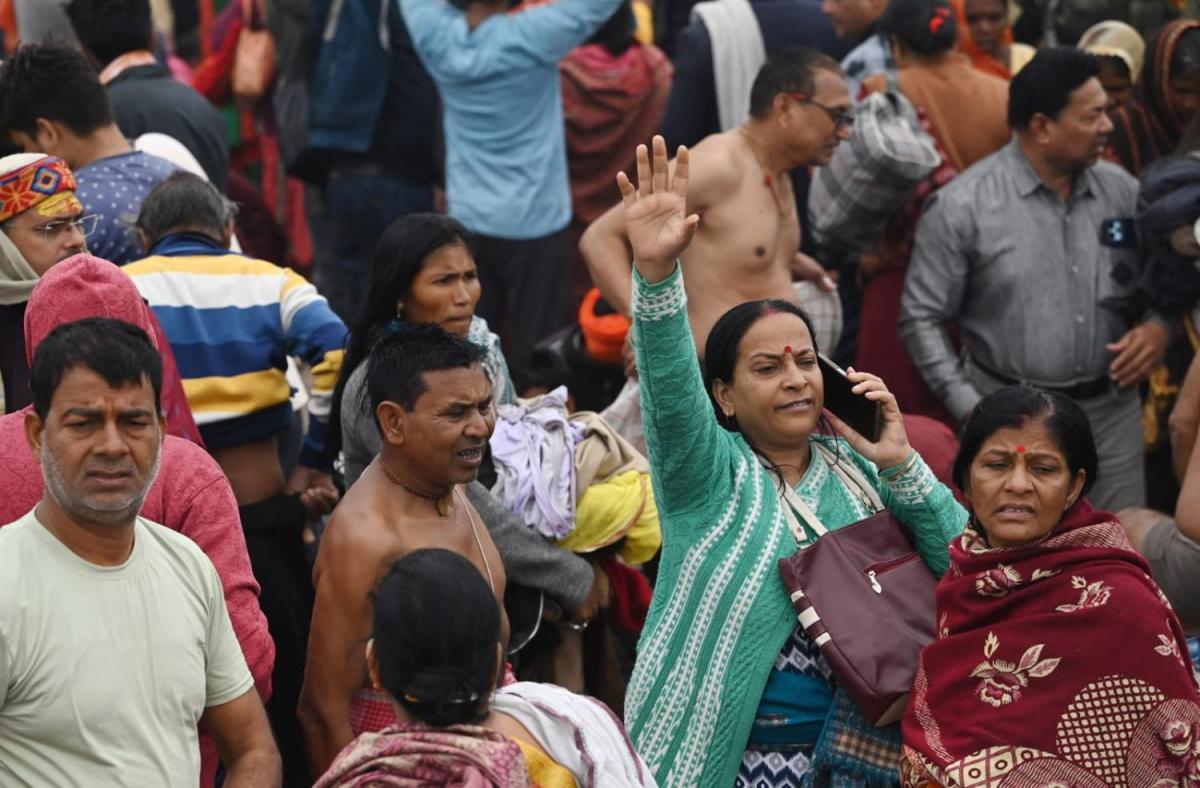
1. In April 2023 when India reached 1,425,775,850 people, it surpassed China’s population to become the most populous country in the world.

2. India’s population is expected to grow for several decades and could peak at 1.7 billion by the 2060s, while China’s population is already in decline, according to UN estimates.

3. The total fertility rate in India has declined from 3.4 children per woman in 1992-93 to 2.0 children per woman in 2019-21.

4. Population in India will however continue to grow, concentrated mostly in the northern states of the country on the basis of demographic momentum, a phenomenon that results from a large number of young adults in childbearing years.

5. A north-south divide – population is growing in the north and declining in the south.

6. Compared to the north, the five southern states of India are economically more advanced and have been highly successful in slowing population growth by focusing on development and women’s empowerment.

7. India has one of the youngest populations in the world: 65 per cent of the country is under the age of 35.

8. By 2030 one out of every five working-age people in the world is projected to be Indian.

9. To reap the demographic dividend, India will need to add 7.85 million jobs every year until 2030.

10. Alongside this phenomenon, India like China is rapidly ageing, which is linked with declining fertility, falling mortality risks and higher life expectancy in both countries.

The speed and scale of ageing is a global concern but in a country like India, it is a race against time, as the country will need to get richer before it gets older.

Sorting out priorities given the many levels of this “paradox” is a task for Governments and policymakers.

Is India the new China?

The stunning economic rise of India is causing a re- think – in 2023, India’s GDP was US$14.54 trillion, the world’s fourth largest economy, behind the United States, China and the European Union.

But what is prompting a rethink by many countries is India’s annual GDP growth of 7.6% – now outstripping all those other countries. India could match China’s 2023 GDP of $34.64 trillion in 14 years. On top of the growth rate advantage, India’s population overtook China’s in 2023, and the “demographic dividend” is kicking in.

This growth comes with an interesting twist, no doubt occupying minds in Washington and Beijing.

India’s military expenditure is now third behind the US and China.

When it comes to regional security in the Indo-Pacific region, India now counts as a major player. In addition to defence spending, location of this large landmass (the world’s seventh largest) means India is pivotal to trade routes crossing the Indian Ocean, as well as being close to China, the preeminent trading nation at the heart of the Indo-Pacific region.

Someone who is well aware of the growing power of India is of course Prime Minister Narendra Modi, a strong leader who stands as an equal with Chinese President Xi Jinping and soon-to-be President of the USA, Donald Trump.

The big question for countries like Australia and New Zealand is where do we fit in with this new scenario, who is listening to us, what does emerging “multi-lateralism” (championed by India) mean for us and how can future trade be assured?

Our diplomats and trade people are well placed and respected in New Delhi – but as the position of India becomes stronger, the diplomatic skills of both Australia and New Zealand will be needed to define our place in what is a new order.

Thanks to Chris Ogden, Associate Professor in Global Studies, University of Auckland, Waipapa Taumata Rau, for some of the above data.