A quick guide to doing business in India

THE “INTO INDIA” QUICK GUIDE TO INDIAN BUSINESS CULTURE

  • While India is one country, there are many Indias within India. India is a multilingual, multi-ethnic and pluralistic society, and vast cultural differences can be seen between North and South India.
  • You might need multiple “market entry strategies” to succeed with these “many Indias”.
  • But beware of generalisations and “expert” advice (including mine!) – it has been said that: “Whatever you can rightly say about India, the opposite is also true.”
  • English is the official language of business.
  • Be prepared for meetings to start and finish late and for interruptions to occur on a regular basis. If you can adapt to interruptions (in almost every activity) then you will have fun and enjoy India.
  • Learn the art of “going with the flow” – avoid filling your whole day with appointments, be flexible, be curious, take in the sights and sounds of this wonderful country and your hosts will be aware of how much you enjoy it.
  • You will no doubt be surprised by how formal and hierarchical is the relationship between managers and staff in India.
  • Indians place great value on relationships: take the time to develop contacts and relationships.
  • “Being there” is a big part of making it in India.
  • One last “generalisation” – India is young, confident, fast and energetic – you need to be all these things too!

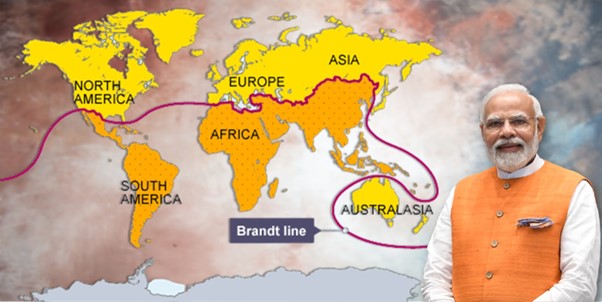
India now wants to lead development in the “Global South”

For several years we have speculated about India’s foreign policy agenda – fuelled by its multi-alignment strategy – where does India stand, ask many western commentators.

But just quietly India has gradually revealed its priority.

Of course, part of this is a response to China – a country which shares contested borders with India.

Many western leaders hoped to “bring India into the fold”, becoming an alliance partner of the USA and others in the west.

But India has made its own choices.

New Delhi plays an active role in multiple organisations – the QUAD (Japan, USA, Australia and India), the SCO (Shanghai Cooperation Organisation) and the BRICS (Brazil, Russia, India, China and South Africa) and remains in these in part to prevent China dominating.

But the “Global South” is now a top priority for Delhi.

India is building a unique bond between the developed and the developing world of the “Global South”. India alone can help the west engage and truly contribute to economic development in the region. For the USA, India can help Washington as it struggles to define and commit to the “Global South”.

It’s an exciting vision, put together by Prime Minister Modi and Foreign Minister Jaishankar.

This “Global South” vision of India does not stop its connections with the west – which remains an important source of technology and capital for India’s growth. It is a great balancing act by the Indian Government.

Since Australia shares its future with many of these “Global South” countries, where can Australia support India in this emerging vision?

Read a more detailed Lowy Institute analysis of India and “Global South” here:

https://www.lowyinstitute.org/the-interpreter/why-india-keeps-foot-both-camps#msdynttrid=FB8Fb-XPrVU8xav4ltaVW09Lm0iwxwP8NNavfmZ3oew


One minute of wisdom – lessons from India on how to relate to conflict

Can we take a more balanced approach to conflict?

In the week ahead, we will almost all face conflict – over politics, within families, at the shopping mall, in school, at work and more. People are on edge. We can protect ourselves from conflict with these simple lessons I picked up from various Indian sources.

Conflict within Yourself:

For most of us, conflict within ourselves is the most long-standing conflict in our life. There is another way. The moment you befriend yourself, everything changes.

Here’s one way to start – what can you forgive yourself for right now?

Conflict with Others:

A massive lesson from India is that relationships are central – they might even be everything. Looking back at the end of your life (if you can imagine) what will matter most is your relationships with the people you love. Do something simple to reinforce this feeling – make someone a cup of tea, reach out to someone you have neglected.

Conflict for The World:

It can get on top of us. Conflict everywhere – Ukraine war, climate change, election battles, communal violence – how can we cope? Pay some attention; you are part of the entire web of life. But try not to follow these conflicts minute by minute. Thinking constructively is a good alternative – for example, how is your lifestyle in conflict with the needs of our planet and the natural world?

In this week ahead, choose connection and relationships. It will lift the weight of conflict off your shoulders.