Does Australia need to have a public holiday for Diwali?

As the Indian diaspora continues to grow in Australia, you can see Indian culture such as Diwali having a big impact in communities across the nation.

Australia is home to a rapidly expanding Indian community.

According to an MEA report, approximately 1 million Overseas Indians live in Australia. The Indian diaspora is the second-largest and fastest-growing in Australia. As of September 2023, there are 122,391 Indian students, making them the second-largest group of foreign-born students in the nation.

Meanwhile, in California, Governor Gavin Newsom has signed Assembly Bill 268 into law, putting Diwali on the list of 12 state holidays. The new law, which will go into effect next year, allows community colleges and public schools to close on Diwali, and state government employees can choose to take the day off.

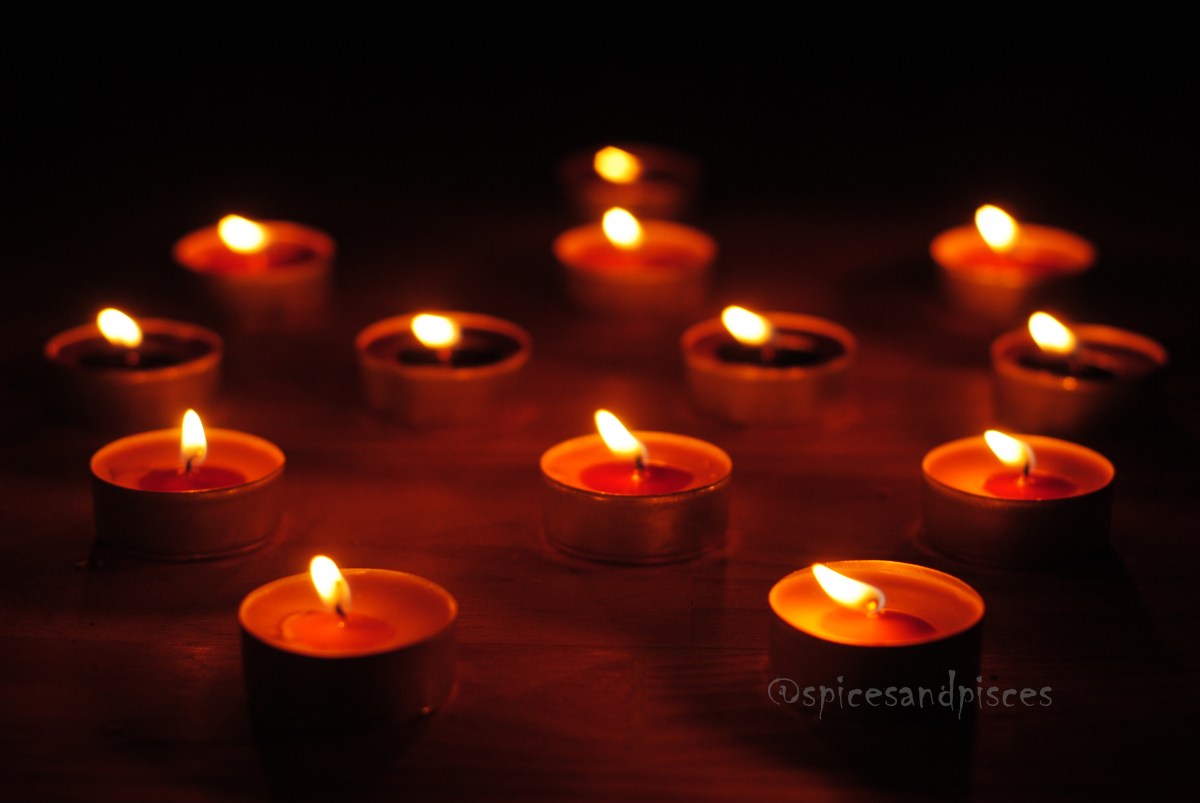
Diwali is such a charming and engaging event – and celebrates the triumph of light over dark, good over evil – it is an uplifting message for our times.

INTO INDIA would love to hear from you – do we need a public holiday for Diwali?

India relies on a friendly USA for progress and peace – but Trump is making this difficult

INTO INDIA last month asked this question – can the USA-India releationship survive President Trump?

This month the answer is even less certain.

New Delhi has some fears on this front – knowing that India’s growing economy and innovation needs a friendly USA. Even more so, the India-USA relationship is a key to ensuring an Asia NOT dominated by China.

India wants agreement with the USA.

Without some effort from Washington, India will just have to find new relationships to secure its position in Asia.

 If India and the United States become more distant to each other, both would have a weaker hand to play when it comes to China.

India is anxious to reduce its reliance on China as a source of supply and also its reliance on the USA as a source of demand.

Trump is softening his approach to China while he goes harder on India.

There are serious levels of concern in New Delhi about this.

First, the China border problem continues to fester.

Second, both the USA and China are moving closer to Pakistan = which is also a volatile border for India.

Corporate India seems to have made up its mind – several of India’s largest corporations are seeking a presence or partnerships in China.

But political India continues to look for new friends.

Can the India-USA relationship survive President Trump?

We have just had 25 years of India and the USA gradually getting closer together.

But claims from US commentators that the two countries have “shared values” and “shared interests” have shown that they miss the point about India.

In the last 25 years India has been engaging with “the world” and has seen the USA as just one among many – it is today, for example, much closer than ever to countries like China, Japan and Russia.

When India joined the “Quad” (USA, Japan, India and Australia) it was celebrated in the USA (and to some extent Australia) as if India had “changed sides”. It had done no such thing.

In fact, within one week of attending a recent Quad meeting, Indian PM Narendra Modi was also high profile at the Shanghai Cooperative Organisation – the world’s largest regional organisation in terms of geographic scope and population, covering approximately 24% of the world’s total area and 42% of the world population.

At heart, this misunderstanding arises from the dramatic differences in world view of the USA and India. The USA and many of its partners see you as being on their side or against them. India, by contrast, takes a more universal view and sees many polarities, many arrangements and alternatives.

In addition, India is not generally evangelical on “democracy” and certainly does not see its mission as imposing democracy on others. It tends to accept others as they are.

Today India faces a 50% tariff from the USA, imposed, it is said, because India continues to buy oil from Russia, which is at war with Ukraine.

On this and other issues with the USA, India takes a quiet non-confronting line – understanding that anger is unlikely to work where reason has failed.

India’s favored policy of “Mult alignment”—seeking friends everywhere while refusing to forge clear single country alliances – is aggravating and confusing to Washington but is an obvious outcome of the Indian world view.

INTO INDIA predicts that the Indian response to Trump’s tariffs and rough tactics will lead to India seeking more diverse trade relationships and to be even more active in building multi alignments.

It’s just a matter of how you see the world.

What do you think?

Growth in “sports culture” part of India’s push of soft power and hopes of hosting the 2036 Olympics

Now Indian PM Modi is chasing an Olympic Games for India

Sport is on the mind of the Government of Indian Prime Minister Mr. Narendra Modi.

No doubt the next election he and the BJP face will have a big sports focus.

And words are being backed up by action – the Indian Government has a US$474 million sports budget this year.

PM Modi has always been ambitious for India – and his spending will create a sporting infrastructure boost to underpin the India push to host the 2036 Olympic Games.

A future Olympic Games could capture the minds and pride of Indians everywhere, including the large Indian diaspora here in Australia.

PM Modi recently stated that India’s soft power will grow with the development of a sports culture. Speaking at the inauguration of the Khelo India Youth Games, he highlighted the government’s focus on modernising sports infrastructure with the goal of hosting the 2036 Olympic Games.

A significant portion of the US$ 474 million sports budget for the year is being allocated to this purpose.

India has submitted a Letter of Intent to the International Olympic Committee to host the Games and is competing with countries such as Qatar, Saudi Arabia, Turkey, South Korea, Indonesia and Chile for the hosting rights.

The sports budget has increased more than threefold in the past decade, with over 1,000 Khelo India centres now operating across the country, including more than three dozen in Bihar.

Australia has been doing well via cricket – opening new training facilities and programs in India and chasing other collaborations.

PM Modi’s big sports spend shows the timing is good for all areas of sports in Australia to get over to India and actively participate in this growing sector.

Is India the new China?

The stunning economic rise of India is causing a re- think – in 2023, India’s GDP was US$14.54 trillion, the world’s fourth largest economy, behind the United States, China and the European Union.

But what is prompting a rethink by many countries is India’s annual GDP growth of 7.6% – now outstripping all those other countries. India could match China’s 2023 GDP of $34.64 trillion in 14 years. On top of the growth rate advantage, India’s population overtook China’s in 2023, and the “demographic dividend” is kicking in.

This growth comes with an interesting twist, no doubt occupying minds in Washington and Beijing.

India’s military expenditure is now third behind the US and China.

When it comes to regional security in the Indo-Pacific region, India now counts as a major player. In addition to defence spending, location of this large landmass (the world’s seventh largest) means India is pivotal to trade routes crossing the Indian Ocean, as well as being close to China, the preeminent trading nation at the heart of the Indo-Pacific region.

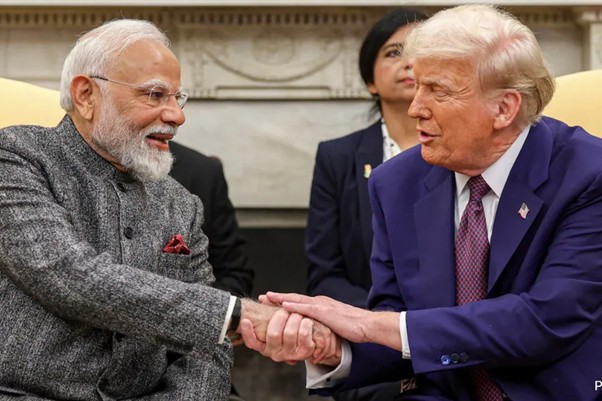
Someone who is well aware of the growing power of India is of course Prime Minister Narendra Modi, a strong leader who stands as an equal with Chinese President Xi Jinping and soon-to-be President of the USA, Donald Trump.

The big question for countries like Australia and New Zealand is where do we fit in with this new scenario, who is listening to us, what does emerging “multi-lateralism” (championed by India) mean for us and how can future trade be assured?

Our diplomats and trade people are well placed and respected in New Delhi – but as the position of India becomes stronger, the diplomatic skills of both Australia and New Zealand will be needed to define our place in what is a new order.

Thanks to Chris Ogden, Associate Professor in Global Studies, University of Auckland, Waipapa Taumata Rau, for some of the above data.

How India can become the “next China”

Globalization worked so well for China, but is stressed today

It’s complicated.

Mainly because of the rise of protectionism worldwide.

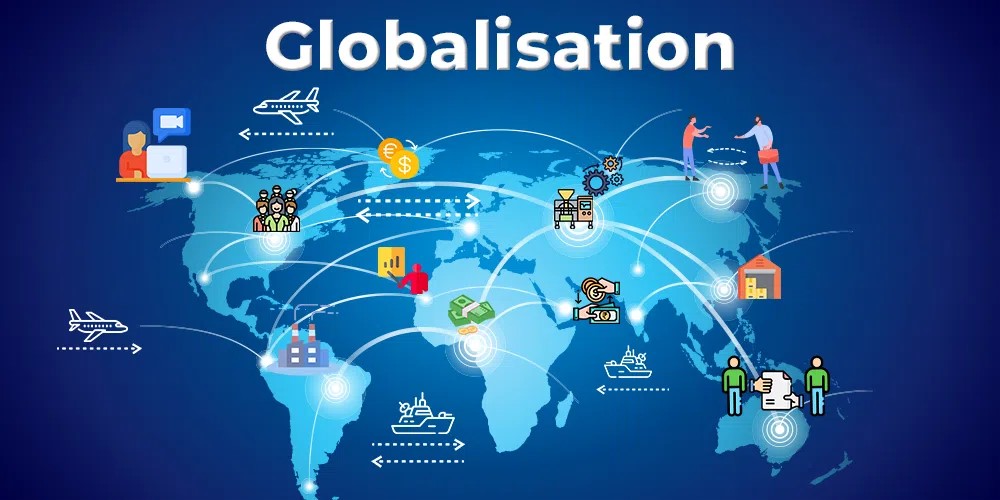
The Chinese miracle rode on the wave of globalization that began around 1980 and lasted until the 2008 global financial market crisis.

Globalization has come under severe stress lately, according to Amit Kumar, a research analyst with the Takshashila Institution’s Indo-Pacific studies program.

Weaponizing trade has left nations increasingly wary of economic coercion.

Self-sufficiency in some form or other is back in fashion. PM Modi is super keen on self-sufficiency for India.

If globalisation is too restricted, India’s ambitions might be thwarted. India could well have shot itself in the foot here, with it’s own anti-globalism and scepticism on international trade deals.

Gains for India will however be derived from the ongoing de-risking and “China plus one” strategies.  

India – unlike China during its growth – faces tough competition from Vietnam, Thailand and Malaysia. India attracted 15% of European investment diversifying away from China, but it fell behind ASEAN, which attracted 21% of the rerouted investments.

India is also lagging on ease of doing business. INTO INDIA has praised India’s progress, but must admit that it is now too slow. Ease of doing business has to leap ahead.

India currently contributes 16% of the global economic growth, as opposed to China’s 34%. The IMF predicts India’s share to rise to 18% in the next five years.

As China witnesses a decline in its share owing to its economic slowdown, we are led to conclude that India should emerge as the leading engine of growth.

With one reservation – “Ease of doing business’ could be the key.

Perhaps India CAN become the ‘next China’ and drive global growth

India’s consumer base is rapidly growing – pic from a Delhi mall

Since INTO INDIA has been involved with India, the mantra from economists and diplomats has been that “India is not the next China “. Is that about to change?

It could be, according to Amit Kumar, a research analyst with the Takshashila Institution’s Indo-Pacific studies program.

China has been top of mind for good reason – contributing more than a quarter to global gross domestic product expansion between 1990 and 2020. In the period from 2013 to 2021, China contributed almost 39% of global GDP growth — 13% more than the G7 countries combined.

How could India become the next China?

India would need to sustain a near double-digit growth rate for nearly three decades.

It would need to integrate with the global manufacturing supply chain, transition into an export powerhouse and attract enormous foreign investment.

But 40 years ago, we would have said the same things about China.

China’s rise from the 1970’s was boosted because of the deepening U.S.-Soviet rivalry and the Sino-Soviet split, prompted the US and the West to open up to China in 1971.

This is happening now with India.

Due to the deepening strategic competition with China, Beijing’s expanding diplomatic and economic clout, its belligerent foreign policy and economic coercion, has sparked concerns of overdependence and strategic vulnerability in the West.

India is emerging (has emerged?) as the preferred partner for the West.

We should not forget that China’s growth was also driven by global businesses looking for cheaper manufacturing.

This is now happening with India. Global firms now see India as an alternative to China.

The Indian Government has already supported high-profile projects involving the manufacturing of iPhones and the assembly of semiconductors – sending an “invitation” to others.

China also had a rapidly growing consumer base. No other Asian country had such a base – until India.

India has the second-largest consumer base – defined as people spending above $12 a day – of over 500 million, second only to China’s 900 million. Estimates show that by 2030, India’s consumer base will expand to 773 million, trailing only China’s 1.062 billion.

The gap between China and India will only shrink from here on.

NEXT BLOG – What India has to do to become the next China.

What will a third term for Indian PM Narendra Modi mean for India and the world?

 INTO INDIA had three big reactions to the Indian elections:

1) Democracy is alive and well in India; 650 million votes cast over a 6 week election process – truly a remarkably strong democracy!

2) Indians want jobs, jobs, and jobs; this is why manufacturing has become so central to India’s economy – the swing away from the ruling BJP suggests PM Modi has to do more on jobs.

3) the Indian voter will expect the government to keep growing the economy – and show why that is a benefit for all Indians.

The only other Indian Prime Minister to win three five-year terms was the first – PM Nehru.

This has been a much closer election than predicted – and probably has given the ruling BJP and PM Modi much to think about. Of course, INTO INDIA notes that long term office holders generally face an anti-incumbency mood.

Congrats to Indian PM Narendra Modi – we have always called him ACTION MAN and in his third term he will need to maintain the action.

We expect a big focus this term on manufacturing, physical infrastructure, digital infrastructure and energy transition.

What’s in a name? Is it “India” or “Bharat”?

What’s in a name? India or Bharat?

Many commentators believe Indian PM Modi will bring on a change of India’s name to Bharat. INTO INDIA thinks this most unlikely.

Modi will win either way, vote or no.

PM Modi will, in a very Indian way, continue to use the two names side by side.

You see, things do not have to be resolved in India – and both sides can have their day. Ambiguity and paradox are part of Indian culture.

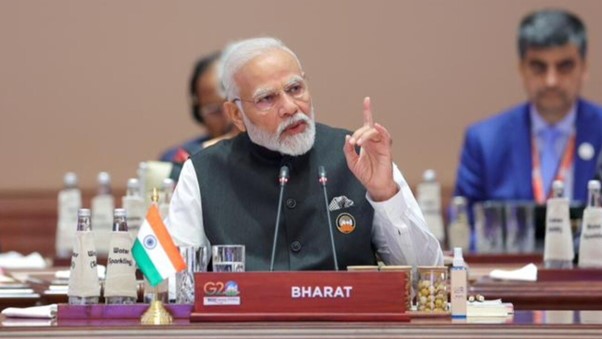
“Bharat” is the Hindu name for the country, so PM Modi appeals to Hindus every time he uses it – such as on menus and nameplates at the recent G20 meeting he hosted in New Delhi last September.

Many attendees thought this a signal that a name change was on the cards for India. Wrong. Just by using both, he continues to create distance between the nation and its colonial past.

Bharat is already a name recognised in India’s constitution.

With India voting in a general election in March and April, we will no doubt see more banners displaying Bharat.

PM Modi knows that getting a name change done is a tough call, requiring a constitutional amendment with a two-thirds majority in both houses of parliament.

So, when it comes to a name, two is better than one. India and Bharat.