International Yoga Day gives insights into how India differs from China

One of the global initiatives of Indian Prime Minister Narendra Modi has been International Yoga Day – celebrated across the world on 21 June each year since 2015.

While China is building a global reputation based on the “belt and road” initiative and creating bases in the South China Sea, defending accusations of deliberately creating debt in emerging nations and interfering with neighbours, India just goes on doing its own thing.yoga2

China has an ageing population and a trade-dependent economy – it is vulnerable to global economic shifts and worried about security of trade routes.

In contrast, India has a young population and economic growth driven by internal demand. It is less likely to be affected by global economic downturns or security issues.

This is not to say security is not on the mind of India – it recently did a significant deal with Indonesia. But for China, security of trade routes is the dominant global concern.

That is why International Yoga Day gives special insight into modern India – lifting millions out of poverty, creating a strong economy and global strength but celebrating the quiet and peaceful side of its culture. This year the theme was “Yoga for Peace” and somehow I feel only India could come up with such a concept.yoga4

World Bank forecasts 7.3% growth for India – world’s fastest emerging market

The World Bank has forecast a growth rate of 7.3 per cent for India this year and 7.5 per cent for the next two years, making it the fastest growing country among major emerging economies.

A top World Bank official said India’s economy is robust, resilient and has potential to deliver sustained growth.economy India retains the tag of the fastest growing country among the world’s major emerging economies, Ayhan Kose, Director of the Development Prospects Group at the World Bank, told PTI.


“India’s economy (today) is robust, resilient and has potential to deliver sustained growth,” Kose said.

“India is doing well. Growth is being robust. Investment growth remains high. Consumption remains strong. All in all these numbers are encouraging,” Kose said, referring to the World Bank report on India’s growth rate figures.

“However, you look at it, India is in a very strong position,” he said.

Why India?

If you are in business or investment, this question (why India?) will have been asked before. But the answer is becoming more compelling as the following list shows:indiagate

  • India to remain one of the fastest growing economies in the world. Source: International Monetary Fund
  • FDI inflows increased by 37% since the launch of Make in India initiative. Source: Department of Industrial Policy and Promotion, Government of India
  • Leading investors ranked India as the most attractive market. Source: Ernst & Young Emerging Markets CenterIndian rail
  • India to have world’s largest youth population by 2020. Source: United Nations Population Fund
  • India to be the largest supplier of university graduates in the world by 2020. Source: British CouncilBKC1
  • India has the third largest group of scientists and technicians in the world. Source: All India Management Association & The Boston Consulting Group
  • Rising affluence is the biggest driver of increasing consumption in India. Source: Boston Consulting GroupEntertainment
  • India’s consumer story will be led by its 129 million urban mass consumers. Source: Goldman Sachs Group
  • Private consumption will be four times by 2025. Source: McKinsey Global Institute
  • Centre of global maritime trade to move from the Pacific to the Indian Ocean Region. India and China will be the largest manufacturing hubs of the world by 2030; Source: Lloyd’s Register Marine & University of Strathclyde, Glasgow
  • In next five years, India to have greater economic influence across the Asia Pacific region; Source: Baker McKenzie & Mergermarket GroupIndian airport
  • Over the next three decades more than 350 million Indians will move into cities. Source: McKinsey Global Institute
  • Over the next two decades more than USD 1.5 trillion investments planned for infrastructure. Source: Press Information Bureau, Government of India
  • India registered a record improvement on Ease of Doing Business ranking from 142 to 100 between 2014-2017; Source: World BankGateway1
  • India ranks 40th on Global Competitiveness Index (GCI) 2016-17; Source: World Economic Forum
  • 95% of 1.2 bn Indians are under Aadhar scheme: One of the world’s Largest Social Security Program; Source: Press Information Bureau, Government of India
  • Jan Dhan Yojana: Formalization of Savings: 312 million bank accounts have been opened with savings amounting to USD 11.6 bn; Source: Ministry of Finance, Government of India
  • Goods and Services Tax (GST), biggest tax reforms since independence; Source: Government of India

    InvestingIndia3
    India is on the move – time to jump on board!

Real leadership to boost Indonesia and India trade

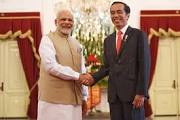
The leaders of Indonesia and India have shown how to lead on trade – committing to boost bilateral trade to USD 50 billion by 2025, from around USD 18 billion this year. India’s Prime Minister Narendra Modi and Indonesian President Joko Widodo made the announcement during talks this week.

ModiWidodo

The boost follows a defence agreement earlier this month for an Indian port and base on an Indonesian island at the northern tip of Sumatra. The deals are confirmation of India’s active “look east” policy and signal a shift which will impact ASEAN.

This leadership is in contrast to Australia’s relationship with India, with trade stuck on around A$18 billion compared to over A$180 billion with China.

India’s Media & Entertainment growing rapidly – hungry for content and investment

The Indian media and entertainment (M&E) industry grew at an average annual rate of 18.55 per cent from 2011-2017; and is expected to grow at 13.9 per cent to touch US$37.55 billion by 2021.

Entertainment

The next 5 years will see digital technologies increase their influence across the industry leading to a sea change in consumer behaviour across all segments.

The entertainment industry is projected to be more than US$62.2 billion by FY25.

The industry provides employment to 3.5-4 million people.

The entertainment industry continues to be dominated by the television segment, with the segment accounting for 44.24 per cent of revenue share in 2016, which is expected to grow further to 48.18 per cent by 2021.

Google’s video platform, YouTube, plans to increase its user base in India to 400 million, as rising internet penetration in the rural areas will enable consumers to access videos on their smartphones.

I expect personal video messages to be a massive growth area – with Indian creativity being stretched to supply this sector.

India is one of the highest spending and fastest growing advertising markets globally. The country’s expenditure on advertising is expected to grow at 12.1 per cent to US$10.59 billion by the end of 2018.

If you are an investor or content provider, India should be on your radar.

Put Indore and MP on your India trade mission list

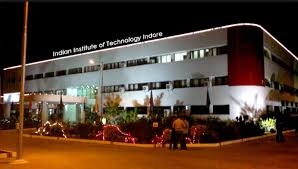
Indore is the largest city in the Indian state of Madhya Pradesh and for the second year in a row has won the Swachh Survekshan Survey as India’s cleanest city.Indore 3

Indore is the financial capital of MP, is an education and mineral resources hub and the state has a major agribusiness economy. In addition, India’s IT giants such as Infosys and TCS are setting up major centres there – Infosys is locating an IT development centre in Indore which will employ about 13,000 and TCS is building a campus there.Indore 4

The State of Madhya Pradesh has 75 million people.

Indore holds a highly successful “Global Investors Summit” each year.Indore 2

Definitely another one of India’s “tier 2” cities worth putting on your trade and investment mission list.

The collision of transaction culture with relationship culture shows how NOT to succeed in India

It is a frustrating pattern. The eager business team arrives in India on their first trade mission, they race from meeting to meeting and sign lots of MOU’s (Memorandum of Understanding) and appoint agents. The three day trip has been a roaring success!

Then, nothing happens.

What is going on here? The collision of “transaction” culture (the west) and “relationship” culture (India) has taken place yet again, with predictable outcomes.

From the Indian side, a high sense of courtesy and a culture that cannot say “no” means the visitor feels great progress is being achieved – while the Indian is also positive, feeling that a valued relationship might develop. Classic misunderstanding.

What is the alternative? Take a long view of India – at least three years – and wait for genuine relationships to develop. Go to India many times, not just once or twice. Put quick transactions aside and build trust. Learn how to relate to a culture that thinks differently.

Given that around 600 million Indians are under the age of 25, the future is bright and you should be there. Just go about it the right way next time.

Frontier Advisors puts India ahead of China for investors

China has led for decades – but now investment advisors are putting India ahead. The latest is from Frontier Advisors as reported by Investment Strategy.

In summary, India is a long-term investment – a 10-year-plus horizon – with favourable demographics, population growth and an emerging middle class.

Here is how they saw both markets and why they favour India:

indiagateThe report says about China:

  • economic growth is likely to continue to slow as credit growth and investments, such as in infrastructure and property, fades
  • reforms in excess capacity sectors and deleveraging is occurring as authorities switch focus to “quality” of economic growth rather than the pace of growth
  • monetary policy is tightening despite an unchanged benchmark interest rate
  • environmental issues are being addressed, and
  • economic transition is taking place as the Government focuses on higher value sectors.

It says there is a risk that China deleverages too quickly and destabilizes the economy, “but a hard landing still seems unlikely”.

Meanwhile the new US restrictive trade policies heighten uncertainty.cropped-investingindia3.jpg

On India, the report says:

  • India is a long-term investment – a 10-year-plus horizon – with favourable demographics, population growth and an emerging middle class
  • Its economic growth path will likely be different from China’s: while social inequality is a problem, education is seen as crucial to alleviating this; demographics suggest it has multi-decades to “harvest” a return from this, while China’s was shorter because of the one-child policy
  • valuations in listed equities are not cheap, “but they seldom are”
  • Government bond yields look attractive, although higher inflation is a risk, and
  • there are opportunities in real assets, such as the “National Corridor Project”. But its history has been poor and there is a reduced capacity for liquidity

https://www.investindia.gov.in/


The way India thinks about time

How do we perceive time? And what does this mean for my appointments or travel schedule? In the west we see time as sequential, a straight line, whereas in India your host sees time as synchronic, they see the past, present and future as interrelated.

In a nutshell, this approach to time explains why westerners are always rushing about, completing one meeting and rushing on to the next, while your Indian host seems relaxed, not in a rush, dealing with many other things while meeting with you and so on.

Sequential cultures include the UK, USA, Canada and Australia. Synchronic is definitely India and probably all Asia.

Anyone who has been at an Indian business function will see this working out – while announcements and speeches are being made, people move in and out of the room, mobile phones ring and are answered (even by presenters), private discussions take place and the scene is a moveable feast. But the western equivalent will ask for mobiles to be switched off, will collectively frown when they ring, will sit and not move – paying attention to the single topic at hand.

On returning home from one of my early trips to India, for the first month or two I told everyone about one of the “disaster” meetings I had in India – while I was presenting my proposal, my Indian colleague was constantly interrupted, taking calls, signing letters, giving instructions and so on. At any time there seemed to be four or five people in his office, all actively doing things and distracting him – or so I thought. But two months down the track I discovered that he had been paying attention, knew what I proposed and even more, wanted to go ahead. Disaster to triumph without even knowing it!

Time – just one of several major areas of cultural difference that we face when engaging with wonderful INDIA.

Put “Invest India” on your radar

Looking for the how and why of investing in modern India? The government has created Invest India and their website should be something you visit regularly. It is the best window into a massive pipeline of investment opportunities.

The Invest India site highlights the economic growth story, the young population, rising domestic demand, business friendly governments and rapid infrastructure improvements as just some of the reasons to invest in India.

Is it time to review your India investment and engagement strategies? If not now, when?

http://www.investindia.gov.in/why-india