Australia has closed the door on technology business and India knows it

India knows it and so does the global tech industry – Australia has turned its back on the biggest potential area of collaboration and trade growth with India, the technology industry. The restrictions Australia has imposed on skilled migration (changes to the living-away-from-home allowance and 457 visas) have put a massive constraint on the growth of technology.

As Atlassian co-founder Mike Cannon-Brookes said yesterday: “We said to the global tech industry we are fundamentally closed for business. The lack of access to global talent is the single biggest factor constraining the growth of the tech industry in Australia.” Mike helped take Atlassian to become a billion dollar tech company and Australia’s biggest – he knows what he is talking about.

He pointed out to a Senate hearing that when overseas IT talent comes here, it actually creates jobs for Australians as local companies hire locals to support this imported talent.

Instead of blocking Indian skilled workers, Australia should seek out a special relationship with India in the technology sector. It would be in the best interests of both countries.

Australia has turned its back on technology growth and is hurting itself in the process.

6 ways Indians can succeed in communication with the west

How can Indians succeed in cross-border communication with the west? Here are my 6 tips:

The west seeks certainty

While Indians are comfortable in an ever changing, flexible, unpredictable and fluid environment, your western colleagues seek certainty. Westerners resist change and are frustrated by uncertainty – and this shows up in communication.

That is why western business place so much focus on the contract and the business plan – they yearn for things to be set down, described and delivered.

This means in business the westerner will focus more on rules than relationships, while Indians generally favour relationships over rules. It means westerners see legal contracts as fixed whereas in India very little is set in concrete. It means westerners see a person who “honours their word” or contract, as being trustworthy, while Indians admire the ability to move with changes.

Your western colleagues become agitated when projects deviate from the plan, and expect that you will tell them immediately there is a problem or delay – they expect any bad news to be delivered up front and instantly.

culture

The western cult of the individual

One of the biggest differences between the west and Asia is the “cult of the individual”. While Asian cultures are based on the group and the collective, in the west from a young age children are encourage to “be” individuals and to take care of themselves.

In corporations, individuals are empowered to make decisions – and are expected to show initiative.

In communication, this can mean the westerner just gets on with the job without much feedback.

The cultural difference here can be massive – the westerner can make decisions on the spot while in most cases the Indian refers decisions back to the organization – one is individual responsibility while the other is the group.

Most westerners really struggle to understand why Indians have such difficulty saying “no” – as individuals they (westerners) often say no. Subtle but polite refusals such as “I will try’ are rarely understood by westerners – who generally prefer blunt responses.

Life for westerners is a “row of boxes”

A big challenge for most Indians is that westerners do not see their life as a whole – preferring to separate life into a series of boxes. Life can include many “boxes” – home, work, sport and social – where the people in one group do not even know those in the other. It is why western cities often have an active centre during the day but little happening after work when everyone rushes home to suburbia.

One impact is that your western colleague is often out of contact on weekends, rarely stays after work for dinner or socializing and keeps family private – it is not meant to offend, it is just how culture is

Informality is the way in the west

Increasingly western culture is informal, where respect is only given to those who perform well, titles are not often used and first names are used even at the first meeting. In many western companies, a younger executive can challenge a senior decision on technical or other grounds. So when a young westerner might contradict a senior Indian, within their culture this is not meant to be offensive. This informality is also happening in most Indian cities, where dress is casual and meetings are held in coffee shops – but underneath it all respect is maintained for seniors.

The western view of time

How do we perceive time? And what does this mean for my appointments? In the west, time is seen as sequential, a straight line, whereas in India time is synchronic, almost circular, with the past, present and future interrelated.

This approach to time explains why westerners are always rushing about, completing one meeting and rushing on to the next, while an Indian host seems relaxed, not in a rush, dealing with many other things while conducting the meeting – signing letters, taking messages, making calls and instructing staff – all while listening to the guest. This really confuses westerners who like to concentrate on one thing at a time.

In business, the western view of time partly explains why they see schedules as so rigid, while Indians take a more flexible and relationship view.

Because “time is urgent” to westerners, they become uncomfortable with long pauses in conversations, will try to fill any silences and expect meetings to finish on time.

Westerners like to be in control

One of the biggest cultural challenges is this – does the individual control the environment (west) or must they respond as best they can to external factors out of their control (Indian)?

The business communication impact is that a westerner will often seem dominating and in control, while their Indian colleague prefers to be flexible, finding compromise, keeping the peace. For a westerner conflict shows you have conviction whereas most Indians will aim for harmony. Westerners become uncomfortable, even angry, when things seem out of control, while most Indians are comfortable with natural waves, change and shifts.

Conclusion

The key with communicating across cultures is to be sensitive and aware of the other, adapting to them but remaining true to your values and your culture.

 

Flipkart is more than India’s version of Amazon – it will become a giant

Indian e-commerce firm Flipkart is planning to set up an integrated logistics park on the outskirts of Bengaluru. This will be the largest and of-its-kind facility in the country. The facility, for which the company is in the process of acquiring 100 acres of land, will house multiple massive warehouses that will rival in size those set up by Amazon and Alibaba in the US and China.

The park, location of which will be finalised in the next few months, will have 1.5 million square feet of warehousing space by the middle of next year.

In comparison, the largest e-commerce warehouse in the country today is run by US online retail giant Amazon in Telangana, which spans 400,000 square feet.

I have used Flipkart for many years – my early transactions were for books which could not be found elsewhere. Always found Flipkart to be efficient and I would recommend them to you.

Of course, Amazon is a growing player in the Indian market but you can see that this home grown e-commerce firm is competing hard and is set to succeed.

http://www.business-standard.com/article/companies/flipkart-to-set-up-india-s-biggest-logistics-park-near-bengaluru-118030800049_1.html Flipkart

Is India the world’s most polite country?

India could be the world’s most polite country. Everybody says “yes”. Nobody ever says “no”. It’s amazing. You arrive on your first trade mission, seeking new markets, and every meeting is a wild success – great friendship, much laughter, the response of “yes” to everything you ask. After day one you are exhilarated – how lucky am I to meet the right people? Day two is the same – “yes”. Days three, four and five provide more “yeses”. Then you go home, report on your extraordinary success and close relations with Indians and wait for things to happen. You might wait a long time.

What is happening here? Indian culture values relationship above all else. Everyone you meet instantly has a “relationship” with you and it is their duty to help. Indians cannot say “no” without giving deep offense. The nearest they come to a “no” is “I will try”. So, “yes” they can import your product, “yes” they would be a good agent, “yes” they know how to take you to market.

Is this “yes” just telling lies? Have you been deliberately deceived? If someone did this in the west, with our cultural background, their response of “yes” would indeed be an offensive lie. But consider my experience of being lost in Colaba in southern Mumbai – I love to wander around this fabulous part of the city. Getting lost is a regular experience for me. The first time, I asked a young man if he knew the way to my hotel. He immediately instructed me – “Go straight ahead, turn right then left and you will surely find it”. How wonderful, I am saved. But 100 metres later it does not feel right and I laugh at my own foolishness. I ask another, who sends me back and he actually knows the way to my hotel. The first person simply did the very best he could in the relationship at that time.

So next time someone in India says “yes”, just remember you are in the world’s most polite country. Otherwise, like me, you might get lost.

World’s largest solar plant for Karnataka shows how India is leading the way

solar2

According to the Press Trust of India, the world’s largest solar park has been launched in Karnataka’s Tumakuru district. Known as ‘Shakti Sthala’, the park spans 13,000 acres spread over five villages and provides major economic benefits to local farmers and communities.

The park was completed without land acquisition and in a record time of two years – farmers leased out their land and receive rental returns. The beneficiaries of this project were 2,300 Pavagada farmers.

The chief minister said Karnataka has emerged as the third largest producer of renewable energy in the nation and was taking “bold strides” towards emerging as an energy surplus state. Their goal is 20 per cent of power from renewables.

The park will create employment and act as an incentive for natives and farmers to explore new opportunities of socio-economic growth in the region.


Interesting to note – given the controversy in Australia about the Adani Group’s ambitious coal project – a 648-mw power project set up by the Adani Green Energy, part of the Adani Group, in Tamil Nadu in 2016 was billed as the world’s largest solar plant.

adanisolar


My secret insight into Holi

On the final day of an India trip that included five cities, I spent time in Kolkata with the family of a Melbourne friend. Love that city – walk, talk, eat sweets! On the last day, we had several appointments and then I was flying home. But in that day, I discovered my very own secret of Holi.

Holi3

Having about an hour free between our appointments, we went to the wonderful Tagore museum, honouring Rabindranath Tagore, poet, philosopher and inspiration. From the first floor window we noticed the entire museum was surrounded by university students celebrating Holi, it was a riot of colour and laughter. Holi this year was 1 and 2 March – and it is known in India as the “Festival of Colours” and marks the end of winter. People splash water and powder on each other – red, yellow, blue and green. Each color also carries a meaning. Red symbolizes love and fertility; yellow is the color of turmeric, a powder native to India and used as a natural remedy; blue represents the Hindu God Krishna; and green is for new beginnings.

Holi at heart is the joy of life in India. It is for family and friends, dancing, feasting and celebrating life as only the Indians can.

But looking down on the young university students in Kolkata, I found another secret of Holi. What a wonderful time for young men and women to flirt, and flirt they did. Covered in powder, laughing, taking photos and having a brilliant time.

If you have a chance to be in India during Holi, make sure you go. It will put the joy of India firmly in your heart.

Put “Invest India” on your radar

Looking for the how and why of investing in modern India? The government has created Invest India and their website should be something you visit regularly. It is the best window into a massive pipeline of investment opportunities.

The Invest India site highlights the economic growth story, the young population, rising domestic demand, business friendly governments and rapid infrastructure improvements as just some of the reasons to invest in India.

Is it time to review your India investment and engagement strategies? If not now, when?

http://www.investindia.gov.in/why-india

5 ways to build business with India in 2021

While Australia sees the “Asian Century” as a huge opportunity, our biggest opportunities are with the rapidly growing economy of India.

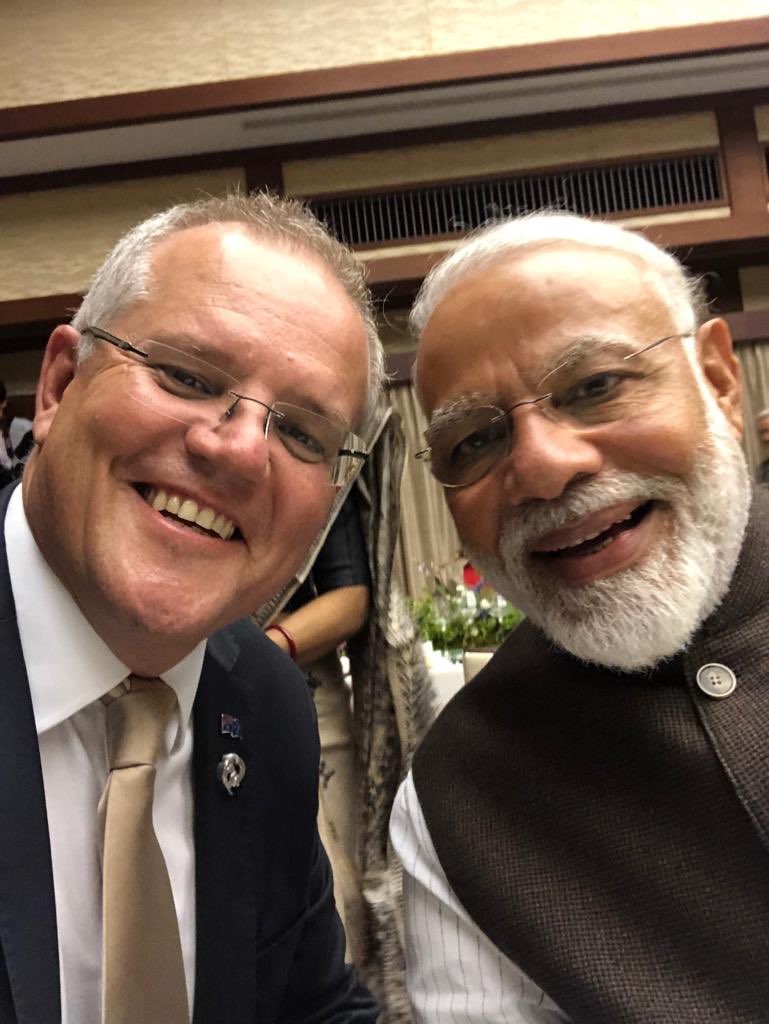
Certainly the two Prime Ministers are working hard to build close connections – India’s Narendra Modi and Australia’s Scott Morrison are building a close relationship. Business, trade and education should follow their lead.

Here are 5 steps we should take to grow our trade ties with India in 2021.

Adopt a patient long term view: It is very easy to get MOU’s (Memorandum of Understanding) signed with fanfare in India but too many do not produce any outcome. One way to improve our cultural dexterity would be to take a long term view and apply lots of patience. Businesses should not start out on market entry unless they are prepared to commit at least five years to making it work. Governments need the same longer term perspective. Rushed trade missions, political announcements and photo opportunities amount to very little – we see them as an achievement, but in reality they are just a beginning. Our business executives and even many diplomats do not build patience into their strategies.

Focus on relationships: India is not a short term transaction opportunity – to succeed there needs a longer term focus on building relationships. The first trade meeting in India can be exciting and positive, but from the India side this is just seen as an introduction and they will wait to see if the relationship grows. Even our companies and governments take too short a view when sending people to India – a two or three year stint there is just not enough. Trust and relationship take time. Others prefer to manage the India relationship from offices in Singapore or elsewhere – this is seen by the India side as evidence you are not committed to India.

See beyond the politeness: Indians are among the most courteous and generous hosts on the planet. On top of this, their culture demands that they never provide an outright rejection or “no” statement, even when for us it would be easy to just say “no”. To succeed, our businesses and governments need to dig deeper and fine the reality beyond the politeness.  The dumbest question for a business to ask in India is “can you help me with market entry for my products?” The answer will always be “yes” and you will sit idle for a long time back home until you realise this is not the right question.

Adapt to indirect communications: Like most of Asia, Indians are indirect communicators. Problems are rarely addressed directly and unless you have an ear for indirectness, you will miss the warning signs. In addition, indirect communication creates misunderstanding because the Indian side will always have to agree with whatever you may be asking. Our normally blunt Aussie style is misunderstood over there and can give offence – but you will never be told. This is a two way process – understanding they are indirect, and adopting an indirect style if we can.

Realise that language and thinking are different: One of the big problems in our relations with India is what makes it seem easy – Indians speak English. As a result, whereas our businesses and government when dealing with China, Japan or any other non-English speaking nation will have interpreters and consultants, in India the use of English creates the illusion that communication is taking place. Yet when we deal with other English speaking nations, we factor in their thinking as well – we know Americans speak English but think differently from Aussies. Our biggest mistake is assuming that Indians think like we do.

These barriers really combine two things – the importance of long term commitment to India (minimum 5 years) and cultural differences. If you think long term and study how to adapt to cultural differences, India could become your next big market.