Is your country serious about India? Lessons from FICCI and the UK

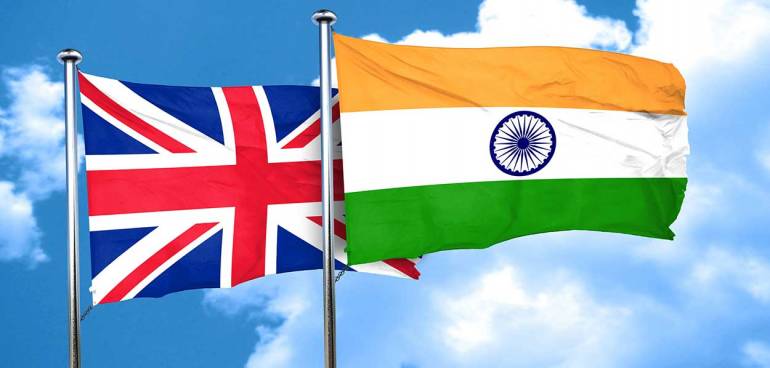
India’s Federation of Indian Chambers of Commerce and Industry (FICCI) has launched a portal called “UKThat” which will promote manufacturing and service industries from UK into India. Great initiative. Has FICCI done that for your country?

A series of initiatives to promote trade and investment between India and Britain was unveiled in India by the Indian High Commission and traders’ body the Federation of Indian Chambers of Commerce and Industry (FICCI).

The UK-India Technology and Talent Exchange Programme, dubbed TechXChange, is aimed at providing support to the best start-ups in both countries.

It follows from the technology exchange programme that has been signed between the two countries in presence of the Prime Ministers (Narendra Modi and Theresa May).

“This is an attempt to really give it some shape, some serious framework to make this actually happen between India and the UK,” said Sunil Parekh, FICCI’s Member of the National Executive Committee and Chair of the Sub-Committee on Start-ups, at a two-day UK-India Leadership Conclave which concluded recently.

Now, that is the kind of decisive conclave I would like for Australia and India.

Why not?

In a move to boost UK exports to India, the industry body announced the ‘UKThat’ Portal, which will create a marketplace for manufacturing and services industries and offshore traders of all goods and services to promote their products to international clients in India.

FICCI seeks to provide an easy way for Indian importers to quote and purchase from UK businesses without third parties or intermediaries, in complete transparent and secure transactions,” it said in a statement.

International Yoga Day gives insights into how India differs from China

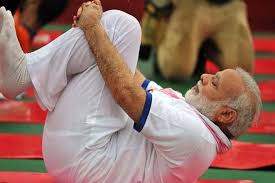
One of the global initiatives of Indian Prime Minister Narendra Modi has been International Yoga Day – celebrated across the world on 21 June each year since 2015.

While China is building a global reputation based on the “belt and road” initiative and creating bases in the South China Sea, defending accusations of deliberately creating debt in emerging nations and interfering with neighbours, India just goes on doing its own thing.yoga2

China has an ageing population and a trade-dependent economy – it is vulnerable to global economic shifts and worried about security of trade routes.

In contrast, India has a young population and economic growth driven by internal demand. It is less likely to be affected by global economic downturns or security issues.

This is not to say security is not on the mind of India – it recently did a significant deal with Indonesia. But for China, security of trade routes is the dominant global concern.

That is why International Yoga Day gives special insight into modern India – lifting millions out of poverty, creating a strong economy and global strength but celebrating the quiet and peaceful side of its culture. This year the theme was “Yoga for Peace” and somehow I feel only India could come up with such a concept.yoga4

Time for the west to take notice when Russia, China and India meet at SCO

This weekend showed how much the west looks at the world through the prism of Europe and America – with the focus very much on the G7 meeting.

There was little or no western media coverage or political analysis of another important meeting over this last weekend – the Shanghai Cooperation Organisation, which has 8 members, representing 42 per cent of the world’s population, 22 per cent of the land area and 20 per cent of the GDP.

SCO focuses on political, economic, security and cultural cooperation among members – China, Russia, India, Kazakhstan, Kyrgystan, Tajikistan, Uzbekistan and Pakistan.

Unlike the friction of the G7 (pictured below), this meeting was a real opportunity for one-on-one discussions between leaders such as India’s Prime Minister Modi and China’s President Xi, who met on multiple occasions.TrumpG7

India is a new member of SCO and was very much focused on regional connectivity projects to boost trade among members of the SCO countries. India has been strongly pushing for connectivity projects like the Chabahar port project in Iran and the over-7,200 km long International North-South Transport Corridor to gain access to resource-rich Central Asian countries.

Prime Minister Modi and Chinese President Xi were also expected to discuss the economic ties between the two countries over the two days. India has been asking China to open its IT and pharmaceutical sectors to address the trade deficit which climbed to over $51 billion last year.

Outcomes of this meeting will be important for countries like Australia and Indonesia – but in Australia, at least, it seems SCO is not on the radar while the goings on at the G7 gain all the attention. Time to change our prism?


Why India?

If you are in business or investment, this question (why India?) will have been asked before. But the answer is becoming more compelling as the following list shows:indiagate

  • India to remain one of the fastest growing economies in the world. Source: International Monetary Fund
  • FDI inflows increased by 37% since the launch of Make in India initiative. Source: Department of Industrial Policy and Promotion, Government of India
  • Leading investors ranked India as the most attractive market. Source: Ernst & Young Emerging Markets CenterIndian rail
  • India to have world’s largest youth population by 2020. Source: United Nations Population Fund
  • India to be the largest supplier of university graduates in the world by 2020. Source: British CouncilBKC1
  • India has the third largest group of scientists and technicians in the world. Source: All India Management Association & The Boston Consulting Group
  • Rising affluence is the biggest driver of increasing consumption in India. Source: Boston Consulting GroupEntertainment
  • India’s consumer story will be led by its 129 million urban mass consumers. Source: Goldman Sachs Group
  • Private consumption will be four times by 2025. Source: McKinsey Global Institute
  • Centre of global maritime trade to move from the Pacific to the Indian Ocean Region. India and China will be the largest manufacturing hubs of the world by 2030; Source: Lloyd’s Register Marine & University of Strathclyde, Glasgow
  • In next five years, India to have greater economic influence across the Asia Pacific region; Source: Baker McKenzie & Mergermarket GroupIndian airport
  • Over the next three decades more than 350 million Indians will move into cities. Source: McKinsey Global Institute
  • Over the next two decades more than USD 1.5 trillion investments planned for infrastructure. Source: Press Information Bureau, Government of India
  • India registered a record improvement on Ease of Doing Business ranking from 142 to 100 between 2014-2017; Source: World BankGateway1
  • India ranks 40th on Global Competitiveness Index (GCI) 2016-17; Source: World Economic Forum
  • 95% of 1.2 bn Indians are under Aadhar scheme: One of the world’s Largest Social Security Program; Source: Press Information Bureau, Government of India
  • Jan Dhan Yojana: Formalization of Savings: 312 million bank accounts have been opened with savings amounting to USD 11.6 bn; Source: Ministry of Finance, Government of India
  • Goods and Services Tax (GST), biggest tax reforms since independence; Source: Government of India

    InvestingIndia3
    India is on the move – time to jump on board!

Real leadership to boost Indonesia and India trade

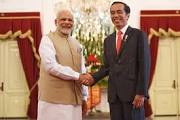
The leaders of Indonesia and India have shown how to lead on trade – committing to boost bilateral trade to USD 50 billion by 2025, from around USD 18 billion this year. India’s Prime Minister Narendra Modi and Indonesian President Joko Widodo made the announcement during talks this week.

ModiWidodo

The boost follows a defence agreement earlier this month for an Indian port and base on an Indonesian island at the northern tip of Sumatra. The deals are confirmation of India’s active “look east” policy and signal a shift which will impact ASEAN.

This leadership is in contrast to Australia’s relationship with India, with trade stuck on around A$18 billion compared to over A$180 billion with China.

India and Indonesia deal signals major shift in Indian Ocean response to China

Indonesia has agreed to give India economic and military access to the strategic island of Sabang at the northern tip of Sumatra and close to the Malacca Strait, an Indonesian minister said last week.

In a typically low profile way, both countries have done the deal in response to China’s Belt and Road Initiative and it signals a major shift in the attitude of Indonesia – it now wants to provide some “balance” to the China move.

Indonesia

Luhut Pandjaitan, Indonesia’s coordinating minister for maritime affairs and a former military officer, said India will invest in the port and economic zone of Sabang and build a hospital. He noted the port’s 40-metre depth is good for all types of vessels, “including submarines”. In time, he said, the coast guards of the two countries could also work together.

India’s Prime Minister Narendra Modi will visit Indonesia on May 31 and no doubt will announce more extensions to his “Act East” strategy.

An Indonesian official accompanying Pandjaitan said his understanding was that besides development of the port, Indian naval ships would be allowed to visit Sabang under the understanding.

The Malacca Strait is considered one of six choke points, or narrow channels, along widely used global sea routes. They are critical for global energy security because of the high volume of oil transported through narrow straits. At least 15 million bpd of oil flows through the Malacca Strait from West Asia and West Africa.

Pandjaitan outlined the reasons for closer bilateral cooperation. He was critical of China’s Belt and Road Initiative, saying: “We do not want to be controlled by BRI.” He also questioned China’s unilateral claims on the South China Sea, noting this includes parts of Indonesia’s maritime exclusive economic zone.

Indonesia had positioned a plan called the “global maritime fulcrum” that is “designed to balance the BRI”, he said. Indonesia and India are big enough that “we don’t have to lean towards any superpower, and this makes India a sensible partner for Indonesia”, he added.

This marks a major shift in Indonesia’s attitude towards China and India. Until recently, Jakarta had been reluctant to seek strategic alignment with New Delhi and was in two minds about Beijing’s role in the region.

More to come…

Mumbai’s BKC increases city profile as financial capital of Asia

Bain & Company, Boston Consulting Group (BCG) and Amazon – just some of the global businesses choosing office space in the new Bandra Kurla Complex (BKC) in Mumbai, adding to Mumbai’s reputation as Asia’s financial capital.

BKC1

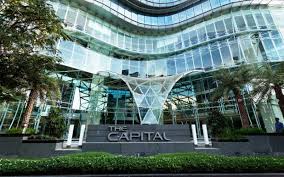
Bain & Company took space in the Capital Building which has attracted large numbers of banking, insurance and consulting companies.

BKC3

Others with significant offices in BKC include India’s Reliance Industries, Canada’s CPPIB, Singapore-based GIC and Australia’s Macquarie. The rents there are some of the highest in Mumbai.


According to the Business Standard, BKC continues to be the most sought-after micro market for BFSI (banking, financial services, and insurance) tenants.BKC2

The Bandra Kurla area is mid-Mumbai with good access to the airport – and this massive redevelopment at BKC is becoming a hub with outstanding retail, good coffee and so much more.

Like most “new” areas in India, it has a youthful vibe – which you would expect in a country where 600 million people are under the age of 25. All of which means Mumbai will go from strength to strength.

Mumbai is a “must visit” if you are planning on business or investing in India. Big, bold, fast, a dynamic 24/7 city.

Mumbai is the financial, commercial and entertainment capital of India. It is also one of the world’s top ten centres of commerce in terms of global financial flow, generating 6.16% of India’s GDP and accounting for 25% of industrial output, 70% of maritime trade in India and 70% of capital transactions to India’s economy.

It houses the Reserve Bank of India, the Bombay Stock Exchange and the National Stock Exchange. It is also home to some of India’s premier scientific and nuclear institutes. The city also houses India’s Hindi (Bollywood) and Marathi cinema industries.

Why doing business in India takes time

Doing business with India is more time consuming. Why? It is mostly because of what researchers call a “diffuse” culture, which is characterized by being indirect.

Most westerners come from “specific” cultures which are very direct in communication and expect absolute clarity in all of their dealings.

You can see that diffuse and specific do not mix that well.

culturenamaste

If you rush a meeting in India, you will almost certainly leave with a “yes we can do business and looking forward to it” but then nothing will happen. So, plan for long meetings, do not rush away, make large breaks between appointments so you can go with the flow. Diffuse takes time.

Diffuse cultures prefer to take time, to work around issues, and they link every part of life – work and private, formal and social, all mix together. In specific cultures, everyone rushes from one specific thing to another, they get to the point and keep most parts of their lives (such as work and private) separate.

HOW DIFFUSE WORKS

  • Your social outing with Indian colleagues might go very late – evening meal might not start until  9pm or 10pm
  • Indians will rarely say “no” – preferring “I will try…”
  • You can easily make appointments on the weekend with many contacts
  • A good sign is when your contact introduces you to someone senior to them – which often comes right at the end of a very long meeting…

Of course, for every cultural generalization there are exceptions. And when we talk about culture, it is not about which is better or worse, it is about gaining insight and understanding.

The collision of transaction culture with relationship culture shows how NOT to succeed in India

It is a frustrating pattern. The eager business team arrives in India on their first trade mission, they race from meeting to meeting and sign lots of MOU’s (Memorandum of Understanding) and appoint agents. The three day trip has been a roaring success!

Then, nothing happens.

What is going on here? The collision of “transaction” culture (the west) and “relationship” culture (India) has taken place yet again, with predictable outcomes.

From the Indian side, a high sense of courtesy and a culture that cannot say “no” means the visitor feels great progress is being achieved – while the Indian is also positive, feeling that a valued relationship might develop. Classic misunderstanding.

What is the alternative? Take a long view of India – at least three years – and wait for genuine relationships to develop. Go to India many times, not just once or twice. Put quick transactions aside and build trust. Learn how to relate to a culture that thinks differently.

Given that around 600 million Indians are under the age of 25, the future is bright and you should be there. Just go about it the right way next time.

The 10 mindsets of Indian business leaders

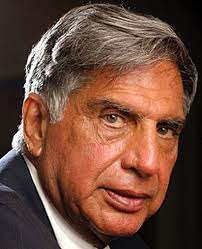
Indian companies are expanding globally, with icons like Jaguar and Land Rover now in Indian hands, and western business executives are going there to gain insights. The real secret of Indian success can be found in ten ways of thinking of Indian business leaders – including the leadership of Ratan Tata (pictured) who made his group a global powerhouse.

Acceptance of change

Kiran Mazumdar-Shaw, the Chairperson and Managing Director of Biocon Ltd is one of India’s most successful and wealthiest women: “I certainly believe that everything happens with a reason. I wanted to join medical school and when that did not happen I took up biology instead. And that led me to specialise in brewing. However when I was not accepted as a brew master in India, I turned to biotechnology in a very accidental manner. In hindsight, I am grateful that the brewing doors shut on me and I set up Biocon instead!”

Live in the moment, now

Living more in the moment makes India’s business leaders very adaptable and opportunistic – arrive in Mumbai with an idea and no appointments, pretty soon you will be seeing the people at the top.

Generosity

Ratan Tata epitomises the Tata Group’s success and ethics: “Some foreign investors accuse us of being unfair to shareholders by using our resources for community development. Yes, this is money that could have made for dividend payouts, but it also is money that’s uplifting and improving the quality of life of people in the rural areas where we operate and work.”

Patience, not anger

Of the great texts of Hinduism, the Bhagavad Gita is an influential part of the education of so many Indian business leaders: “Delusion arises from anger. The mind is bewildered by delusion. Reasoning is destroyed when the mind is bewildered.”

Ethics and respect

My exposure to this began in 2005 when the Chairman and Chief Mentor of Infosys, Narayana Murthy, spoke about corporate governance and morality in business: “We follow one principle – the softest pillow is a clear conscience”.

Problems are a gift

While the west has a fear of things going wrong, in India it is accepted.

The Indian born Lakshmi Mittal, head of Arcelor Mittal: “Everyone experiences tough times, it is a measure of your determination and dedication how you deal with them and how you can come through them.”

Right Words

Ratan Tata expresses his communication style this way: “What I have done is establish growth mechanisms, play down individuals and play up the team that has made the companies what they are. I, for one, am not the kind who loves dwelling on the ‘I’. If history remembers me at all, I hope it will be for this transformation.”

Leaders as gurus

TT Srinivasaraghavan is the Managing Director of Sundaram Finance, a diverse company based in Chennai. TT says that Sundaram is first a family and second, a company. Fundamental to his business is ‘trust’ and what he calls a ‘chain of faith’ that flows from people who trust each other.

Life as a spider web

Indian business leaders know that life is like trying to find your way through a spider web – where does it begin, where does it lead, who can tell? The Bhagavad Gita says: “Better still is surrender of attachment to results, because there follows immediate peace.”

Leading by not conforming

Thinking of others rather than “profits first” is one way Indian leaders do not conform. Paramahansa Yogananda: “Business life need not be a material life. Business ambition can be spiritualized. Business is nothing but serving others materially in the best possible way.”

Stephen Manallack is a Director of the EastWest Academy Pty Ltd and compiled the secrets of Indian business success and cross cultural issues while preparing his book for the Indian market, Soft Skills for a Flat World (Tata McGraw-Hill). He has led several trade missions to India and is a Cross-Cultural Trainer. He has just released Communicating Your Personal Brand (Vivid Publications)