Is your country serious about India? Lessons from FICCI and the UK

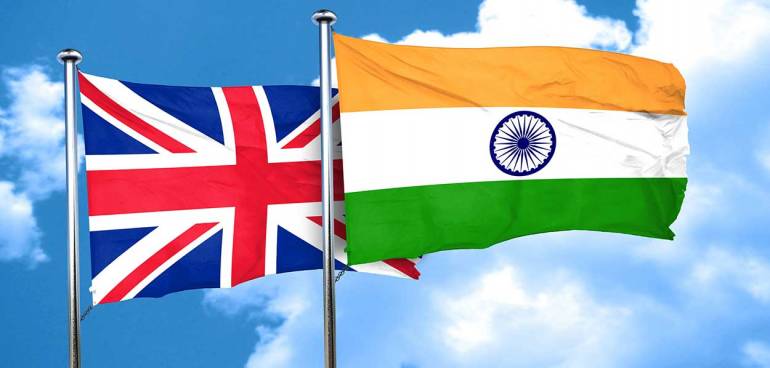
India’s Federation of Indian Chambers of Commerce and Industry (FICCI) has launched a portal called “UKThat” which will promote manufacturing and service industries from UK into India. Great initiative. Has FICCI done that for your country?

A series of initiatives to promote trade and investment between India and Britain was unveiled in India by the Indian High Commission and traders’ body the Federation of Indian Chambers of Commerce and Industry (FICCI).

The UK-India Technology and Talent Exchange Programme, dubbed TechXChange, is aimed at providing support to the best start-ups in both countries.

It follows from the technology exchange programme that has been signed between the two countries in presence of the Prime Ministers (Narendra Modi and Theresa May).

“This is an attempt to really give it some shape, some serious framework to make this actually happen between India and the UK,” said Sunil Parekh, FICCI’s Member of the National Executive Committee and Chair of the Sub-Committee on Start-ups, at a two-day UK-India Leadership Conclave which concluded recently.

Now, that is the kind of decisive conclave I would like for Australia and India.

Why not?

In a move to boost UK exports to India, the industry body announced the ‘UKThat’ Portal, which will create a marketplace for manufacturing and services industries and offshore traders of all goods and services to promote their products to international clients in India.

FICCI seeks to provide an easy way for Indian importers to quote and purchase from UK businesses without third parties or intermediaries, in complete transparent and secure transactions,” it said in a statement.
International Yoga Day gives insights into how India differs from China

One of the global initiatives of Indian Prime Minister Narendra Modi has been International Yoga Day – celebrated across the world on 21 June each year since 2015.

While China is building a global reputation based on the “belt and road” initiative and creating bases in the South China Sea, defending accusations of deliberately creating debt in emerging nations and interfering with neighbours, India just goes on doing its own thing.yoga2

China has an ageing population and a trade-dependent economy – it is vulnerable to global economic shifts and worried about security of trade routes.

In contrast, India has a young population and economic growth driven by internal demand. It is less likely to be affected by global economic downturns or security issues.

This is not to say security is not on the mind of India – it recently did a significant deal with Indonesia. But for China, security of trade routes is the dominant global concern.

That is why International Yoga Day gives special insight into modern India – lifting millions out of poverty, creating a strong economy and global strength but celebrating the quiet and peaceful side of its culture. This year the theme was “Yoga for Peace” and somehow I feel only India could come up with such a concept.yoga4

Time for the west to take notice when Russia, China and India meet at SCO

This weekend showed how much the west looks at the world through the prism of Europe and America – with the focus very much on the G7 meeting.

There was little or no western media coverage or political analysis of another important meeting over this last weekend – the Shanghai Cooperation Organisation, which has 8 members, representing 42 per cent of the world’s population, 22 per cent of the land area and 20 per cent of the GDP.

SCO focuses on political, economic, security and cultural cooperation among members – China, Russia, India, Kazakhstan, Kyrgystan, Tajikistan, Uzbekistan and Pakistan.

Unlike the friction of the G7 (pictured below), this meeting was a real opportunity for one-on-one discussions between leaders such as India’s Prime Minister Modi and China’s President Xi, who met on multiple occasions.TrumpG7

India is a new member of SCO and was very much focused on regional connectivity projects to boost trade among members of the SCO countries. India has been strongly pushing for connectivity projects like the Chabahar port project in Iran and the over-7,200 km long International North-South Transport Corridor to gain access to resource-rich Central Asian countries.

Prime Minister Modi and Chinese President Xi were also expected to discuss the economic ties between the two countries over the two days. India has been asking China to open its IT and pharmaceutical sectors to address the trade deficit which climbed to over $51 billion last year.

Outcomes of this meeting will be important for countries like Australia and Indonesia – but in Australia, at least, it seems SCO is not on the radar while the goings on at the G7 gain all the attention. Time to change our prism?


The way India thinks about time

How do we perceive time? And what does this mean for my appointments or travel schedule? In the west we see time as sequential, a straight line, whereas in India your host sees time as synchronic, they see the past, present and future as interrelated.

In a nutshell, this approach to time explains why westerners are always rushing about, completing one meeting and rushing on to the next, while your Indian host seems relaxed, not in a rush, dealing with many other things while meeting with you and so on.

Sequential cultures include the UK, USA, Canada and Australia. Synchronic is definitely India and probably all Asia.

Anyone who has been at an Indian business function will see this working out – while announcements and speeches are being made, people move in and out of the room, mobile phones ring and are answered (even by presenters), private discussions take place and the scene is a moveable feast. But the western equivalent will ask for mobiles to be switched off, will collectively frown when they ring, will sit and not move – paying attention to the single topic at hand.

On returning home from one of my early trips to India, for the first month or two I told everyone about one of the “disaster” meetings I had in India – while I was presenting my proposal, my Indian colleague was constantly interrupted, taking calls, signing letters, giving instructions and so on. At any time there seemed to be four or five people in his office, all actively doing things and distracting him – or so I thought. But two months down the track I discovered that he had been paying attention, knew what I proposed and even more, wanted to go ahead. Disaster to triumph without even knowing it!

Time – just one of several major areas of cultural difference that we face when engaging with wonderful INDIA.