
India first adopted “Look East” as a foreign policy in 1991 – but in true PM Narendra Modi form, he changed the name to “Act East” – and action there is. Two main projects show how change is coming.
As 2023 draws to a close, a decade-old Memorandum of Understanding (MoU) between India and Bangladesh, to set up the first Indo-Bangla international railway connectivity in India’s Northeast, has found fruition in the recently launched Akhaura-Agartala cross-border rail link.
Inaugurated digitally by Indian Prime Minister Narendra Modi and Bangladesh Prime Minister Sheikh Hasina, this railway connects, Agartala—the capital city of India’s Northeastern state, Tripura—with the Akhaura upazila in Bangladesh’s Bahmanbaria district. The connectivity through Bangladesh helps bypass the long, narrow, and congested Siliguri Corridor, also known as the ‘Chicken’s Neck’ which connects the Northeast to India’s mainland. In effect, this reduces the traveling distance from India’s Northeastern states such as Mizoram, and southern parts of Assam to Kolkata. For Tripura particularly, the distance to Kolkata by rail is reduced from 1,600 km to 500 km and the duration is reduced from 31 hours to 10 hours, approximately.
In another major “Act East” development, on the side-lines of the recently concluded 12th Mekong Ganga Cooperation (MGC) meeting in Bangkok on 16 July, Indian External Affairs Minister Dr. S. Jaishankar met with his Myanmar counterpart U Than Swe to discuss regional connectivity initiatives, with particular emphasis on expediting the India-Myanmar-Thailand Trilateral Highway (IMT-TH) project.
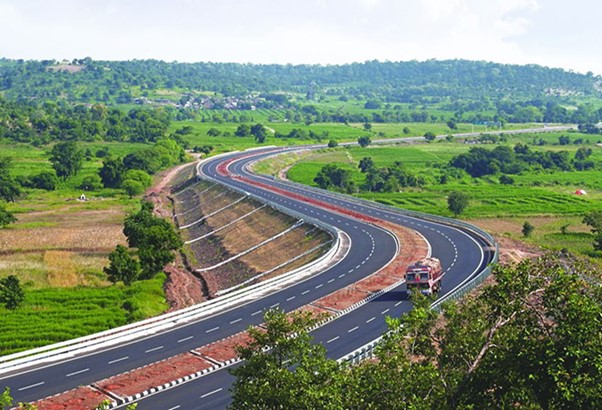
The IMT-TH project follows a proposed plan that starts from Bangkok and passes through cities like Sukhothai and Mae Sot in Thailand, and Yangon, Mandalay, Kalewa, and Tamu in Myanmar before reaching India. In India, it is likely to pass through Moreh, Kohima, Guwahati, Srirampur, Siliguri, and Kolkata, spanning over 2,800 km. The longest stretch of the highway will be in India, while the most minor road section will be in Thailand. Thailand’s Vice Minister of Foreign Affairs, Vijavat Isarabhakdi, stated in a recent interview that most of the project’s work in Thailand is over. The Indian counterpart also mentioned that around 70 percent of the work is complete. Upon being approached, Aung Naing Oo, Myanmar’s Trade Minister, revealed that most of the highway was constructed, spanning 1,512 km. The contractors will complete the remaining sections within three years.
“Act East” looks like building new connectivity between Southeast Asia and South Asia – and that strengthens the region.

 Into India